Laurel Electronics LLC LTS Series DIN Rail Transmitter for RS232/485 Serial-to-Analog Converter LTS60

Description
Features Converts streaming RS232 or RS485 ASCII data to an (isolated), scaled 4-20 mA, 0-10 mA, 0-10V or -10V to +10V analog output. Able to retrieve data from long character strings. Setup using Laurel's free Instrument Setup Software. Accepts Modbus or Custom ASCII protocol commands to set analog output or relay action. Includes up to 1/2 hour of technical phone support with screen sharing. Serial data rates from 300 to 9600 baud. Analog output resolution 0.0015% of span (16 bits), accuracy ±0.02% of span. Dual 120 mA solid state relays can respond to readings or to control characters. Universal 85-264 Vac / 90-300 Vdc or 10-48 Vdc / 12-32 Vac power. Operating temperature from -40°C to 70°C (-40°F to 158°F) DIN rail mount housing only 22.5 mm wide, detachable screw-clamp connectors. The LTS serial data input, analog output transmitter accepts streaming RS232 or RS485 serial data ASCII strings from an external device, like a scale, at rates up to 9600 baud. It converts this data to an (isolated), scalable 4-20 mA, 0-20 mA, 0-10V or -10V to +10V analog output. Two solid state relays are standard and can respond to readings or to received control characters. The LTS also accepts serial commands via the Modbus RTU or Laurel Custom ASCII protocols to set the analog output or relay state. The unit is housed in a transmitter case which is only 22.5 mm (0.89") thick and fits on a 35 mm DIN rail. Depending on the model, it can be powered by AC (85-264 Vac) or DC (10-48 Vdc). Standard LTS features include: Streaming serial data input, RS232 or RS485. The data to be converted to analog is specified using Laurel's free Instrument Setup Software. The user-selectable "Remote C" mode allows the number of characters in the data, preceding the data and following the data to be specified. In all cases, it is essential to know know the what ASCII characters are contained in each serial data transmission. Commands via the Modbus RTU, Modbus ASCII or Custom ASCII protocols. For details, please or Modbus and Custom ASCII manuals. These commands can be used to set the analog output and the state of the unit's two relays. Modbus implementation is fully compliant with Modbus over Serial Line Specification V1.0 (2002) for operation, with up to 247 digital addresses. 4-20 mA, 0-20 mA, 0-10V or -10V to +10V analog transmitter output, (isolated), jumper-selectable and user scalable. All selections provide 16-bit (0.0015%) resolution of output span and 0.02% output accuracy of readings from -999,999 to +999,999 counts. Output isolation from signal and power grounds eliminates potential ground loops. Dual solid state relays for control or alarm, (isolated). Rated 120 mA at 140 Vac or 180 Vdc. The relays can respond to digital readings or to received control characters, or be commanded via the Modbus protocol or Custom ASCII protocol. Transmitter programming via Laurel's Instrument Setup Software, which runs on a PC under MS Windows. This software can be downloaded from this website at no charge. The required cables from the transmitters to a PC com port are available from Laurel (P/N CBL02 and CBL04). Up to 30 minutes of technical phone support. Programming requires an understanding of the ASCII characters in your streamed data. Setup assistance using screen sharing is built into the price of the LTS. All signal conditioner board ranges are factory-calibrated, with calibration factors for each range securely stored in an onboard EEPROM. These factors can be scaled via software to accommodate external shunts, enabling field replacement of signal conditioner boards without necessitating recalibration of the associated transmitter. For optimal accuracy, factory recalibration is recommended annually. All Laurel Electronics instruments undergo factory calibration using the industry-leading Fluke calibrators, which are recalibrated yearly and certified traceable to national standards, ensuring the highest level of precision and reliability. Programmable Streaming Input Modes Six data conversion modes are user selectable to receive and process streaming data. The number of characters to be processed can be up to 7, including 6 digits and a decimal point. Include leading zeros, like 00300.0. The LTS is not plug and play. The format of the strings being received must be known in advance, including non-printing control characters. If you do not know the string format, contact tech support of the sending device's manufacturer, or use a terminal emulator program like HyperTerminal, PuTTY or RealTerm to view the actual transmitted characters. Remote S processes single values without a digital address. An alarm character is optional. Remote A processes single values with a digital address. An alarm character is optional. Remote 1 processes the 1st of up to 4 readings embedded in a Laureate transmission. Remote 2 processes the 2nd of up to 4 readings embedded in a Laureate transmission. Remote 3 processes the 3rd of up to 4 readings embedded in a Laureate transmission. Remote 4 processes the 4th of up to 4 readings embedded in a Laureate transmission. Remote C can process readings embedden in long ASCII strings. Specify the start character at the beginning of the string, the number of characters following the start chracter to be ignored, the number of characters to be processed following the lastignored character, and the stop character at the end of the string. Programmable Command Modes A Master, which can be a PC, PLC or other programmable device, can send digital values to an LTS transmitter to cause it to output specifc analog signals and actuate alarms. Ether the Modbus RTU protocol or Laurel's simpler Customer ASCII protocol can be used for commands. Both support digital addressing. The Modbus RTU protocol uses Function Code FC10, Holding Register 006C, and data as 4 hexadecimal bytes. The Custom ASCII protocol uses the string *1K followed by the decimal reading and by Connecting Laureate LTS Transmitters to a Local Area Network (LAN) Up to 30 Laureate LTS Transmitters and/or Digital Panel Meters can be configured for RS485 and daisy-chained to an LTS Transmitter using Laurel’s High Speed Ethernet-to-RS485 converter board for seamless LAN integration. Alternatively, Laurel LTE series Ethernet transmitters can connect directly to a LAN via an Ethernet cable. Setup for both configurations is streamlined using Laurel’s free Instrument Setup Software, which simplifies node discovery and transmitter configuration. Flexible Communication Options for LTS Transmitters Laureate Transmitters can be equipped with Laurel communication boards to support various interfaces and protocols. These include serial interfaces with ASCII or Modbus RTU protocols, and Ethernet interfaces with web access, ASCII, or Modbus TCP/IP protocols, ensuring versatile connectivity for your commercial applications.
Request a Quote
Description
Features Converts streaming RS232 or RS485 ASCII data to an (isolated), scaled 4-20 mA, 0-10 mA, 0-10V or -10V to +10V analog output. Able to retrieve data from long character strings. Setup using Laurel's free Instrument Setup Software. Accepts Modbus or Custom ASCII protocol commands to set analog output or relay action. Includes up to 1/2 hour of technical phone support with screen sharing. Serial data rates from 300 to 9600 baud. Analog output resolution 0.0015% of span (16 bits), accuracy ±0.02% of span. Dual 120 mA solid state relays can respond to readings or to control characters. Universal 85-264 Vac / 90-300 Vdc or 10-48 Vdc / 12-32 Vac power. Operating temperature from -40°C to 70°C (-40°F to 158°F) DIN rail mount housing only 22.5 mm wide, detachable screw-clamp connectors. The LTS serial data input, analog output transmitter accepts streaming RS232 or RS485 serial data ASCII strings from an external device, like a scale, at rates up to 9600 baud. It converts this data to an (isolated), scalable 4-20 mA, 0-20 mA, 0-10V or -10V to +10V analog output. Two solid state relays are standard and can respond to readings or to received control characters. The LTS also accepts serial commands via the Modbus RTU or Laurel Custom ASCII protocols to set the analog output or relay state. The unit is housed in a transmitter case which is only 22.5 mm (0.89") thick and fits on a 35 mm DIN rail. Depending on the model, it can be powered by AC (85-264 Vac) or DC (10-48 Vdc). Standard LTS features include: Streaming serial data input, RS232 or RS485. The data to be converted to analog is specified using Laurel's free Instrument Setup Software. The user-selectable "Remote C" mode allows the number of characters in the data, preceding the data and following the data to be specified. In all cases, it is essential to know know the what ASCII characters are contained in each serial data transmission. Commands via the Modbus RTU, Modbus ASCII or Custom ASCII protocols. For details, please or Modbus and Custom ASCII manuals. These commands can be used to set the analog output and the state of the unit's two relays. Modbus implementation is fully compliant with Modbus over Serial Line Specification V1.0 (2002) for operation, with up to 247 digital addresses. 4-20 mA, 0-20 mA, 0-10V or -10V to +10V analog transmitter output, (isolated), jumper-selectable and user scalable. All selections provide 16-bit (0.0015%) resolution of output span and 0.02% output accuracy of readings from -999,999 to +999,999 counts. Output isolation from signal and power grounds eliminates potential ground loops. Dual solid state relays for control or alarm, (isolated). Rated 120 mA at 140 Vac or 180 Vdc. The relays can respond to digital readings or to received control characters, or be commanded via the Modbus protocol or Custom ASCII protocol. Transmitter programming via Laurel's Instrument Setup Software, which runs on a PC under MS Windows. This software can be downloaded from this website at no charge. The required cables from the transmitters to a PC com port are available from Laurel (P/N CBL02 and CBL04). Up to 30 minutes of technical phone support. Programming requires an understanding of the ASCII characters in your streamed data. Setup assistance using screen sharing is built into the price of the LTS. All signal conditioner board ranges are factory-calibrated, with calibration factors for each range securely stored in an onboard EEPROM. These factors can be scaled via software to accommodate external shunts, enabling field replacement of signal conditioner boards without necessitating recalibration of the associated transmitter. For optimal accuracy, factory recalibration is recommended annually. All Laurel Electronics instruments undergo factory calibration using the industry-leading Fluke calibrators, which are recalibrated yearly and certified traceable to national standards, ensuring the highest level of precision and reliability. Programmable Streaming Input Modes Six data conversion modes are user selectable to receive and process streaming data. The number of characters to be processed can be up to 7, including 6 digits and a decimal point. Include leading zeros, like 00300.0. The LTS is not plug and play. The format of the strings being received must be known in advance, including non-printing control characters. If you do not know the string format, contact tech support of the sending device's manufacturer, or use a terminal emulator program like HyperTerminal, PuTTY or RealTerm to view the actual transmitted characters. Remote S processes single values without a digital address. An alarm character is optional. Remote A processes single values with a digital address. An alarm character is optional. Remote 1 processes the 1st of up to 4 readings embedded in a Laureate transmission. Remote 2 processes the 2nd of up to 4 readings embedded in a Laureate transmission. Remote 3 processes the 3rd of up to 4 readings embedded in a Laureate transmission. Remote 4 processes the 4th of up to 4 readings embedded in a Laureate transmission. Remote C can process readings embedden in long ASCII strings. Specify the start character at the beginning of the string, the number of characters following the start chracter to be ignored, the number of characters to be processed following the lastignored character, and the stop character at the end of the string. Programmable Command Modes A Master, which can be a PC, PLC or other programmable device, can send digital values to an LTS transmitter to cause it to output specifc analog signals and actuate alarms. Ether the Modbus RTU protocol or Laurel's simpler Customer ASCII protocol can be used for commands. Both support digital addressing. The Modbus RTU protocol uses Function Code FC10, Holding Register 006C, and data as 4 hexadecimal bytes. The Custom ASCII protocol uses the string *1K followed by the decimal reading and by Connecting Laureate LTS Transmitters to a Local Area Network (LAN) Up to 30 Laureate LTS Transmitters and/or Digital Panel Meters can be configured for RS485 and daisy-chained to an LTS Transmitter using Laurel’s High Speed Ethernet-to-RS485 converter board for seamless LAN integration. Alternatively, Laurel LTE series Ethernet transmitters can connect directly to a LAN via an Ethernet cable. Setup for both configurations is streamlined using Laurel’s free Instrument Setup Software, which simplifies node discovery and transmitter configuration. Flexible Communication Options for LTS Transmitters Laureate Transmitters can be equipped with Laurel communication boards to support various interfaces and protocols. These include serial interfaces with ASCII or Modbus RTU protocols, and Ethernet interfaces with web access, ASCII, or Modbus TCP/IP protocols, ensuring versatile connectivity for your commercial applications.
Request a Quote

Suppliers

Company
Product
Description
Supplier Links
LTS Series DIN Rail Transmitter for RS232/485 Serial-to-Analog Converter - LTS60 - Laurel Electronics LLC
Costa Mesa, CA, United States
LTS Series DIN Rail Transmitter for RS232/485 Serial-to-Analog Converter
LTS60
LTS Series DIN Rail Transmitter for RS232/485 Serial-to-Analog Converter LTS60
Features Converts streaming RS232 or RS485 ASCII data to an (isolated), scaled 4-20 mA, 0-10 mA, 0-10V or -10V to +10V analog output. Able to retrieve data from long character strings. Setup using Laurel's free Instrument Setup Software. Accepts Modbus or Custom ASCII protocol commands to set analog output or relay action. Includes up to 1/2 hour of technical phone support with screen sharing. Serial data rates from 300 to 9600 baud. Analog output resolution 0.0015% of span (16 bits), accuracy ±0.02% of span. Dual 120 mA solid state relays can respond to readings or to control characters. Universal 85-264 Vac / 90-300 Vdc or 10-48 Vdc / 12-32 Vac power. Operating temperature from -40°C to 70°C (-40°F to 158°F) DIN rail mount housing only 22.5 mm wide, detachable screw-clamp connectors. The LTS serial data input, analog output transmitter accepts streaming RS232 or RS485 serial data ASCII strings from an external device, like a scale, at rates up to 9600 baud. It converts this data to an (isolated), scalable 4-20 mA, 0-20 mA, 0-10V or -10V to +10V analog output. Two solid state relays are standard and can respond to readings or to received control characters. The LTS also accepts serial commands via the Modbus RTU or Laurel Custom ASCII protocols to set the analog output or relay state. The unit is housed in a transmitter case which is only 22.5 mm (0.89") thick and fits on a 35 mm DIN rail. Depending on the model, it can be powered by AC (85-264 Vac) or DC (10-48 Vdc). Standard LTS features include: Streaming serial data input, RS232 or RS485. The data to be converted to analog is specified using Laurel's free Instrument Setup Software. The user-selectable "Remote C" mode allows the number of characters in the data, preceding the data and following the data to be specified. In all cases, it is essential to know know the what ASCII characters are contained in each serial data transmission. Commands via the Modbus RTU, Modbus ASCII or Custom ASCII protocols. For details, please or Modbus and Custom ASCII manuals. These commands can be used to set the analog output and the state of the unit's two relays. Modbus implementation is fully compliant with Modbus over Serial Line Specification V1.0 (2002) for operation, with up to 247 digital addresses. 4-20 mA, 0-20 mA, 0-10V or -10V to +10V analog transmitter output, (isolated), jumper-selectable and user scalable. All selections provide 16-bit (0.0015%) resolution of output span and 0.02% output accuracy of readings from -999,999 to +999,999 counts. Output isolation from signal and power grounds eliminates potential ground loops. Dual solid state relays for control or alarm, (isolated). Rated 120 mA at 140 Vac or 180 Vdc. The relays can respond to digital readings or to received control characters, or be commanded via the Modbus protocol or Custom ASCII protocol. Transmitter programming via Laurel's Instrument Setup Software, which runs on a PC under MS Windows. This software can be downloaded from this website at no charge. The required cables from the transmitters to a PC com port are available from Laurel (P/N CBL02 and CBL04). Up to 30 minutes of technical phone support. Programming requires an understanding of the ASCII characters in your streamed data. Setup assistance using screen sharing is built into the price of the LTS. All signal conditioner board ranges are factory-calibrated, with calibration factors for each range securely stored in an onboard EEPROM. These factors can be scaled via software to accommodate external shunts, enabling field replacement of signal conditioner boards without necessitating recalibration of the associated transmitter. For optimal accuracy, factory recalibration is recommended annually. All Laurel Electronics instruments undergo factory calibration using the industry-leading Fluke calibrators, which are recalibrated yearly and certified traceable to national standards, ensuring the highest level of precision and reliability. Programmable Streaming Input Modes Six data conversion modes are user selectable to receive and process streaming data. The number of characters to be processed can be up to 7, including 6 digits and a decimal point. Include leading zeros, like 00300.0. The LTS is not plug and play. The format of the strings being received must be known in advance, including non-printing control characters. If you do not know the string format, contact tech support of the sending device's manufacturer, or use a terminal emulator program like HyperTerminal, PuTTY or RealTerm to view the actual transmitted characters. Remote S processes single values without a digital address. An alarm character is optional. Remote A processes single values with a digital address. An alarm character is optional. Remote 1 processes the 1st of up to 4 readings embedded in a Laureate transmission. Remote 2 processes the 2nd of up to 4 readings embedded in a Laureate transmission. Remote 3 processes the 3rd of up to 4 readings embedded in a Laureate transmission. Remote 4 processes the 4th of up to 4 readings embedded in a Laureate transmission. Remote C can process readings embedden in long ASCII strings. Specify the start character at the beginning of the string, the number of characters following the start chracter to be ignored, the number of characters to be processed following the lastignored character, and the stop character at the end of the string. Programmable Command Modes A Master, which can be a PC, PLC or other programmable device, can send digital values to an LTS transmitter to cause it to output specifc analog signals and actuate alarms. Ether the Modbus RTU protocol or Laurel's simpler Customer ASCII protocol can be used for commands. Both support digital addressing. The Modbus RTU protocol uses Function Code FC10, Holding Register 006C, and data as 4 hexadecimal bytes. The Custom ASCII protocol uses the string *1K followed by the decimal reading and by Connecting Laureate LTS Transmitters to a Local Area Network (LAN) Up to 30 Laureate LTS Transmitters and/or Digital Panel Meters can be configured for RS485 and daisy-chained to an LTS Transmitter using Laurel’s High Speed Ethernet-to-RS485 converter board for seamless LAN integration. Alternatively, Laurel LTE series Ethernet transmitters can connect directly to a LAN via an Ethernet cable. Setup for both configurations is streamlined using Laurel’s free Instrument Setup Software, which simplifies node discovery and transmitter configuration. Flexible Communication Options for LTS Transmitters Laureate Transmitters can be equipped with Laurel communication boards to support various interfaces and protocols. These include serial interfaces with ASCII or Modbus RTU protocols, and Ethernet interfaces with web access, ASCII, or Modbus TCP/IP protocols, ensuring versatile connectivity for your commercial applications.

Features

  • Converts streaming RS232 or RS485 ASCII data to an (isolated), scaled 4-20 mA, 0-10 mA, 0-10V or -10V to +10V analog output.
  • Able to retrieve data from long character strings.
  • Setup using Laurel's free Instrument Setup Software.
  • Accepts Modbus or Custom ASCII protocol commands to set analog output or relay action.
  • Includes up to 1/2 hour of technical phone support with screen sharing.
  • Serial data rates from 300 to 9600 baud.
  • Analog output resolution 0.0015% of span (16 bits), accuracy ±0.02% of span.
  • Dual 120 mA solid state relays can respond to readings or to control characters.
  • Universal 85-264 Vac / 90-300 Vdc or 10-48 Vdc / 12-32 Vac power.
  • Operating temperature from -40°C to 70°C (-40°F to 158°F)
  • DIN rail mount housing only 22.5 mm wide, detachable screw-clamp connectors.

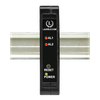
The LTS serial data input, analog output transmitter accepts streaming RS232 or RS485 serial data ASCII strings from an external device, like a scale, at rates up to 9600 baud. It converts this data to an (isolated), scalable 4-20 mA, 0-20 mA, 0-10V or -10V to +10V analog output. Two solid state relays are standard and can respond to readings or to received control characters. The LTS also accepts serial commands via the Modbus RTU or Laurel Custom ASCII protocols to set the analog output or relay state. The unit is housed in a transmitter case which is only 22.5 mm (0.89") thick and fits on a 35 mm DIN rail. Depending on the model, it can be powered by AC (85-264 Vac) or DC (10-48 Vdc).

Standard LTS features include:

  • Streaming serial data input, RS232 or RS485. The data to be converted to analog is specified using Laurel's free Instrument Setup Software. The user-selectable "Remote C" mode allows the number of characters in the data, preceding the data and following the data to be specified. In all cases, it is essential to know know the what ASCII characters are contained in each serial data transmission.
  • Commands via the Modbus RTU, Modbus ASCII or Custom ASCII protocols. For details, please or Modbus and Custom ASCII manuals. These commands can be used to set the analog output and the state of the unit's two relays. Modbus implementation is fully compliant with Modbus over Serial Line Specification V1.0 (2002) for operation, with up to 247 digital addresses.
  • 4-20 mA, 0-20 mA, 0-10V or -10V to +10V analog transmitter output, (isolated), jumper-selectable and user scalable. All selections provide 16-bit (0.0015%) resolution of output span and 0.02% output accuracy of readings from -999,999 to +999,999 counts. Output isolation from signal and power grounds eliminates potential ground loops.
  • Dual solid state relays for control or alarm, (isolated). Rated 120 mA at 140 Vac or 180 Vdc. The relays can respond to digital readings or to received control characters, or be commanded via the Modbus protocol or Custom ASCII protocol.
  • Transmitter programming via Laurel's Instrument Setup Software, which runs on a PC under MS Windows. This software can be downloaded from this website at no charge. The required cables from the transmitters to a PC com port are available from Laurel (P/N CBL02 and CBL04).
  • Up to 30 minutes of technical phone support. Programming requires an understanding of the ASCII characters in your streamed data. Setup assistance using screen sharing is built into the price of the LTS.

All signal conditioner board ranges are factory-calibrated, with calibration factors for each range securely stored in an onboard EEPROM. These factors can be scaled via software to accommodate external shunts, enabling field replacement of signal conditioner boards without necessitating recalibration of the associated transmitter. For optimal accuracy, factory recalibration is recommended annually. All Laurel Electronics instruments undergo factory calibration using the industry-leading Fluke calibrators, which are recalibrated yearly and certified traceable to national standards, ensuring the highest level of precision and reliability.

Programmable Streaming Input Modes

Six data conversion modes are user selectable to receive and process streaming data. The number of characters to be processed can be up to 7, including 6 digits and a decimal point. Include leading zeros, like 00300.0. The LTS is not plug and play. The format of the strings being received must be known in advance, including non-printing control characters. If you do not know the string format, contact tech support of the sending device's manufacturer, or use a terminal emulator program like HyperTerminal, PuTTY or RealTerm to view the actual transmitted characters.

  • Remote S processes single values without a digital address. An alarm character is optional.
  • Remote A processes single values with a digital address. An alarm character is optional.
  • Remote 1 processes the 1st of up to 4 readings embedded in a Laureate transmission.
  • Remote 2 processes the 2nd of up to 4 readings embedded in a Laureate transmission.
  • Remote 3 processes the 3rd of up to 4 readings embedded in a Laureate transmission.
  • Remote 4 processes the 4th of up to 4 readings embedded in a Laureate transmission.
  • Remote C can process readings embedden in long ASCII strings. Specify the start character at the beginning of the string, the number of characters following the start chracter to be ignored, the number of characters to be processed following the lastignored character, and the stop character at the end of the string.

Programmable Command Modes

A Master, which can be a PC, PLC or other programmable device, can send digital values to an LTS transmitter to cause it to output specifc analog signals and actuate alarms. Ether the Modbus RTU protocol or Laurel's simpler Customer ASCII protocol can be used for commands. Both support digital addressing.

  • The Modbus RTU protocol uses Function Code FC10, Holding Register 006C, and data as 4 hexadecimal bytes.
  • The Custom ASCII protocol uses the string *1K followed by the decimal reading and by <CR>

Connecting Laureate LTS Transmitters to a Local Area Network (LAN)

Up to 30 Laureate LTS Transmitters and/or Digital Panel Meters can be configured for RS485 and daisy-chained to an LTS Transmitter using Laurel’s High Speed Ethernet-to-RS485 converter board for seamless LAN integration. Alternatively, Laurel LTE series Ethernet transmitters can connect directly to a LAN via an Ethernet cable. Setup for both configurations is streamlined using Laurel’s free Instrument Setup Software, which simplifies node discovery and transmitter configuration.

Flexible Communication Options for LTS Transmitters

Laureate Transmitters can be equipped with Laurel communication boards to support various interfaces and protocols. These include serial interfaces with ASCII or Modbus RTU protocols, and Ethernet interfaces with web access, ASCII, or Modbus TCP/IP protocols, ensuring versatile connectivity for your commercial applications.

Supplier's Site

Technical Specifications

  Laurel Electronics LLC
Product Category Sensor Transmitters
Product Number LTS60
Product Name LTS Series DIN Rail Transmitter for RS232/485 Serial-to-Analog Converter
Outputs Analog Current Output; Analog Voltage Output
Unlock Full Specs
to access all available technical data

Similar Products

LTE DIN Rail Analog Transmitter with Ethernet Communication and Analog outputs for Thermocouple Temperature - LTE20JC - Laurel Electronics LLC
Specs
Outputs Ethernet; Analog Current Output; Analog Voltage Output
Form Factor DIN Rail
Inputs Thermocouple Input
View Details
LT DIN Rail Digital Transmitter with Serial Data Communication and Analog outputs for Time of Periodic Events - LT60FR - Laurel Electronics LLC
Specs
Outputs Analog Current Output; Analog Voltage Output
Form Factor DIN Rail
Excitation & Features Voltage
View Details
LTE DIN Rail Analog Transmitter with Ethernet Communication and Analog outputs for RTD Temperature - LTE20P385C - Laurel Electronics LLC
Specs
Outputs Ethernet; Analog Current Output; Analog Voltage Output
Form Factor DIN Rail
Inputs RTD Input
View Details
LT DIN Rail Analog Transmitter with Serial Data Communication and Analog outputs for True RMS AC Voltage and Current - LT20RMV1 - Laurel Electronics LLC
Specs
Outputs Analog Current Output; Analog Voltage Output
Form Factor DIN Rail
Operating Temperature -40 to 158 F (-40 to 70 C)
View Details