Laurel Electronics LLC LT DIN Rail Analog Transmitter with Serial Data Communication and Analog outputs for Process and Ratiometric Signals LT20P

Description
Features 200 mV, 2V, 20V, 200V, 300V & 600V DC voltage input ranges 2, 20, 200 mA and 5A DC current input ranges Accuracy ±0.01% of reading ± 2 counts Absolute and ratiometric mode for bridges and potentiometers Error less than 0.01% of full scale for absolute ranges, less than 0.01% of reading for ratiometric measurements All input ranges are user selectable and factory calibrated Up to 60 conversions per second, Ideal for peak or valley capture Digital span adjust from 0 to ±99,999, zero adjust from -99,999 to +99,999 4-20 mA, 0-20 mA, 0-10V or -10V to +10V transmitter output, (isolated) Analog output resolution 0.0015% of span, accuracy ±0.02% of span RS232 or RS485 serial data, Modbus or Laurel ASCII protocol (isolated) Dual 120 mA solid state relays for alarm or control (isolated) 5V, 10V, 12V, or 24V dc transducer excitation output (isolated) Power 85-264 Vac / 90-300 Vdc or 10-48 Vdc / 12-32 Vac (isolated) DIN rail mount housing, 22.5 mm wide, detachable screw-clamp connectors Operating temperature from -40°C to 70°C (-40°F to 158°F) Optional - Extended allows up to 180 data points for custom curve linearization and a rate derived from consecutive readings. The Laureate™ LT Series DIN rail analog transmitter with serial data communication and analog outputs for versatile connectivity. The digitally programmable transmitter features two relays for alarm or control. The series offers exceptional accuracy of 0.01% of reading ± 2 counts, with high read rates at up to 60 or 50 conversions per second. The LT Series transmitters offer the same high performance, signal conditioning, and programmable features as Laureate digital panel meters, counters, and timers. The Laureate 4-20 mA, 0-20 mA, 0-10V or -10V to +10V and RS232/RS485 output transmitter for process signal input provides zero and span adjustment for use with a wide range of industrial transducers. Six DC voltage and four DC current input ranges are jumper selectable. The two most sensitive voltage ranges, 200.00 mV and 2.0000V, provide a high input impedance of 1 GΩ to minimize the load on the voltage signal. The transmitter can be set to a ratio (or potentiometer follower) mode by making selections at the connector and in software. In this mode, the transmitter output tracks a ratio of the applied excitation voltage and is unaffected by changes in the excitation voltage. Ratiometric measurements provide an exceptional accuracy of 0.01% of reading ± 2 counts. This capability is used with the transmitter's 5V or 10V excitation output for load cells and Wheatstone bridges, and with the transmitter's 5V excitation output for potentiometers which track wiper position. All signal conditioner board ranges are factory-calibrated, with calibration factors for each range securely stored in an onboard EEPROM. These factors can be scaled via software to accommodate external shunts, enabling field replacement of signal conditioner boards without necessitating recalibration of the associated transmitter. For optimal accuracy, factory recalibration is recommended annually. All Laurel Electronics instruments undergo factory calibration using the industry-leading Fluke calibrators, which are recalibrated yearly and certified traceable to national standards, ensuring the highest level of precision and reliability. The optional extended Laureate computer board enhances Laureate transmitter by displaying rates derived from successive readings and enabling highly accurate custom curve linearization. For example, it can calculate liquid volume or flow rate in a horizontal cylindrical tank using levels from a 4-20 mA transmitter. Setup is straightforward: users input up to 180 data points into a spreadsheet or text file, and the computer calculates spline-fit segments, which are then downloaded to the transmitter for precise operation. Laureate Transmitters are easily programmed with Laurel’s free Instrument Setup Software, downloadable from our website and compatible with Windows PCs, requiring a data interface board for setup. High read rate of up to 50 or 60 conversions per second, the Laureate™ LT Series transmitter uses Concurrent Slope (US Pat. 5,262,780) analog-to-digital conversion to integrate signals over a full power line cycle (50 Hz or 60 Hz). This read rate enables peak and valley capture, real-time computer interfacing, and control applications. Peak and valley values are automatically captured and can be viewed using Laurel’s free Instrument Setup Software (compatible with Windows PCs) or transmitted as serial data. Standard Hardware Features of Laureate LT Transmitters Include: Serial communications output, (isolated), RS232 or RS485 (half or full duplex), jumper selectable. Three protocols are user selectable: Modbus RTU, Modbus ASCII, or Laurel ASCII. Modbus operation is fully compliant with Modbus Over Serial Line Specification V1.0 (2002). The Laurel ASCII protocol is simpler than the Modbus protocol and is recommended when all devices are Laureates. 4-20 mA, 0-10V or -10V to +10V analog transmitter output, (isolated), jumper-selectable and user scalable. All selections provide 0.0015% resolution of output span and 0.02% output accuracy of a reading from -99,999 to +99,999 counts that is also transmitted digitally. Output isolation from signal and power grounds eliminates potential ground loop problems. Note that Ethernet data I/O is provided by Laurel's LTE series transmitters. Dual solid state relays, (isolated), for alarm or control. Rated 120 mA at 130 Vac or 180 Vdc. Selectable transducer excitation output, (isolated), user selectable 5V@100 mA, 10V@120 mA, 12V@100mA, or 24V@50 mA. Power 85-264 Vac, (isolated), low-voltage 10-48 Vdc or 12-32 Vac power is optional. Digital signal filtering modes can be selected to ensure stable readings in electrically noisy environments. An unfiltered selection provides true peak and valley readings and aids in control applications. A batch average filter selection averages each 16 conversions. An adaptive moving average filter selection provides a choice of 8 time constants from 80 ms to 9.6 seconds. When a significant change in signal level occurs, the filter adapts by briefly switching to the shortest time to follow the change, then reverts back to its selected time constant. An Auto setting selects the time constant selection based on signal noise. Two tare functions: auto-tare and manual tare. In auto-tare, an input line is grounded by an external pushbutton. This causes the current weight, which is normally the empty weight of the container to be stored in memory as an offset. In manual tare, the tare value can be entered manually via a control input pushbutton or using Laurel's free Instrument Setup Software. Peak and valley values are automatically captured. These may be displayed via Laurel's free Instrument Setup Software, which runs on a PC under MS Windows or can be transmitted as serial data. Two control inputs (CMOS/TTL levels, logic 0 = tied to digital ground, logic 1 = open) or dry contacts that can be set to control / activate 14 transmitter commands. An (isolated) 5, 10, 12, or 24 Vdc excitation output is standard to power transducers or two-wire transmitters. Ratiometric operation, which automatically compensates for changes in the applied excitation, is jumper selectable for applications, such as bridges, where the signal to be measured is proportional to the excitation level. LT series DIN rail Transmitters & signal conditioners can be interfaced to a wide range of sensors and transducers using one of seven available plug-in signal conditioner boards. The transmitters duplicate the high performance (high accuracy and high read rate) and extensive programmable features of Laureate 1/8 DIN digital panel meters, counters, and timers. They utilize the same signal conditioners boards, much of the same firmware, and Laurel's free Windows-based Instrument Setup Software. They come in a compact DIN rail mount package with detachable screw-clamp connectors for easy wiring. The LT series Transmitters feature isolated, user-selectable analog outputs (4-20 mA, 0-20 mA, 0-10V, or -10V to +10V), an RS232 or RS485 serial data interface, and dual 120 mA solid state AC/DC relays. Most models, except those with temperature or AC RMS signal conditioners, include an isolated 5, 10, 12, or 24 Vdc transducer excitation output. Connecting Laureate LT Transmitters to a Local Area Network (LAN) Up to 30 Laureate LT Transmitters and/or Digital Panel Meters can be configured for RS485 and daisy-chained to an LT Transmitter for seamless LAN integration. Alternatively, Laurel LTE series Ethernet transmitters can connect directly to a LAN via an Ethernet cable. Setup for both configurations is streamlined using Laurel’s free Instrument Setup Software, which simplifies node discovery and transmitter configuration. Flexible Communication Options for LT Transmitters Laureate Transmitters can be equipped with Laurel communication boards to support various interfaces and protocols. These include serial interfaces with ASCII or Modbus RTU protocols, and Ethernet interfaces with web access, ASCII, or Modbus TCP/IP protocols, ensuring versatile connectivity for your commercial applications.
Request a Quote
Description
Features 200 mV, 2V, 20V, 200V, 300V & 600V DC voltage input ranges 2, 20, 200 mA and 5A DC current input ranges Accuracy ±0.01% of reading ± 2 counts Absolute and ratiometric mode for bridges and potentiometers Error less than 0.01% of full scale for absolute ranges, less than 0.01% of reading for ratiometric measurements All input ranges are user selectable and factory calibrated Up to 60 conversions per second, Ideal for peak or valley capture Digital span adjust from 0 to ±99,999, zero adjust from -99,999 to +99,999 4-20 mA, 0-20 mA, 0-10V or -10V to +10V transmitter output, (isolated) Analog output resolution 0.0015% of span, accuracy ±0.02% of span RS232 or RS485 serial data, Modbus or Laurel ASCII protocol (isolated) Dual 120 mA solid state relays for alarm or control (isolated) 5V, 10V, 12V, or 24V dc transducer excitation output (isolated) Power 85-264 Vac / 90-300 Vdc or 10-48 Vdc / 12-32 Vac (isolated) DIN rail mount housing, 22.5 mm wide, detachable screw-clamp connectors Operating temperature from -40°C to 70°C (-40°F to 158°F) Optional - Extended allows up to 180 data points for custom curve linearization and a rate derived from consecutive readings. The Laureate™ LT Series DIN rail analog transmitter with serial data communication and analog outputs for versatile connectivity. The digitally programmable transmitter features two relays for alarm or control. The series offers exceptional accuracy of 0.01% of reading ± 2 counts, with high read rates at up to 60 or 50 conversions per second. The LT Series transmitters offer the same high performance, signal conditioning, and programmable features as Laureate digital panel meters, counters, and timers. The Laureate 4-20 mA, 0-20 mA, 0-10V or -10V to +10V and RS232/RS485 output transmitter for process signal input provides zero and span adjustment for use with a wide range of industrial transducers. Six DC voltage and four DC current input ranges are jumper selectable. The two most sensitive voltage ranges, 200.00 mV and 2.0000V, provide a high input impedance of 1 GΩ to minimize the load on the voltage signal. The transmitter can be set to a ratio (or potentiometer follower) mode by making selections at the connector and in software. In this mode, the transmitter output tracks a ratio of the applied excitation voltage and is unaffected by changes in the excitation voltage. Ratiometric measurements provide an exceptional accuracy of 0.01% of reading ± 2 counts. This capability is used with the transmitter's 5V or 10V excitation output for load cells and Wheatstone bridges, and with the transmitter's 5V excitation output for potentiometers which track wiper position. All signal conditioner board ranges are factory-calibrated, with calibration factors for each range securely stored in an onboard EEPROM. These factors can be scaled via software to accommodate external shunts, enabling field replacement of signal conditioner boards without necessitating recalibration of the associated transmitter. For optimal accuracy, factory recalibration is recommended annually. All Laurel Electronics instruments undergo factory calibration using the industry-leading Fluke calibrators, which are recalibrated yearly and certified traceable to national standards, ensuring the highest level of precision and reliability. The optional extended Laureate computer board enhances Laureate transmitter by displaying rates derived from successive readings and enabling highly accurate custom curve linearization. For example, it can calculate liquid volume or flow rate in a horizontal cylindrical tank using levels from a 4-20 mA transmitter. Setup is straightforward: users input up to 180 data points into a spreadsheet or text file, and the computer calculates spline-fit segments, which are then downloaded to the transmitter for precise operation. Laureate Transmitters are easily programmed with Laurel’s free Instrument Setup Software, downloadable from our website and compatible with Windows PCs, requiring a data interface board for setup. High read rate of up to 50 or 60 conversions per second, the Laureate™ LT Series transmitter uses Concurrent Slope (US Pat. 5,262,780) analog-to-digital conversion to integrate signals over a full power line cycle (50 Hz or 60 Hz). This read rate enables peak and valley capture, real-time computer interfacing, and control applications. Peak and valley values are automatically captured and can be viewed using Laurel’s free Instrument Setup Software (compatible with Windows PCs) or transmitted as serial data. Standard Hardware Features of Laureate LT Transmitters Include: Serial communications output, (isolated), RS232 or RS485 (half or full duplex), jumper selectable. Three protocols are user selectable: Modbus RTU, Modbus ASCII, or Laurel ASCII. Modbus operation is fully compliant with Modbus Over Serial Line Specification V1.0 (2002). The Laurel ASCII protocol is simpler than the Modbus protocol and is recommended when all devices are Laureates. 4-20 mA, 0-10V or -10V to +10V analog transmitter output, (isolated), jumper-selectable and user scalable. All selections provide 0.0015% resolution of output span and 0.02% output accuracy of a reading from -99,999 to +99,999 counts that is also transmitted digitally. Output isolation from signal and power grounds eliminates potential ground loop problems. Note that Ethernet data I/O is provided by Laurel's LTE series transmitters. Dual solid state relays, (isolated), for alarm or control. Rated 120 mA at 130 Vac or 180 Vdc. Selectable transducer excitation output, (isolated), user selectable 5V@100 mA, 10V@120 mA, 12V@100mA, or 24V@50 mA. Power 85-264 Vac, (isolated), low-voltage 10-48 Vdc or 12-32 Vac power is optional. Digital signal filtering modes can be selected to ensure stable readings in electrically noisy environments. An unfiltered selection provides true peak and valley readings and aids in control applications. A batch average filter selection averages each 16 conversions. An adaptive moving average filter selection provides a choice of 8 time constants from 80 ms to 9.6 seconds. When a significant change in signal level occurs, the filter adapts by briefly switching to the shortest time to follow the change, then reverts back to its selected time constant. An Auto setting selects the time constant selection based on signal noise. Two tare functions: auto-tare and manual tare. In auto-tare, an input line is grounded by an external pushbutton. This causes the current weight, which is normally the empty weight of the container to be stored in memory as an offset. In manual tare, the tare value can be entered manually via a control input pushbutton or using Laurel's free Instrument Setup Software. Peak and valley values are automatically captured. These may be displayed via Laurel's free Instrument Setup Software, which runs on a PC under MS Windows or can be transmitted as serial data. Two control inputs (CMOS/TTL levels, logic 0 = tied to digital ground, logic 1 = open) or dry contacts that can be set to control / activate 14 transmitter commands. An (isolated) 5, 10, 12, or 24 Vdc excitation output is standard to power transducers or two-wire transmitters. Ratiometric operation, which automatically compensates for changes in the applied excitation, is jumper selectable for applications, such as bridges, where the signal to be measured is proportional to the excitation level. LT series DIN rail Transmitters & signal conditioners can be interfaced to a wide range of sensors and transducers using one of seven available plug-in signal conditioner boards. The transmitters duplicate the high performance (high accuracy and high read rate) and extensive programmable features of Laureate 1/8 DIN digital panel meters, counters, and timers. They utilize the same signal conditioners boards, much of the same firmware, and Laurel's free Windows-based Instrument Setup Software. They come in a compact DIN rail mount package with detachable screw-clamp connectors for easy wiring. The LT series Transmitters feature isolated, user-selectable analog outputs (4-20 mA, 0-20 mA, 0-10V, or -10V to +10V), an RS232 or RS485 serial data interface, and dual 120 mA solid state AC/DC relays. Most models, except those with temperature or AC RMS signal conditioners, include an isolated 5, 10, 12, or 24 Vdc transducer excitation output. Connecting Laureate LT Transmitters to a Local Area Network (LAN) Up to 30 Laureate LT Transmitters and/or Digital Panel Meters can be configured for RS485 and daisy-chained to an LT Transmitter for seamless LAN integration. Alternatively, Laurel LTE series Ethernet transmitters can connect directly to a LAN via an Ethernet cable. Setup for both configurations is streamlined using Laurel’s free Instrument Setup Software, which simplifies node discovery and transmitter configuration. Flexible Communication Options for LT Transmitters Laureate Transmitters can be equipped with Laurel communication boards to support various interfaces and protocols. These include serial interfaces with ASCII or Modbus RTU protocols, and Ethernet interfaces with web access, ASCII, or Modbus TCP/IP protocols, ensuring versatile connectivity for your commercial applications.
Request a Quote

Suppliers

Company
Product
Description
Supplier Links
LT DIN Rail Analog Transmitter with Serial Data Communication and Analog outputs for Process and Ratiometric Signals - LT20P - Laurel Electronics LLC
Costa Mesa, CA, United States
LT DIN Rail Analog Transmitter with Serial Data Communication and Analog outputs for Process and Ratiometric Signals
LT20P
LT DIN Rail Analog Transmitter with Serial Data Communication and Analog outputs for Process and Ratiometric Signals LT20P
Features 200 mV, 2V, 20V, 200V, 300V & 600V DC voltage input ranges 2, 20, 200 mA and 5A DC current input ranges Accuracy ±0.01% of reading ± 2 counts Absolute and ratiometric mode for bridges and potentiometers Error less than 0.01% of full scale for absolute ranges, less than 0.01% of reading for ratiometric measurements All input ranges are user selectable and factory calibrated Up to 60 conversions per second, Ideal for peak or valley capture Digital span adjust from 0 to ±99,999, zero adjust from -99,999 to +99,999 4-20 mA, 0-20 mA, 0-10V or -10V to +10V transmitter output, (isolated) Analog output resolution 0.0015% of span, accuracy ±0.02% of span RS232 or RS485 serial data, Modbus or Laurel ASCII protocol (isolated) Dual 120 mA solid state relays for alarm or control (isolated) 5V, 10V, 12V, or 24V dc transducer excitation output (isolated) Power 85-264 Vac / 90-300 Vdc or 10-48 Vdc / 12-32 Vac (isolated) DIN rail mount housing, 22.5 mm wide, detachable screw-clamp connectors Operating temperature from -40°C to 70°C (-40°F to 158°F) Optional - Extended allows up to 180 data points for custom curve linearization and a rate derived from consecutive readings. The Laureate™ LT Series DIN rail analog transmitter with serial data communication and analog outputs for versatile connectivity. The digitally programmable transmitter features two relays for alarm or control. The series offers exceptional accuracy of 0.01% of reading ± 2 counts, with high read rates at up to 60 or 50 conversions per second. The LT Series transmitters offer the same high performance, signal conditioning, and programmable features as Laureate digital panel meters, counters, and timers. The Laureate 4-20 mA, 0-20 mA, 0-10V or -10V to +10V and RS232/RS485 output transmitter for process signal input provides zero and span adjustment for use with a wide range of industrial transducers. Six DC voltage and four DC current input ranges are jumper selectable. The two most sensitive voltage ranges, 200.00 mV and 2.0000V, provide a high input impedance of 1 GΩ to minimize the load on the voltage signal. The transmitter can be set to a ratio (or potentiometer follower) mode by making selections at the connector and in software. In this mode, the transmitter output tracks a ratio of the applied excitation voltage and is unaffected by changes in the excitation voltage. Ratiometric measurements provide an exceptional accuracy of 0.01% of reading ± 2 counts. This capability is used with the transmitter's 5V or 10V excitation output for load cells and Wheatstone bridges, and with the transmitter's 5V excitation output for potentiometers which track wiper position. All signal conditioner board ranges are factory-calibrated, with calibration factors for each range securely stored in an onboard EEPROM. These factors can be scaled via software to accommodate external shunts, enabling field replacement of signal conditioner boards without necessitating recalibration of the associated transmitter. For optimal accuracy, factory recalibration is recommended annually. All Laurel Electronics instruments undergo factory calibration using the industry-leading Fluke calibrators, which are recalibrated yearly and certified traceable to national standards, ensuring the highest level of precision and reliability. The optional extended Laureate computer board enhances Laureate transmitter by displaying rates derived from successive readings and enabling highly accurate custom curve linearization. For example, it can calculate liquid volume or flow rate in a horizontal cylindrical tank using levels from a 4-20 mA transmitter. Setup is straightforward: users input up to 180 data points into a spreadsheet or text file, and the computer calculates spline-fit segments, which are then downloaded to the transmitter for precise operation. Laureate Transmitters are easily programmed with Laurel’s free Instrument Setup Software, downloadable from our website and compatible with Windows PCs, requiring a data interface board for setup. High read rate of up to 50 or 60 conversions per second, the Laureate™ LT Series transmitter uses Concurrent Slope (US Pat. 5,262,780) analog-to-digital conversion to integrate signals over a full power line cycle (50 Hz or 60 Hz). This read rate enables peak and valley capture, real-time computer interfacing, and control applications. Peak and valley values are automatically captured and can be viewed using Laurel’s free Instrument Setup Software (compatible with Windows PCs) or transmitted as serial data. Standard Hardware Features of Laureate LT Transmitters Include: Serial communications output, (isolated), RS232 or RS485 (half or full duplex), jumper selectable. Three protocols are user selectable: Modbus RTU, Modbus ASCII, or Laurel ASCII. Modbus operation is fully compliant with Modbus Over Serial Line Specification V1.0 (2002). The Laurel ASCII protocol is simpler than the Modbus protocol and is recommended when all devices are Laureates. 4-20 mA, 0-10V or -10V to +10V analog transmitter output, (isolated), jumper-selectable and user scalable. All selections provide 0.0015% resolution of output span and 0.02% output accuracy of a reading from -99,999 to +99,999 counts that is also transmitted digitally. Output isolation from signal and power grounds eliminates potential ground loop problems. Note that Ethernet data I/O is provided by Laurel's LTE series transmitters. Dual solid state relays, (isolated), for alarm or control. Rated 120 mA at 130 Vac or 180 Vdc. Selectable transducer excitation output, (isolated), user selectable 5V@100 mA, 10V@120 mA, 12V@100mA, or 24V@50 mA. Power 85-264 Vac, (isolated), low-voltage 10-48 Vdc or 12-32 Vac power is optional. Digital signal filtering modes can be selected to ensure stable readings in electrically noisy environments. An unfiltered selection provides true peak and valley readings and aids in control applications. A batch average filter selection averages each 16 conversions. An adaptive moving average filter selection provides a choice of 8 time constants from 80 ms to 9.6 seconds. When a significant change in signal level occurs, the filter adapts by briefly switching to the shortest time to follow the change, then reverts back to its selected time constant. An Auto setting selects the time constant selection based on signal noise. Two tare functions: auto-tare and manual tare. In auto-tare, an input line is grounded by an external pushbutton. This causes the current weight, which is normally the empty weight of the container to be stored in memory as an offset. In manual tare, the tare value can be entered manually via a control input pushbutton or using Laurel's free Instrument Setup Software. Peak and valley values are automatically captured. These may be displayed via Laurel's free Instrument Setup Software, which runs on a PC under MS Windows or can be transmitted as serial data. Two control inputs (CMOS/TTL levels, logic 0 = tied to digital ground, logic 1 = open) or dry contacts that can be set to control / activate 14 transmitter commands. An (isolated) 5, 10, 12, or 24 Vdc excitation output is standard to power transducers or two-wire transmitters. Ratiometric operation, which automatically compensates for changes in the applied excitation, is jumper selectable for applications, such as bridges, where the signal to be measured is proportional to the excitation level. LT series DIN rail Transmitters & signal conditioners can be interfaced to a wide range of sensors and transducers using one of seven available plug-in signal conditioner boards. The transmitters duplicate the high performance (high accuracy and high read rate) and extensive programmable features of Laureate 1/8 DIN digital panel meters, counters, and timers. They utilize the same signal conditioners boards, much of the same firmware, and Laurel's free Windows-based Instrument Setup Software. They come in a compact DIN rail mount package with detachable screw-clamp connectors for easy wiring. The LT series Transmitters feature isolated, user-selectable analog outputs (4-20 mA, 0-20 mA, 0-10V, or -10V to +10V), an RS232 or RS485 serial data interface, and dual 120 mA solid state AC/DC relays. Most models, except those with temperature or AC RMS signal conditioners, include an isolated 5, 10, 12, or 24 Vdc transducer excitation output. Connecting Laureate LT Transmitters to a Local Area Network (LAN) Up to 30 Laureate LT Transmitters and/or Digital Panel Meters can be configured for RS485 and daisy-chained to an LT Transmitter for seamless LAN integration. Alternatively, Laurel LTE series Ethernet transmitters can connect directly to a LAN via an Ethernet cable. Setup for both configurations is streamlined using Laurel’s free Instrument Setup Software, which simplifies node discovery and transmitter configuration. Flexible Communication Options for LT Transmitters Laureate Transmitters can be equipped with Laurel communication boards to support various interfaces and protocols. These include serial interfaces with ASCII or Modbus RTU protocols, and Ethernet interfaces with web access, ASCII, or Modbus TCP/IP protocols, ensuring versatile connectivity for your commercial applications.

Features

  • 200 mV, 2V, 20V, 200V, 300V & 600V DC voltage input ranges
  • 2, 20, 200 mA and 5A DC current input ranges
  • Accuracy ±0.01% of reading ± 2 counts
  • Absolute and ratiometric mode for bridges and potentiometers
  • Error less than 0.01% of full scale for absolute ranges, less than 0.01% of reading for ratiometric measurements
  • All input ranges are user selectable and factory calibrated
  • Up to 60 conversions per second, Ideal for peak or valley capture
  • Digital span adjust from 0 to ±99,999, zero adjust from -99,999 to +99,999
  • 4-20 mA, 0-20 mA, 0-10V or -10V to +10V transmitter output, (isolated)
  • Analog output resolution 0.0015% of span, accuracy ±0.02% of span
  • RS232 or RS485 serial data, Modbus or Laurel ASCII protocol (isolated)
  • Dual 120 mA solid state relays for alarm or control (isolated)
  • 5V, 10V, 12V, or 24V dc transducer excitation output (isolated)
  • Power 85-264 Vac / 90-300 Vdc or 10-48 Vdc / 12-32 Vac (isolated)
  • DIN rail mount housing, 22.5 mm wide, detachable screw-clamp connectors
  • Operating temperature from -40°C to 70°C (-40°F to 158°F)
    Optional - Extended allows up to 180 data points for custom curve linearization and a rate derived from consecutive readings.

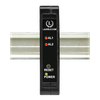
The Laureate™ LT Series DIN rail analog transmitter with serial data communication and analog outputs for versatile connectivity.

The digitally programmable transmitter features two relays for alarm or control. The series offers exceptional accuracy of 0.01% of reading ± 2 counts, with high read rates at up to 60 or 50 conversions per second. The LT Series transmitters offer the same high performance, signal conditioning, and programmable features as Laureate digital panel meters, counters, and timers.

The Laureate 4-20 mA, 0-20 mA, 0-10V or -10V to +10V and RS232/RS485 output transmitter for process signal input provides zero and span adjustment for use with a wide range of industrial transducers. Six DC voltage and four DC current input ranges are jumper selectable. The two most sensitive voltage ranges, 200.00 mV and 2.0000V, provide a high input impedance of 1 GΩ to minimize the load on the voltage signal.

The transmitter can be set to a ratio (or potentiometer follower) mode by making selections at the connector and in software. In this mode, the transmitter output tracks a ratio of the applied excitation voltage and is unaffected by changes in the excitation voltage. Ratiometric measurements provide an exceptional accuracy of 0.01% of reading ± 2 counts. This capability is used with the transmitter's 5V or 10V excitation output for load cells and Wheatstone bridges, and with the transmitter's 5V excitation output for potentiometers which track wiper position.

All signal conditioner board ranges are factory-calibrated, with calibration factors for each range securely stored in an onboard EEPROM. These factors can be scaled via software to accommodate external shunts, enabling field replacement of signal conditioner boards without necessitating recalibration of the associated transmitter. For optimal accuracy, factory recalibration is recommended annually. All Laurel Electronics instruments undergo factory calibration using the industry-leading Fluke calibrators, which are recalibrated yearly and certified traceable to national standards, ensuring the highest level of precision and reliability.

The optional extended Laureate computer board enhances Laureate transmitter by displaying rates derived from successive readings and enabling highly accurate custom curve linearization. For example, it can calculate liquid volume or flow rate in a horizontal cylindrical tank using levels from a 4-20 mA transmitter. Setup is straightforward: users input up to 180 data points into a spreadsheet or text file, and the computer calculates spline-fit segments, which are then downloaded to the transmitter for precise operation.

Laureate Transmitters are easily programmed with Laurel’s free Instrument Setup Software, downloadable from our website and compatible with Windows PCs, requiring a data interface board for setup.

High read rate of up to 50 or 60 conversions per second, the Laureate™ LT Series transmitter uses Concurrent Slope (US Pat. 5,262,780) analog-to-digital conversion to integrate signals over a full power line cycle (50 Hz or 60 Hz). This read rate enables peak and valley capture, real-time computer interfacing, and control applications. Peak and valley values are automatically captured and can be viewed using Laurel’s free Instrument Setup Software (compatible with Windows PCs) or transmitted as serial data.

Standard Hardware Features of Laureate LT Transmitters Include:

  • Serial communications output, (isolated), RS232 or RS485 (half or full duplex), jumper selectable. Three protocols are user selectable: Modbus RTU, Modbus ASCII, or Laurel ASCII. Modbus operation is fully compliant with Modbus Over Serial Line Specification V1.0 (2002). The Laurel ASCII protocol is simpler than the Modbus protocol and is recommended when all devices are Laureates.
  • 4-20 mA, 0-10V or -10V to +10V analog transmitter output, (isolated), jumper-selectable and user scalable. All selections provide 0.0015% resolution of output span and 0.02% output accuracy of a reading from -99,999 to +99,999 counts that is also transmitted digitally. Output isolation from signal and power grounds eliminates potential ground loop problems. Note that Ethernet data I/O is provided by Laurel's LTE series transmitters.
  • Dual solid state relays, (isolated), for alarm or control. Rated 120 mA at 130 Vac or 180 Vdc.
  • Selectable transducer excitation output, (isolated), user selectable 5V@100 mA, 10V@120 mA, 12V@100mA, or 24V@50 mA.
  • Power 85-264 Vac, (isolated), low-voltage 10-48 Vdc or 12-32 Vac power is optional.

Digital signal filtering modes can be selected to ensure stable readings in electrically noisy environments.


  • An unfiltered selection provides true peak and valley readings and aids in control applications.
  • A batch average filter selection averages each 16 conversions.
  • An adaptive moving average filter selection provides a choice of 8 time constants from 80 ms to 9.6 seconds. When a significant change in signal level occurs, the filter adapts by briefly switching to the shortest time to follow the change, then reverts back to its selected time constant. An Auto setting selects the time constant selection based on signal noise.

Two tare functions: auto-tare and manual tare. In auto-tare, an input line is grounded by an external pushbutton. This causes the current weight, which is normally the empty weight of the container to be stored in memory as an offset. In manual tare, the tare value can be entered manually via a control input pushbutton or using Laurel's free Instrument Setup Software.

Peak and valley values are automatically captured. These may be displayed via Laurel's free Instrument Setup Software, which runs on a PC under MS Windows or can be transmitted as serial data.

Two control inputs (CMOS/TTL levels, logic 0 = tied to digital ground, logic 1 = open) or dry contacts that can be set to control / activate 14 transmitter commands.

An (isolated) 5, 10, 12, or 24 Vdc excitation output is standard to power transducers or two-wire transmitters. Ratiometric operation, which automatically compensates for changes in the applied excitation, is jumper selectable for applications, such as bridges, where the signal to be measured is proportional to the excitation level.

LT series DIN rail Transmitters & signal conditioners can be interfaced to a wide range of sensors and transducers using one of seven available plug-in signal conditioner boards. The transmitters duplicate the high performance (high accuracy and high read rate) and extensive programmable features of Laureate 1/8 DIN digital panel meters, counters, and timers. They utilize the same signal conditioners boards, much of the same firmware, and Laurel's free Windows-based Instrument Setup Software. They come in a compact DIN rail mount package with detachable screw-clamp connectors for easy wiring.

The LT series Transmitters feature isolated, user-selectable analog outputs (4-20 mA, 0-20 mA, 0-10V, or -10V to +10V), an RS232 or RS485 serial data interface, and dual 120 mA solid state AC/DC relays. Most models, except those with temperature or AC RMS signal conditioners, include an isolated 5, 10, 12, or 24 Vdc transducer excitation output.


Connecting Laureate LT Transmitters to a Local Area Network (LAN)

Up to 30 Laureate LT Transmitters and/or Digital Panel Meters can be configured for RS485 and daisy-chained to an LT Transmitter for seamless LAN integration. Alternatively, Laurel LTE series Ethernet transmitters can connect directly to a LAN via an Ethernet cable. Setup for both configurations is streamlined using Laurel’s free Instrument Setup Software, which simplifies node discovery and transmitter configuration.

Flexible Communication Options for LT Transmitters

Laureate Transmitters can be equipped with Laurel communication boards to support various interfaces and protocols. These include serial interfaces with ASCII or Modbus RTU protocols, and Ethernet interfaces with web access, ASCII, or Modbus TCP/IP protocols, ensuring versatile connectivity for your commercial applications.

Supplier's Site

Technical Specifications

  Laurel Electronics LLC
Product Category Sensor Transmitters
Product Number LT20P
Product Name LT DIN Rail Analog Transmitter with Serial Data Communication and Analog outputs for Process and Ratiometric Signals
Outputs Analog Current Output; Analog Voltage Output
Unlock Full Specs
to access all available technical data

Similar Products

LTE DIN Rail Analog Transmitter with Ethernet Communication and Analog outputs for Process and Ratiometric Signals - LTE20P - Laurel Electronics LLC
Specs
Outputs Ethernet; Analog Current Output; Analog Voltage Output
Form Factor DIN Rail
Excitation & Features Voltage
View Details
LTE DIN Rail Analog Transmitter with Ethernet Communication and Analog outputs for Resistance in Ohms - LTE20R1 - Laurel Electronics LLC
Specs
Outputs Ethernet; Analog Current Output; Analog Voltage Output
Form Factor DIN Rail
Operating Temperature -40 to 158 F (-40 to 70 C)
View Details
LTE DIN Rail Digital Transmitter with Ethernet Communication and Analog outputs for Time of Periodic Events - LTE60FR - Laurel Electronics LLC
Specs
Outputs Ethernet; Analog Current Output; Analog Voltage Output
Form Factor DIN Rail
Excitation & Features Voltage
View Details
LTE DIN Rail Analog Transmitter with Ethernet Communication and Analog outputs for Weighing Applications - LTE20SG - Laurel Electronics LLC
Specs
Outputs Ethernet
Form Factor DIN Rail
Excitation & Features Voltage
View Details