Kipp & Zonen, Inc. Radiometer SUV-E UV

Description
Easy to install and to access data Excellent directional response Precise temperature correction Extremely low power consumption RS-485 Modbus® RTU digital output 0 to 1 V analogue output The new SUV series offers a measurement solution for every part of the ultraviolet solar radiation spectrum. The successful SUV5 total UV radiometer has been re-engineered into dedicated UVA, UVB and UVE (UV Index) models to make a range that is smarter than alternatives; thanks to the latest detector technology, digital signal processing and Modbus® output. Kipp & Zonen’s unique UVIATOR software improves measurement results by correcting for solar angle and ozone column effects. Download the free UVIATOR software. The difference between UVA, UVB and UVC What is ultraviolet radiation? Ultraviolet (UV) radiation is part of the Sun’s light spectrum that reaches the earth. UV radiation breaks down into wavelengths that are invisible to the naked eye. There are three types of UV rays: UVA, UVB and UVC. They decrease in wavelength from A to C but increase in intensity, meaning that the shorter the wavelength, the more potential for damage. Fortunately, only UVA and UVB rays can penetrate the earth’s atmosphere. With the new SUV-A and SUV-B you can measure both single wavelenghts. UVE Limited amount reaches the earth's surface (mainly absorbed by atmosphere) Is considered a risk factor for skin cancer Corresponds with the sensitivity of the human skin Is found in man-made sources of UVC radiation (mercury lamps, welding torches) Is used in to calculate the UV-index UV Index SUV-E measures according to ISO 17166:1999 and CIE/S 007/E-1999 the erythemally active UV radiation that causes harm to human skin. It converts the irradiance in W/m2 into the UV Index for public health information.
Datasheet
Description
Easy to install and to access data Excellent directional response Precise temperature correction Extremely low power consumption RS-485 Modbus® RTU digital output 0 to 1 V analogue output The new SUV series offers a measurement solution for every part of the ultraviolet solar radiation spectrum. The successful SUV5 total UV radiometer has been re-engineered into dedicated UVA, UVB and UVE (UV Index) models to make a range that is smarter than alternatives; thanks to the latest detector technology, digital signal processing and Modbus® output. Kipp & Zonen’s unique UVIATOR software improves measurement results by correcting for solar angle and ozone column effects. Download the free UVIATOR software. The difference between UVA, UVB and UVC What is ultraviolet radiation? Ultraviolet (UV) radiation is part of the Sun’s light spectrum that reaches the earth. UV radiation breaks down into wavelengths that are invisible to the naked eye. There are three types of UV rays: UVA, UVB and UVC. They decrease in wavelength from A to C but increase in intensity, meaning that the shorter the wavelength, the more potential for damage. Fortunately, only UVA and UVB rays can penetrate the earth’s atmosphere. With the new SUV-A and SUV-B you can measure both single wavelenghts. UVE Limited amount reaches the earth's surface (mainly absorbed by atmosphere) Is considered a risk factor for skin cancer Corresponds with the sensitivity of the human skin Is found in man-made sources of UVC radiation (mercury lamps, welding torches) Is used in to calculate the UV-index UV Index SUV-E measures according to ISO 17166:1999 and CIE/S 007/E-1999 the erythemally active UV radiation that causes harm to human skin. It converts the irradiance in W/m2 into the UV Index for public health information.
Datasheet

Suppliers

Company
Product
Description
Supplier Links
Radiometer - SUV-E UV - Kipp & Zonen, Inc.
Bohemia, NY, United States
Radiometer
SUV-E UV
Radiometer SUV-E UV
Easy to install and to access data Excellent directional response Precise temperature correction Extremely low power consumption RS-485 Modbus® RTU digital output 0 to 1 V analogue output The new SUV series offers a measurement solution for every part of the ultraviolet solar radiation spectrum. The successful SUV5 total UV radiometer has been re-engineered into dedicated UVA, UVB and UVE (UV Index) models to make a range that is smarter than alternatives; thanks to the latest detector technology, digital signal processing and Modbus® output. Kipp & Zonen’s unique UVIATOR software improves measurement results by correcting for solar angle and ozone column effects. Download the free UVIATOR software. The difference between UVA, UVB and UVC What is ultraviolet radiation? Ultraviolet (UV) radiation is part of the Sun’s light spectrum that reaches the earth. UV radiation breaks down into wavelengths that are invisible to the naked eye. There are three types of UV rays: UVA, UVB and UVC. They decrease in wavelength from A to C but increase in intensity, meaning that the shorter the wavelength, the more potential for damage. Fortunately, only UVA and UVB rays can penetrate the earth’s atmosphere. With the new SUV-A and SUV-B you can measure both single wavelenghts. UVE Limited amount reaches the earth's surface (mainly absorbed by atmosphere) Is considered a risk factor for skin cancer Corresponds with the sensitivity of the human skin Is found in man-made sources of UVC radiation (mercury lamps, welding torches) Is used in to calculate the UV-index UV Index SUV-E measures according to ISO 17166:1999 and CIE/S 007/E-1999 the erythemally active UV radiation that causes harm to human skin. It converts the irradiance in W/m2 into the UV Index for public health information.
  • Easy to install and to access data
  • Excellent directional response
  • Precise temperature correction
  • Extremely low power consumption
  • RS-485 Modbus® RTU digital output
  • 0 to 1 V analogue output

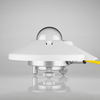
The new SUV series offers a measurement solution for every part of the ultraviolet solar radiation spectrum. The successful SUV5 total UV radiometer has been re-engineered into dedicated UVA, UVB and UVE (UV Index) models to make a range that is smarter than alternatives; thanks to the latest detector technology, digital signal processing and Modbus® output.

Kipp & Zonen’s unique UVIATOR software improves measurement results by correcting for solar angle and ozone column effects. Download the free UVIATOR software.

The difference between UVA, UVB and UVC
What is ultraviolet radiation?
Ultraviolet (UV) radiation is part of the Sun’s light spectrum that reaches the earth. UV radiation breaks down into wavelengths that are invisible to the naked eye. There are three types of UV rays: UVA, UVB and UVC. They decrease in wavelength from A to C but increase in intensity, meaning that the shorter the wavelength, the more potential for damage. Fortunately, only UVA and UVB rays can penetrate the earth’s atmosphere. With the new SUV-A and SUV-B you can measure both single wavelenghts.

UVE
Limited amount reaches the earth's surface (mainly absorbed by atmosphere)
Is considered a risk factor for skin cancer
Corresponds with the sensitivity of the human skin
Is found in man-made sources of UVC radiation (mercury lamps, welding torches)
Is used in to calculate the UV-index

UV Index
SUV-E measures according to ISO 17166:1999 and CIE/S 007/E-1999 the erythemally active UV radiation that causes harm to human skin. It converts the irradiance in W/m2 into the UV Index for public health information.

Supplier's Site Datasheet

Technical Specifications

  Kipp & Zonen, Inc.
Product Category Radiometers
Product Number SUV-E UV
Product Name Radiometer
Operating Temperature Range -40 to 70 C (-40 to 158 F)
Unlock Full Specs
to access all available technical data

Similar Products

Spectroradiometer - CS-2000A - Konica Minolta Sensing Americas, Inc.
Konica Minolta Sensing Americas, Inc.
Specs
Wavelength Range 380 to 780 nm (3800 to 7800 Å)
Operating Temperature Range 5 to 35 C (41 to 95 F)
Humidity Range 0.0 to 80 %
View Details
UV Radiometer for Spot Curing - OmniCure R2000 - Excelitas Technologies Corp.
Specs
Wavelength Range 250 to 1000 nm (2500 to 10000 Å)
Power Range 5 to 60000 mW/cm²
Accuracy 10 %
View Details