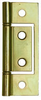
The advantage of a "no-mortise" hinge is that because the one leaf is set inside the other installation of the hinge leaves only a small gap between the door and frame .
For connecting doors, panels, or screens.
No-mortise hinges are a good choice for bi-fold doors.
This hinge will leave only a 1/16" gap between the door and frame or in the case of bi-fold doors between the two doors.
Made from steel base material.
Uses #5 x 3/4" flat head screws which are included.
Finishes:
Satin brass
HardwareSource, Inc.
Done
Description
The advantage of a "no-mortise" hinge is that because the one leaf is set inside the other installation of the hinge leaves only a small gap between the door and frame .
For connecting doors, panels, or screens.
No-mortise hinges are a good choice for bi-fold doors.
This hinge will leave only a 1/16" gap between the door and frame or in the case of bi-fold doors between the two doors.
Made from steel base material.
Uses #5 x 3/4" flat head screws which are included.
Finishes:
Satin brass
The advantage of a "no-mortise" hinge is that because the one leaf is set inside the other installation of the hinge leaves only a small gap between the door and frame .
For connecting doors, panels, or screens.
No-mortise hinges are a good choice for bi-fold doors.
This hinge will leave only a 1/16" gap between the door and frame or in the case of bi-fold doors between the two doors.
Made from steel base material.
Uses #5 x 3/4" flat head screws which are included.
Finishes:
Satin brass
The advantage of a "no-mortise" hinge is that because the one leaf is set inside the other installation of the hinge leaves only a small gap between the door and frame .
For connecting doors, panels, or screens.
No-mortise hinges are a good choice for bi-fold doors.
This hinge will leave only a 1/16" gap between the door and frame or in the case of bi-fold doors between the two doors.
Made from steel base material.
Uses #5 x 3/4" flat head screws which are included.