GL Communications, Inc. Multi-link Frame Relay (MFR)Emulation with Client-Server XX655

Description
Multi-Link Frame Relay, or MFR, is similar to Multi-Link PPP, and both are a form of inverse multiplexing. Users rely on inverse multiplexing when access line capacity does not scale smoothly, i.e. notice the big jumps in bandwidth from 56kbps, 1.544 Mbps, and 45 Mbps. In such cases, intermediate bandwidth must be derived by aggregating a number of smaller access lines into larger ones. MFR is used to derive a larger frame relay pipe by aggregating smaller frame relay pipes. For example, 5 T1 frame relay pipes could be bundled to appear as a single 7.5 Mbps frame relay pipe. Some of the advantages of using MFR are: better bandwidth sizing according to customer traffic requirements and potentially better QOS by minimizing delay. MFR works by bundling multiple T1 circuits into a multilink bundle and fragmenting the individual frame relay frames into fragments. These fragments are then transported in parallel over the multiple T1 circuits. At the other end, the fragments are reassembled into the original frame relay frames. The protocol includes the use of sequence numbers to allow the fragments to be reassembled correctly and to ensure that the reconstructed frames are sent out in the original order in which they entered the network. Main Features: Performs MFR as well as FR simulation on up to 16 T1/E1 lines Adheres to FRF.12 standards Support two simulation modes - FR and MFR FR links can be created on Full or Fractional Timeslots Group FR links to create a MFR bundle Dynamically add/remove (open/close) of Frame Relay links without loss in data Multiple MFR Bundles/FR links can be created with each bundle/link configured with multiple virtual channels for traffic tx/rx Generate and verify end to end traffic on each Virtual Channel Transmit and receive Ethernet traffic over T1E1 links by operating either in bridge or router mode User configurable FR/MFR packet and fragment size, bandwidth using flags, and maximum link differential delay Supports both Interface (UNI and NNI) and End-to-End fragmentation Supports various traffic source/sink types namely, Sequence Number, Binary File, Hex String, and pre-captured HDL files Supports various Byte level, Frame level , CRC error, and Frame error impairments at link level Supports various Byte level and Frame level impairments at Fragment/Packet level for each Virtual Channel Provides detailed statistics for each bundle and virtual channels associated with a bundle
Datasheet
Description
Multi-Link Frame Relay, or MFR, is similar to Multi-Link PPP, and both are a form of inverse multiplexing. Users rely on inverse multiplexing when access line capacity does not scale smoothly, i.e. notice the big jumps in bandwidth from 56kbps, 1.544 Mbps, and 45 Mbps. In such cases, intermediate bandwidth must be derived by aggregating a number of smaller access lines into larger ones. MFR is used to derive a larger frame relay pipe by aggregating smaller frame relay pipes. For example, 5 T1 frame relay pipes could be bundled to appear as a single 7.5 Mbps frame relay pipe. Some of the advantages of using MFR are: better bandwidth sizing according to customer traffic requirements and potentially better QOS by minimizing delay. MFR works by bundling multiple T1 circuits into a multilink bundle and fragmenting the individual frame relay frames into fragments. These fragments are then transported in parallel over the multiple T1 circuits. At the other end, the fragments are reassembled into the original frame relay frames. The protocol includes the use of sequence numbers to allow the fragments to be reassembled correctly and to ensure that the reconstructed frames are sent out in the original order in which they entered the network. Main Features: Performs MFR as well as FR simulation on up to 16 T1/E1 lines Adheres to FRF.12 standards Support two simulation modes - FR and MFR FR links can be created on Full or Fractional Timeslots Group FR links to create a MFR bundle Dynamically add/remove (open/close) of Frame Relay links without loss in data Multiple MFR Bundles/FR links can be created with each bundle/link configured with multiple virtual channels for traffic tx/rx Generate and verify end to end traffic on each Virtual Channel Transmit and receive Ethernet traffic over T1E1 links by operating either in bridge or router mode User configurable FR/MFR packet and fragment size, bandwidth using flags, and maximum link differential delay Supports both Interface (UNI and NNI) and End-to-End fragmentation Supports various traffic source/sink types namely, Sequence Number, Binary File, Hex String, and pre-captured HDL files Supports various Byte level, Frame level , CRC error, and Frame error impairments at link level Supports various Byte level and Frame level impairments at Fragment/Packet level for each Virtual Channel Provides detailed statistics for each bundle and virtual channels associated with a bundle
Datasheet

Suppliers

Company
Product
Description
Supplier Links
Multi-link Frame Relay (MFR)Emulation with Client-Server - XX655 - GL Communications, Inc.
Gaithersburg, MD, United States
Multi-link Frame Relay (MFR)Emulation with Client-Server
XX655
Multi-link Frame Relay (MFR)Emulation with Client-Server XX655
Multi-Link Frame Relay, or MFR, is similar to Multi-Link PPP, and both are a form of inverse multiplexing. Users rely on inverse multiplexing when access line capacity does not scale smoothly, i.e. notice the big jumps in bandwidth from 56kbps, 1.544 Mbps, and 45 Mbps. In such cases, intermediate bandwidth must be derived by aggregating a number of smaller access lines into larger ones. MFR is used to derive a larger frame relay pipe by aggregating smaller frame relay pipes. For example, 5 T1 frame relay pipes could be bundled to appear as a single 7.5 Mbps frame relay pipe. Some of the advantages of using MFR are: better bandwidth sizing according to customer traffic requirements and potentially better QOS by minimizing delay. MFR works by bundling multiple T1 circuits into a multilink bundle and fragmenting the individual frame relay frames into fragments. These fragments are then transported in parallel over the multiple T1 circuits. At the other end, the fragments are reassembled into the original frame relay frames. The protocol includes the use of sequence numbers to allow the fragments to be reassembled correctly and to ensure that the reconstructed frames are sent out in the original order in which they entered the network. Main Features: Performs MFR as well as FR simulation on up to 16 T1/E1 lines Adheres to FRF.12 standards Support two simulation modes - FR and MFR FR links can be created on Full or Fractional Timeslots Group FR links to create a MFR bundle Dynamically add/remove (open/close) of Frame Relay links without loss in data Multiple MFR Bundles/FR links can be created with each bundle/link configured with multiple virtual channels for traffic tx/rx Generate and verify end to end traffic on each Virtual Channel Transmit and receive Ethernet traffic over T1E1 links by operating either in bridge or router mode User configurable FR/MFR packet and fragment size, bandwidth using flags, and maximum link differential delay Supports both Interface (UNI and NNI) and End-to-End fragmentation Supports various traffic source/sink types namely, Sequence Number, Binary File, Hex String, and pre-captured HDL files Supports various Byte level, Frame level , CRC error, and Frame error impairments at link level Supports various Byte level and Frame level impairments at Fragment/Packet level for each Virtual Channel Provides detailed statistics for each bundle and virtual channels associated with a bundle

Multi-Link Frame Relay, or MFR, is similar to Multi-Link PPP, and both are a form of inverse multiplexing. Users rely on inverse multiplexing when access line capacity does not scale smoothly, i.e. notice the big jumps in bandwidth from 56kbps, 1.544 Mbps, and 45 Mbps. In such cases, intermediate bandwidth must be derived by aggregating a number of smaller access lines into larger ones. MFR is used to derive a larger frame relay pipe by aggregating smaller frame relay pipes. For example, 5 T1 frame relay pipes could be bundled to appear as a single 7.5 Mbps frame relay pipe. Some of the advantages of using MFR are: better bandwidth sizing according to customer traffic requirements and potentially better QOS by minimizing delay.

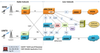
MFR works by bundling multiple T1 circuits into a multilink bundle and fragmenting the individual frame relay frames into fragments. These fragments are then transported in parallel over the multiple T1 circuits. At the other end, the fragments are reassembled into the original frame relay frames. The protocol includes the use of sequence numbers to allow the fragments to be reassembled correctly and to ensure that the reconstructed frames are sent out in the original order in which they entered the network.

Main Features:

  • Performs MFR as well as FR simulation on up to 16 T1/E1 lines
  • Adheres to FRF.12 standards
  • Support two simulation modes - FR and MFR
  • FR links can be created on Full or Fractional Timeslots
  • Group FR links to create a MFR bundle
  • Dynamically add/remove (open/close) of Frame Relay links without loss in data
  • Multiple MFR Bundles/FR links can be created with each bundle/link configured with multiple virtual channels for traffic tx/rx
  • Generate and verify end to end traffic on each Virtual Channel
  • Transmit and receive Ethernet traffic over T1E1 links by operating either in bridge or router mode
  • User configurable FR/MFR packet and fragment size, bandwidth using flags, and maximum link differential delay
  • Supports both Interface (UNI and NNI) and End-to-End fragmentation
  • Supports various traffic source/sink types namely, Sequence Number, Binary File, Hex String, and pre-captured HDL files
  • Supports various Byte level, Frame level , CRC error, and Frame error impairments at link level
  • Supports various Byte level and Frame level impairments at Fragment/Packet level for each Virtual Channel
  • Provides detailed statistics for each bundle and virtual channels associated with a bundle
Supplier's Site Datasheet

Technical Specifications

  GL Communications, Inc.
Product Category Network Test Equipment
Product Number XX655
Product Name Multi-link Frame Relay (MFR)Emulation with Client-Server
Network Protocol Frame Relay
Unlock Full Specs
to access all available technical data

Similar Products

Network Testers - 4250754 - RS Components, Ltd.
RS Components, Ltd.
Specs
Equipment Type Network Cable tester; Cable Tester
Port Type UTP
View Details
Profibus Diagnostic & Troubleshooting Device -  - Softing Inc. Industrial Automation
Softing Inc. Industrial Automation
Specs
Equipment Type Protocol Analyzer
View Details
Optical Modulation Index (OMI) Equipment - FOS 860A - M2 Optics, Inc.
Specs
Equipment Type Optical Test System
Number of Ports 2
Form Factor Desktop
View Details
BusTrACEr™ - Data Bus Analyzer and Monitor Software (DASO) - BU-69066 - Data Device Corporation (DDC)
Specs
Equipment Type Network / LAN Analyzer
Features Software Included
View Details