The Integrated Services Digital Network (ISDN) system allows voice, data and video to be transmitted simultaneously across the world using end-to-end digital connectivity. ISDN, based on the telephony network, was conceived to provide multiple voice and non-voice services over a single network and a digital user network interface over regular phone lines, instead of dedicated and isolated user-network interfaces.
ISDN is an integrated solution for providing basic telephony and data services, and additional supplementary telephony services. ISDN services are grouped in three service categories:
Bearer service
Teleservice
Supplementary service
The user-to-network interface is provided in two flavors:
Basic interface structure - two B-channels and one 16 Kbit/s D-channel (2B+D)
Primary rate B-channel interface structure - 30 B-channels and one 64 Kbit/s D-channel, (30B+D)
From the point of view of the OSI architecture, an ISDN line has a stack of three protocols
Layer 1 - Physical Layer
Layer 2 - Data Link Layer (known as LAPD protocol)
Layer 3 - Network Layer (the ISDN protocol)
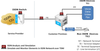
GL’s MAPS™-ISDN is an advanced protocol simulator/tester for ISDN simulation over TDM (T1 E1) and generates high volumes of ISDN traffic. The tester can simulate ISDN signaling as defined by ITU-T Q.931, 5ESS, 4ESS, BELL, DMS-100, DMS-250, and QSIG ECMA standards. MAPS™ application can also emulate signaling as per Q.921, referred to as LAPD (Link Access Protocol - D Channel), a Data Link protocol used over ISDN's D channel. This test tool is used to perform testing using ISDN and LAPD protocol messages over T1/E1, and offers a complete solution for testing, troubleshooting, and maintenance of devices and networks implementing PRI ISDN.
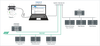
MAPS™-ISDN also incorporates the flexibility to modify ISDN and LAPD call parameters & message contents (arbitrary manipulation of messages, information elements and message sequence on the different protocols). This flexibility ensures that the MAPS™-ISDN communicates with the system under test. It is even possible to emulate a complete ISDN connection (switch to subscriber) all in the same PC with a dual interface card or dual portable analyzer unit.
The application is enhanced to support ISDN and LAPD conformance test suite to provide reliable communication over the network. MAPS™ ISDN and LAPD Conformance test suite is a product that helps service providers to check their ISDN network for conformity to its standard specifications - ITU-T Q.931 for ISDN and Q.921 for LAPD.
The ISDN Conformance test suite is used to conform various ISDN and LAPD call states over T1 E1, offering a complete solution for testing, troubleshooting, and maintenance of devices and networks implementing PRI ISDN. It is useful to test ISDN products designed for either U or S/T interface, including network terminations, Type 1 terminating equipment, and terminal adapters.
The application supports powerful utilities like Message Editor and Script Editor which allow new scenarios to be created or existing scenarios to be modified using ISDN messages and parameters.
GL also provides a GUI based ISDN protocol analyzer (optional application – xx100) for on-line capture and decode of the signaling in real-time both during tests and as a stand-alone tracer for live systems.
Main Features
ISDN Switch and Subscriber simulation over TDM (E1/T1)
Ability to generate high volumes of ISDN traffic over established calls – DTMF/MF digits, voice files, single /dual tones
Multiple T1/E1 line interfaces supported
Access to all ISDN Message Parameters such as Setup, Connect, Release messages, and more
Access to LAPD SABME, UA, RR, DISC signaling messages at layer 2.
Supports complete ISDN and LAPD conformance test suite
Simulated ISDN conformance call states include U0 (Null state), U01 (Call Initiated call), U3 (Outgoing call proceeding), U4 (Call delivered), U8 (Connect request), U10 (Active), U11 (Disconnect request), U19 (Release request), U25 (Overlap receiving), and R0 (Null state)
Simulated LAPD conformance call states include TEI Assigned state, Multiple Frame Established state, and Timer Recovery state
Example Scenarios in ISDN conformance Test Suite
Verification of Device behavior for events in a given state
Verification of Bearer capability negotiation
Verification of enbloc & overlap signaling
Verification and Validation of protocol related timers.
Sequence Number Verification in LAPD
Verification of Re-Transmission of messages in a given state.
Verification of State Variables V(S) and V(R) in LAPD
Verify if N(R) counter is using modulo 128 addition in LAPD
Provides various release cause codes such as rejected, no user response, user busy, congested, and so on to troubleshoot the problems in ISDN
Supports NFAS testing for T1 only
User controlled access to optional ISDN parameters such as timers
Impairments can be applied to messages to simulate error conditions
Ready-to-use scripts for quick testing
Bulk Call Simulation for Performance testing, Load testing, Functional testing, and Regression testing of network elements
The Integrated Services Digital Network (ISDN) system allows voice, data and video to be transmitted simultaneously across the world using end-to-end digital connectivity. ISDN, based on the telephony network, was conceived to provide multiple voice and non-voice services over a single network and a digital user network interface over regular phone lines, instead of dedicated and isolated user-network interfaces.
ISDN is an integrated solution for providing basic telephony and data services, and additional supplementary telephony services. ISDN services are grouped in three service categories:
- Bearer service
- Teleservice
- Supplementary service
The user-to-network interface is provided in two flavors:
- Basic interface structure - two B-channels and one 16 Kbit/s D-channel (2B+D)
- Primary rate B-channel interface structure - 30 B-channels and one 64 Kbit/s D-channel, (30B+D)
From the point of view of the OSI architecture, an ISDN line has a stack of three protocols
- Layer 1 - Physical Layer
- Layer 2 - Data Link Layer (known as LAPD protocol)
- Layer 3 - Network Layer (the ISDN protocol)
GL’s MAPS™-ISDN is an advanced protocol simulator/tester for ISDN simulation over TDM (T1 E1) and generates high volumes of ISDN traffic. The tester can simulate ISDN signaling as defined by ITU-T Q.931, 5ESS, 4ESS, BELL, DMS-100, DMS-250, and QSIG ECMA standards. MAPS™ application can also emulate signaling as per Q.921, referred to as LAPD (Link Access Protocol - D Channel), a Data Link protocol used over ISDN's D channel. This test tool is used to perform testing using ISDN and LAPD protocol messages over T1/E1, and offers a complete solution for testing, troubleshooting, and maintenance of devices and networks implementing PRI ISDN.
MAPS™-ISDN also incorporates the flexibility to modify ISDN and LAPD call parameters & message contents (arbitrary manipulation of messages, information elements and message sequence on the different protocols). This flexibility ensures that the MAPS™-ISDN communicates with the system under test. It is even possible to emulate a complete ISDN connection (switch to subscriber) all in the same PC with a dual interface card or dual portable analyzer unit.
The application is enhanced to support ISDN and LAPD conformance test suite to provide reliable communication over the network. MAPS™ ISDN and LAPD Conformance test suite is a product that helps service providers to check their ISDN network for conformity to its standard specifications - ITU-T Q.931 for ISDN and Q.921 for LAPD.
The ISDN Conformance test suite is used to conform various ISDN and LAPD call states over T1 E1, offering a complete solution for testing, troubleshooting, and maintenance of devices and networks implementing PRI ISDN. It is useful to test ISDN products designed for either U or S/T interface, including network terminations, Type 1 terminating equipment, and terminal adapters.
The application supports powerful utilities like Message Editor and Script Editor which allow new scenarios to be created or existing scenarios to be modified using ISDN messages and parameters.
GL also provides a GUI based ISDN protocol analyzer (optional application – xx100) for on-line capture and decode of the signaling in real-time both during tests and as a stand-alone tracer for live systems.
Main Features
- ISDN Switch and Subscriber simulation over TDM (E1/T1)
- Ability to generate high volumes of ISDN traffic over established calls – DTMF/MF digits, voice files, single /dual tones
- Multiple T1/E1 line interfaces supported
- Access to all ISDN Message Parameters such as Setup, Connect, Release messages, and more
- Access to LAPD SABME, UA, RR, DISC signaling messages at layer 2.
- Supports complete ISDN and LAPD conformance test suite
- Simulated ISDN conformance call states include U0 (Null state), U01 (Call Initiated call), U3 (Outgoing call proceeding), U4 (Call delivered), U8 (Connect request), U10 (Active), U11 (Disconnect request), U19 (Release request), U25 (Overlap receiving), and R0 (Null state)
- Simulated LAPD conformance call states include TEI Assigned state, Multiple Frame Established state, and Timer Recovery state
- Example Scenarios in ISDN conformance Test Suite
- Verification of Device behavior for events in a given state
- Verification of Bearer capability negotiation
- Verification of enbloc & overlap signaling
- Verification and Validation of protocol related timers.
- Sequence Number Verification in LAPD
- Verification of Re-Transmission of messages in a given state.
- Verification of State Variables V(S) and V(R) in LAPD
- Verify if N(R) counter is using modulo 128 addition in LAPD
- Provides various release cause codes such as rejected, no user response, user busy, congested, and so on to troubleshoot the problems in ISDN
- Supports NFAS testing for T1 only
- User controlled access to optional ISDN parameters such as timers
- Impairments can be applied to messages to simulate error conditions
- Ready-to-use scripts for quick testing
- Bulk Call Simulation for Performance testing, Load testing, Functional testing, and Regression testing of network elements