GL Communications, Inc. ATM Protocol Analyzer XX160

Description
Asynchronous Transfer Mode (ATM) is a flexible network, which carries voice, video, and data in the same way, i.e. fixed length cells. It has generated a number of revenue opportunities because of its different classes of service support for multimedia traffic, efficient bandwidth management for burst traffic, support for LAN/WAN architecture and high performance via hardware switching. ATM network basically has two kinds of interfaces i.e. UNI (Interface between ATM User and Public ATM switch) and NNI (Interface between two Public ATM switches). Similar to the OSI Protocol model, ATM has an ATM Layer as Layer 2, ATM Adaptation Layer (AAL) as Layer 3 and other higher layers depending on C-Plane, U-Plane or Layer Management Plane. User information is transferred across U-Plane and signaling messages is transferred across C-Plane. ATM-UNI signaling is used to create and release SVCs along with a particular QoS attached to it depending bandwidth on demand. GL's ATM Analyzer is used to analyze and decode different ATM protocols like ATM, AAL2 Protocols (CPS-SDU, SSSAR-SDU, and SSCS), AAL5 (CPCS), UNI etc across U plane and C plane of UNI and NNI interface. The analyzer can also decode ATM frames constituting Classical IP over ATM, or CIP based networks, and traditional SS7 Stack (ISUP, SCCP, MAP, CAMEL (CAP) etc) over ATM. The analyzer is also capable of capturing & reassembling frames that were transmitted with Inverse Multiplexing. IMA combines up to 8 T1/ E1 links to form a single high-speed connection with flexible bandwidth options. GL Communications supports the following types of ATM analyzers: Real-time ATM Analyzer (Pre-requisites: GL's field proven E1 or T1 internal cards or USB Laptop E1 or T1 external units, required licenses and Windows XP (or higher) Operating System) Offline ATM Analyzers(Pre-requis ites: Hardware Dongle and Windows XP (or higher) Operating System) ATM Analyzer Main Features Displays Summary, Detail, Hex-dump, Statistics, and Call Trace Views, the contents of this view can also be copied to clipboard. Summary View displays Dev #, Time Slot, Frame #, VPI/VCI, PT (Payload Type), HEC, OSF, AAL Type, Frame Type, CID, LI, CPI, UUI, SSSAR CID and SSCS message type and more in a tabular format. Detail view displays decodes of user-selected frames from the Summary View, the contents of this view can also be copied to clipboard. Hex dump view displays raw frame data as hexadecimal and ASCII octet dump , the contents of this view can also be copied to clipboard. Statistics view displays statistics based on frame count, byte count, frames/sec, bytes/sec etc for the entire capture data. Call trace capability based on UNI signaling parameters, VPI/VCI etc. CRC verification for AAL5 carrying packet data. Support of various UNI Signaling Protocols i.e. UNI 4.0, UNI 3.1 and UNI Q-2931. Supports decoding of Classical IP over ATM, Multi-Protocol over ATM, and SS7 signaling over ATM. Supports search and filtering capabilities. Any protocol field can be added to the summary view, filtering, and search features providing users more flexibility to monitor required protocol fields. Ability to configure .ini file to get the proper decoding (customize options such as VPI:VCI values, or detect presence of HEC in ATM header). Capability to export Summary View details to comma separated values (CSV) format for subsequent import into a database or spreadsheet. Capability to export detail decode information to an ASCII. Remote monitoring capability using GL's Network Surveillance System. Additional features supported by Real-time ATM Analyzer are: Captures, decodes, filters, and reassembles AAL-2 and AAL-5 frames in real-time, from within the ATM cells according to user defined VPI/VCI. Recorded raw data can be played back using raw data playback application. The following variations are accommodated in the software: inverted or non-inverted data, byte reversal or non-reversal, with or without Inverse Multiplexing option. Unscrambling of ATM cells based on SDH X^43 + 1 algorithm. Multiple streams of ATM traffic on various T1/E1 channels can be simultaneously decoded with different GUI instances. Streams may be captured on the selected time slots (contiguous or non-contiguous) and on full bandwidth. Additional features supported by Offline ATM Analyzer: Trace files for analysis can be loaded through simple command-line arguments Multiple trace files can be loaded simultaneously with different GUI instances for offline analysis.
Datasheet
Description
Asynchronous Transfer Mode (ATM) is a flexible network, which carries voice, video, and data in the same way, i.e. fixed length cells. It has generated a number of revenue opportunities because of its different classes of service support for multimedia traffic, efficient bandwidth management for burst traffic, support for LAN/WAN architecture and high performance via hardware switching. ATM network basically has two kinds of interfaces i.e. UNI (Interface between ATM User and Public ATM switch) and NNI (Interface between two Public ATM switches). Similar to the OSI Protocol model, ATM has an ATM Layer as Layer 2, ATM Adaptation Layer (AAL) as Layer 3 and other higher layers depending on C-Plane, U-Plane or Layer Management Plane. User information is transferred across U-Plane and signaling messages is transferred across C-Plane. ATM-UNI signaling is used to create and release SVCs along with a particular QoS attached to it depending bandwidth on demand. GL's ATM Analyzer is used to analyze and decode different ATM protocols like ATM, AAL2 Protocols (CPS-SDU, SSSAR-SDU, and SSCS), AAL5 (CPCS), UNI etc across U plane and C plane of UNI and NNI interface. The analyzer can also decode ATM frames constituting Classical IP over ATM, or CIP based networks, and traditional SS7 Stack (ISUP, SCCP, MAP, CAMEL (CAP) etc) over ATM. The analyzer is also capable of capturing & reassembling frames that were transmitted with Inverse Multiplexing. IMA combines up to 8 T1/ E1 links to form a single high-speed connection with flexible bandwidth options. GL Communications supports the following types of ATM analyzers: Real-time ATM Analyzer (Pre-requisites: GL's field proven E1 or T1 internal cards or USB Laptop E1 or T1 external units, required licenses and Windows XP (or higher) Operating System) Offline ATM Analyzers(Pre-requis ites: Hardware Dongle and Windows XP (or higher) Operating System) ATM Analyzer Main Features Displays Summary, Detail, Hex-dump, Statistics, and Call Trace Views, the contents of this view can also be copied to clipboard. Summary View displays Dev #, Time Slot, Frame #, VPI/VCI, PT (Payload Type), HEC, OSF, AAL Type, Frame Type, CID, LI, CPI, UUI, SSSAR CID and SSCS message type and more in a tabular format. Detail view displays decodes of user-selected frames from the Summary View, the contents of this view can also be copied to clipboard. Hex dump view displays raw frame data as hexadecimal and ASCII octet dump , the contents of this view can also be copied to clipboard. Statistics view displays statistics based on frame count, byte count, frames/sec, bytes/sec etc for the entire capture data. Call trace capability based on UNI signaling parameters, VPI/VCI etc. CRC verification for AAL5 carrying packet data. Support of various UNI Signaling Protocols i.e. UNI 4.0, UNI 3.1 and UNI Q-2931. Supports decoding of Classical IP over ATM, Multi-Protocol over ATM, and SS7 signaling over ATM. Supports search and filtering capabilities. Any protocol field can be added to the summary view, filtering, and search features providing users more flexibility to monitor required protocol fields. Ability to configure .ini file to get the proper decoding (customize options such as VPI:VCI values, or detect presence of HEC in ATM header). Capability to export Summary View details to comma separated values (CSV) format for subsequent import into a database or spreadsheet. Capability to export detail decode information to an ASCII. Remote monitoring capability using GL's Network Surveillance System. Additional features supported by Real-time ATM Analyzer are: Captures, decodes, filters, and reassembles AAL-2 and AAL-5 frames in real-time, from within the ATM cells according to user defined VPI/VCI. Recorded raw data can be played back using raw data playback application. The following variations are accommodated in the software: inverted or non-inverted data, byte reversal or non-reversal, with or without Inverse Multiplexing option. Unscrambling of ATM cells based on SDH X^43 + 1 algorithm. Multiple streams of ATM traffic on various T1/E1 channels can be simultaneously decoded with different GUI instances. Streams may be captured on the selected time slots (contiguous or non-contiguous) and on full bandwidth. Additional features supported by Offline ATM Analyzer: Trace files for analysis can be loaded through simple command-line arguments Multiple trace files can be loaded simultaneously with different GUI instances for offline analysis.
Datasheet

Suppliers

Company
Product
Description
Supplier Links
ATM Protocol Analyzer - XX160 - GL Communications, Inc.
Gaithersburg, MD, United States
ATM Protocol Analyzer
XX160
ATM Protocol Analyzer XX160
Asynchronous Transfer Mode (ATM) is a flexible network, which carries voice, video, and data in the same way, i.e. fixed length cells. It has generated a number of revenue opportunities because of its different classes of service support for multimedia traffic, efficient bandwidth management for burst traffic, support for LAN/WAN architecture and high performance via hardware switching. ATM network basically has two kinds of interfaces i.e. UNI (Interface between ATM User and Public ATM switch) and NNI (Interface between two Public ATM switches). Similar to the OSI Protocol model, ATM has an ATM Layer as Layer 2, ATM Adaptation Layer (AAL) as Layer 3 and other higher layers depending on C-Plane, U-Plane or Layer Management Plane. User information is transferred across U-Plane and signaling messages is transferred across C-Plane. ATM-UNI signaling is used to create and release SVCs along with a particular QoS attached to it depending bandwidth on demand. GL's ATM Analyzer is used to analyze and decode different ATM protocols like ATM, AAL2 Protocols (CPS-SDU, SSSAR-SDU, and SSCS), AAL5 (CPCS), UNI etc across U plane and C plane of UNI and NNI interface. The analyzer can also decode ATM frames constituting Classical IP over ATM, or CIP based networks, and traditional SS7 Stack (ISUP, SCCP, MAP, CAMEL (CAP) etc) over ATM. The analyzer is also capable of capturing & reassembling frames that were transmitted with Inverse Multiplexing. IMA combines up to 8 T1/ E1 links to form a single high-speed connection with flexible bandwidth options. GL Communications supports the following types of ATM analyzers: Real-time ATM Analyzer (Pre-requisites: GL's field proven E1 or T1 internal cards or USB Laptop E1 or T1 external units, required licenses and Windows XP (or higher) Operating System) Offline ATM Analyzers(Pre-requis ites: Hardware Dongle and Windows XP (or higher) Operating System) ATM Analyzer Main Features Displays Summary, Detail, Hex-dump, Statistics, and Call Trace Views, the contents of this view can also be copied to clipboard. Summary View displays Dev #, Time Slot, Frame #, VPI/VCI, PT (Payload Type), HEC, OSF, AAL Type, Frame Type, CID, LI, CPI, UUI, SSSAR CID and SSCS message type and more in a tabular format. Detail view displays decodes of user-selected frames from the Summary View, the contents of this view can also be copied to clipboard. Hex dump view displays raw frame data as hexadecimal and ASCII octet dump , the contents of this view can also be copied to clipboard. Statistics view displays statistics based on frame count, byte count, frames/sec, bytes/sec etc for the entire capture data. Call trace capability based on UNI signaling parameters, VPI/VCI etc. CRC verification for AAL5 carrying packet data. Support of various UNI Signaling Protocols i.e. UNI 4.0, UNI 3.1 and UNI Q-2931. Supports decoding of Classical IP over ATM, Multi-Protocol over ATM, and SS7 signaling over ATM. Supports search and filtering capabilities. Any protocol field can be added to the summary view, filtering, and search features providing users more flexibility to monitor required protocol fields. Ability to configure .ini file to get the proper decoding (customize options such as VPI:VCI values, or detect presence of HEC in ATM header). Capability to export Summary View details to comma separated values (CSV) format for subsequent import into a database or spreadsheet. Capability to export detail decode information to an ASCII. Remote monitoring capability using GL's Network Surveillance System. Additional features supported by Real-time ATM Analyzer are: Captures, decodes, filters, and reassembles AAL-2 and AAL-5 frames in real-time, from within the ATM cells according to user defined VPI/VCI. Recorded raw data can be played back using raw data playback application. The following variations are accommodated in the software: inverted or non-inverted data, byte reversal or non-reversal, with or without Inverse Multiplexing option. Unscrambling of ATM cells based on SDH X^43 + 1 algorithm. Multiple streams of ATM traffic on various T1/E1 channels can be simultaneously decoded with different GUI instances. Streams may be captured on the selected time slots (contiguous or non-contiguous) and on full bandwidth. Additional features supported by Offline ATM Analyzer: Trace files for analysis can be loaded through simple command-line arguments Multiple trace files can be loaded simultaneously with different GUI instances for offline analysis.

Asynchronous Transfer Mode (ATM) is a flexible network, which carries voice, video, and data in the same way, i.e. fixed length cells. It has generated a number of revenue opportunities because of its different classes of service support for multimedia traffic, efficient bandwidth management for burst traffic, support for LAN/WAN architecture and high performance via hardware switching.

ATM network basically has two kinds of interfaces i.e. UNI (Interface between ATM User and Public ATM switch) and NNI (Interface between two Public ATM switches). Similar to the OSI Protocol model, ATM has an ATM Layer as Layer 2, ATM Adaptation Layer (AAL) as Layer 3 and other higher layers depending on C-Plane, U-Plane or Layer Management Plane. User information is transferred across U-Plane and signaling messages is transferred across C-Plane. ATM-UNI signaling is used to create and release SVCs along with a particular QoS attached to it depending bandwidth on demand.

GL's ATM Analyzer is used to analyze and decode different ATM protocols like ATM, AAL2 Protocols (CPS-SDU, SSSAR-SDU, and SSCS), AAL5 (CPCS), UNI etc across U plane and C plane of UNI and NNI interface. The analyzer can also decode ATM frames constituting Classical IP over ATM, or CIP based networks, and traditional SS7 Stack (ISUP, SCCP, MAP, CAMEL (CAP) etc) over ATM. The analyzer is also capable of capturing & reassembling frames that were transmitted with Inverse Multiplexing. IMA combines up to 8 T1/ E1 links to form a single high-speed connection with flexible bandwidth options.

GL Communications supports the following types of ATM analyzers:

  • Real-time ATM Analyzer (Pre-requisites: GL's field proven E1 or T1 internal cards or USB Laptop E1 or T1 external units, required licenses and Windows XP (or higher) Operating System)
  • Offline ATM Analyzers(Pre-requisites: Hardware Dongle and Windows XP (or higher) Operating System)

ATM Analyzer Main Features

  • Displays Summary, Detail, Hex-dump, Statistics, and Call Trace Views, the contents of this view can also be copied to clipboard.
  • Summary View displays Dev #, Time Slot, Frame #, VPI/VCI, PT (Payload Type), HEC, OSF, AAL Type, Frame Type, CID, LI, CPI, UUI, SSSAR CID and SSCS message type and more in a tabular format.
  • Detail view displays decodes of user-selected frames from the Summary View, the contents of this view can also be copied to clipboard.
  • Hex dump view displays raw frame data as hexadecimal and ASCII octet dump , the contents of this view can also be copied to clipboard.
  • Statistics view displays statistics based on frame count, byte count, frames/sec, bytes/sec etc for the entire capture data.
  • Call trace capability based on UNI signaling parameters, VPI/VCI etc.
  • CRC verification for AAL5 carrying packet data.
  • Support of various UNI Signaling Protocols i.e. UNI 4.0, UNI 3.1 and UNI Q-2931.
  • Supports decoding of Classical IP over ATM, Multi-Protocol over ATM, and SS7 signaling over ATM.
  • Supports search and filtering capabilities.
  • Any protocol field can be added to the summary view, filtering, and search features providing users more flexibility to monitor required protocol fields.
  • Ability to configure .ini file to get the proper decoding (customize options such as VPI:VCI values, or detect presence of HEC in ATM header).
  • Capability to export Summary View details to comma separated values (CSV) format for subsequent import into a database or spreadsheet.
  • Capability to export detail decode information to an ASCII.
  • Remote monitoring capability using GL's Network Surveillance System.

Additional features supported by Real-time ATM Analyzer are:

  • Captures, decodes, filters, and reassembles AAL-2 and AAL-5 frames in real-time, from within the ATM cells according to user defined VPI/VCI.
  • Recorded raw data can be played back using raw data playback application.
  • The following variations are accommodated in the software: inverted or non-inverted data, byte reversal or non-reversal, with or without Inverse Multiplexing option.
  • Unscrambling of ATM cells based on SDH X^43 + 1 algorithm.
  • Multiple streams of ATM traffic on various T1/E1 channels can be simultaneously decoded with different GUI instances.
  • Streams may be captured on the selected time slots (contiguous or non-contiguous) and on full bandwidth.

Additional features supported by Offline ATM Analyzer:

  • Trace files for analysis can be loaded through simple command-line arguments
  • Multiple trace files can be loaded simultaneously with different GUI instances for offline analysis.
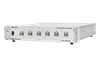
Supplier's Site Datasheet

Technical Specifications

  GL Communications, Inc.
Product Category Network Test Equipment
Product Number XX160
Product Name ATM Protocol Analyzer
Equipment Type Protocol Analyzer
Unlock Full Specs
to access all available technical data

Similar Products

Analyzer IE -  - Softing Inc. Industrial Automation
Softing Inc. Industrial Automation
Specs
Equipment Type Protocol Analyzer
View Details
Network Testers - 2413189 - RS Components, Ltd.
RS Components, Ltd.
Specs
Equipment Type Network Cable tester; Cable Tester
Port Type RJ-45; RJ12, RJ45, RJ11
Standards and Certifications RoHS
View Details
IGX Bloodhound 802.11ac Sniffer/Injector -  - Intelligraphics, Inc.
Specs
Equipment Type Network / LAN Analyzer; Protocol Analyzer
Network Protocol 802.11ac
Port Type USB
View Details
PocketBOB™ DB-25 Breakout Box - Model 50-9 - Data Connect Enterprise, Inc.
Specs
Equipment Type Breakout Boxes
Network Protocol RS232
Number of Ports 1
View Details