GL Communications, Inc. Voice Quality Testing (VQT) Software VQT002

Description
Test Engineers can now efficiently test voice quality with a common platform and common software, thereby avoiding purchasing dedicated software and equipment for various technologies. The test tools provide the means of sending and receiving speech signals through various network interfaces. GL's Voice Quality Testing (VQT) software supports the next-generation voice quality testing standard for fixed, mobile and IP-based networks using POLQA (ITU-T P.863), PESQ (ITU-T P.862), PESQ LQ / LQO (P.862.1), PESQ WB (P.862.2), PAMS (ITU-T P.800), and PSQM/PSQM+ (ITU-T P.861). PESQ provides an objective measurement of subjective listening tests on telephony systems. PAMS predicts overall subjective listening quality (a human's perception of quality) without requiring actual subjective testing (a very expensive and time-consuming process). PSQM predicts subjective quality of speech codecs without requiring subjective testing. POLQA, Perceptual Objective Listening Quality Analysis, is the successor of PESQ (ITU-T P.862) analysis and the next generation voice quality testing standard for fixed, mobile and IP-based networks. POLQA, based on ITU standard, ITU-T P.863, supports the latest HD-quality speech coding and network transport technology, with higher accuracy for 3G, 4G/LTE and VoIP networks. The VQT supports analysis using POLQA algorithm for NB (8000 sampling), WB (16000 sampling), and SWB (Super Wideband) (48000 sampling) in both manual and automated testing. POLQA® is a registered trademark of OPTICOM. GL is one of the Test & Measurement manufacturers that has adopted POLQA/P.863 in its Voice Quality Test solution, by obtaining the essential rights to use POLQA® standard, and hereby acknowledge that the images or text references to POLQA used in this document originally copyrights with Opticom. The VQT application is available with the following options: PESQ PESQ with POLQA POLQA only The results of the VQT algorithms, POLQA and PESQ LQ/LQO/WB, are displayed both in tabular format as well as graphically. Additional analytical results are displayed as part of the assessment such as POLQA MOS, E-Model, Signal Level, SNR, jitter, clipping, noise level, and delay (end to end as well as per speech utterance). All results are saved to file and database for post processing viewing along with sophisticated searching on the results within the VQT application and using the WebViewer™ (remote and local access). VQT POLQA Measurements and Analysis The VQT software can work either independently, in conjunction with VQuad™ - Dual UTA HD, or in conjunction with VQuad™ Probe. The VQuad™ Probe HD(combines with VQuad™-Dual UTA - PC into one single box) provides multiple interfaces for connecting to any communication device on a network using an efficient, portable, single box solution. The VQuad™ Probe HD can work with variety of networks, including Wireless (Bluetooth®, Wi-fi, 3G, 4G, LTE, PTT), VoIP, Analog, and TDM, practically allowing any end-point interfaces to be tested for voice, data, and video quality. Various associated applications (Voice Quality, Video Quality, Data tests, Echo and Delay tests, Fax tests, VBA) works with VQuad™ Probe HD to provide "end-to-end assessment" with additional test and measuring capabilities. GL's NetTestVQT app (rooted Android devices), supports both manual and automated testing of Voice Quality within the network. All recorded voice files, whether recorded at the NetTest VQT app (on the Android phone) or recorded at the VQuad™ system, are automatically transferred to the Central VQT system for analysis. All results associated with the VQT analysis as well as the call control events are transferred to the Central Database and accessed using GL’s web-based WebViewer™. Third party Goldwave software (SA048) is required for playback, viewing, and analysis of audio from within VQT software. Main Features Evaluate audio quality with MOS, E-Model, SNR, jitter, clipping, signal level, noise level, and delay measurements Manual or Automated mode of operations using GL's VQuad™, MAPS™, or T1/E1 Analysis Cards Measuring the effect of Packet Jitter in VoIP Network. Analyze the effects of Codec Compression in Wireless Networks Supports PESQ ITU-P.862.2 and POLQA for Wideband VQT supports analysis of PCM16 files consisting raw data as well as u-law/a-law encoded data. VQT also support analysis of uncompressed wav files consisting of narrow band, wide band and super wide band signals. POLQA ITU-T P.863 for next generation voice quality testing supporting NB (8000 sampling), WB (16000 sampling) and SWB (Super Wideband) (48000 sampling) Provides POLQA and PESQ Mean Opinion Score (MOS) results. Tabular as well as Graphical Results. Playback and display of audio files from within VQT using Goldwave software. Complete automatic logging of all results (both file and database) with the ability to import log back into VQT. All results along with call control information are sent to central database. Query results remotely using the WebViewer™. Support for Central DB Primary and Secondary IP addresses for backup and redundancy Real-time mapping (most countries supported) of results when optional GPS is used in conjunction with VQuad™. Sophisticated search features on the results within the VQT application Command Line Interface (CLI) support to control VQT nodes remotely. Supported on Windows® and Linux
Description
Test Engineers can now efficiently test voice quality with a common platform and common software, thereby avoiding purchasing dedicated software and equipment for various technologies. The test tools provide the means of sending and receiving speech signals through various network interfaces. GL's Voice Quality Testing (VQT) software supports the next-generation voice quality testing standard for fixed, mobile and IP-based networks using POLQA (ITU-T P.863), PESQ (ITU-T P.862), PESQ LQ / LQO (P.862.1), PESQ WB (P.862.2), PAMS (ITU-T P.800), and PSQM/PSQM+ (ITU-T P.861). PESQ provides an objective measurement of subjective listening tests on telephony systems. PAMS predicts overall subjective listening quality (a human's perception of quality) without requiring actual subjective testing (a very expensive and time-consuming process). PSQM predicts subjective quality of speech codecs without requiring subjective testing. POLQA, Perceptual Objective Listening Quality Analysis, is the successor of PESQ (ITU-T P.862) analysis and the next generation voice quality testing standard for fixed, mobile and IP-based networks. POLQA, based on ITU standard, ITU-T P.863, supports the latest HD-quality speech coding and network transport technology, with higher accuracy for 3G, 4G/LTE and VoIP networks. The VQT supports analysis using POLQA algorithm for NB (8000 sampling), WB (16000 sampling), and SWB (Super Wideband) (48000 sampling) in both manual and automated testing. POLQA® is a registered trademark of OPTICOM. GL is one of the Test & Measurement manufacturers that has adopted POLQA/P.863 in its Voice Quality Test solution, by obtaining the essential rights to use POLQA® standard, and hereby acknowledge that the images or text references to POLQA used in this document originally copyrights with Opticom. The VQT application is available with the following options: PESQ PESQ with POLQA POLQA only The results of the VQT algorithms, POLQA and PESQ LQ/LQO/WB, are displayed both in tabular format as well as graphically. Additional analytical results are displayed as part of the assessment such as POLQA MOS, E-Model, Signal Level, SNR, jitter, clipping, noise level, and delay (end to end as well as per speech utterance). All results are saved to file and database for post processing viewing along with sophisticated searching on the results within the VQT application and using the WebViewer™ (remote and local access). VQT POLQA Measurements and Analysis The VQT software can work either independently, in conjunction with VQuad™ - Dual UTA HD, or in conjunction with VQuad™ Probe. The VQuad™ Probe HD(combines with VQuad™-Dual UTA - PC into one single box) provides multiple interfaces for connecting to any communication device on a network using an efficient, portable, single box solution. The VQuad™ Probe HD can work with variety of networks, including Wireless (Bluetooth®, Wi-fi, 3G, 4G, LTE, PTT), VoIP, Analog, and TDM, practically allowing any end-point interfaces to be tested for voice, data, and video quality. Various associated applications (Voice Quality, Video Quality, Data tests, Echo and Delay tests, Fax tests, VBA) works with VQuad™ Probe HD to provide "end-to-end assessment" with additional test and measuring capabilities. GL's NetTestVQT app (rooted Android devices), supports both manual and automated testing of Voice Quality within the network. All recorded voice files, whether recorded at the NetTest VQT app (on the Android phone) or recorded at the VQuad™ system, are automatically transferred to the Central VQT system for analysis. All results associated with the VQT analysis as well as the call control events are transferred to the Central Database and accessed using GL’s web-based WebViewer™. Third party Goldwave software (SA048) is required for playback, viewing, and analysis of audio from within VQT software. Main Features Evaluate audio quality with MOS, E-Model, SNR, jitter, clipping, signal level, noise level, and delay measurements Manual or Automated mode of operations using GL's VQuad™, MAPS™, or T1/E1 Analysis Cards Measuring the effect of Packet Jitter in VoIP Network. Analyze the effects of Codec Compression in Wireless Networks Supports PESQ ITU-P.862.2 and POLQA for Wideband VQT supports analysis of PCM16 files consisting raw data as well as u-law/a-law encoded data. VQT also support analysis of uncompressed wav files consisting of narrow band, wide band and super wide band signals. POLQA ITU-T P.863 for next generation voice quality testing supporting NB (8000 sampling), WB (16000 sampling) and SWB (Super Wideband) (48000 sampling) Provides POLQA and PESQ Mean Opinion Score (MOS) results. Tabular as well as Graphical Results. Playback and display of audio files from within VQT using Goldwave software. Complete automatic logging of all results (both file and database) with the ability to import log back into VQT. All results along with call control information are sent to central database. Query results remotely using the WebViewer™. Support for Central DB Primary and Secondary IP addresses for backup and redundancy Real-time mapping (most countries supported) of results when optional GPS is used in conjunction with VQuad™. Sophisticated search features on the results within the VQT application Command Line Interface (CLI) support to control VQT nodes remotely. Supported on Windows® and Linux
Datasheet
Datasheet Summary
Powered by GS/AI

GL Communications, Inc.'s Voice Quality Testing (VQT) Software, part number VQT002, is designed for evaluating voice quality across various telecommunications networks, including fixed, mobile, and IP-based systems. This software utilizes the PESQ (ITU-T P.862) standard for voice quality assessment, providing objective measurements that correlate with subjective listening tests. The VQT software supports both manual and automated testing modes, allowing users to analyze voice quality using reference and degraded audio files. It generates results in both graphical and tabular formats, including metrics such as Mean Opinion Score (MOS), E-Model, Signal Level, SNR, jitter, clipping, noise level, and delay. The results can be stored in a central database for further analysis and accessed remotely via the WebViewer interface. VQT002 is suitable for engineers looking for a reliable tool to assess voice quality in various network environments, particularly those requiring PESQ analysis. It is compatible with GL's other products, enhancing its functionality in comprehensive testing setups.

Datasheet Summary
Powered by GS/AI

GL Communications, Inc.'s Voice Quality Testing (VQT) Software, part number VQT002, is designed for evaluating voice quality across various telecommunications networks, including fixed, mobile, and IP-based systems. This software utilizes the PESQ (ITU-T P.862) standard for voice quality assessment, providing objective measurements that correlate with subjective listening tests. The VQT software supports both manual and automated testing modes, allowing users to analyze voice quality using reference and degraded audio files. It generates results in both graphical and tabular formats, including metrics such as Mean Opinion Score (MOS), E-Model, Signal Level, SNR, jitter, clipping, noise level, and delay. The results can be stored in a central database for further analysis and accessed remotely via the WebViewer interface. VQT002 is suitable for engineers looking for a reliable tool to assess voice quality in various network environments, particularly those requiring PESQ analysis. It is compatible with GL's other products, enhancing its functionality in comprehensive testing setups.

Suppliers

Company
Product
Description
Supplier Links
Voice Quality Testing (VQT) Software - VQT002 - GL Communications, Inc.
Gaithersburg, MD, United States
Voice Quality Testing (VQT) Software
VQT002
Voice Quality Testing (VQT) Software VQT002
Test Engineers can now efficiently test voice quality with a common platform and common software, thereby avoiding purchasing dedicated software and equipment for various technologies. The test tools provide the means of sending and receiving speech signals through various network interfaces. GL's Voice Quality Testing (VQT) software supports the next-generation voice quality testing standard for fixed, mobile and IP-based networks using POLQA (ITU-T P.863), PESQ (ITU-T P.862), PESQ LQ / LQO (P.862.1), PESQ WB (P.862.2), PAMS (ITU-T P.800), and PSQM/PSQM+ (ITU-T P.861). PESQ provides an objective measurement of subjective listening tests on telephony systems. PAMS predicts overall subjective listening quality (a human's perception of quality) without requiring actual subjective testing (a very expensive and time-consuming process). PSQM predicts subjective quality of speech codecs without requiring subjective testing. POLQA, Perceptual Objective Listening Quality Analysis, is the successor of PESQ (ITU-T P.862) analysis and the next generation voice quality testing standard for fixed, mobile and IP-based networks. POLQA, based on ITU standard, ITU-T P.863, supports the latest HD-quality speech coding and network transport technology, with higher accuracy for 3G, 4G/LTE and VoIP networks. The VQT supports analysis using POLQA algorithm for NB (8000 sampling), WB (16000 sampling), and SWB (Super Wideband) (48000 sampling) in both manual and automated testing. POLQA® is a registered trademark of OPTICOM. GL is one of the Test & Measurement manufacturers that has adopted POLQA/P.863 in its Voice Quality Test solution, by obtaining the essential rights to use POLQA® standard, and hereby acknowledge that the images or text references to POLQA used in this document originally copyrights with Opticom. The VQT application is available with the following options: PESQ PESQ with POLQA POLQA only The results of the VQT algorithms, POLQA and PESQ LQ/LQO/WB, are displayed both in tabular format as well as graphically. Additional analytical results are displayed as part of the assessment such as POLQA MOS, E-Model, Signal Level, SNR, jitter, clipping, noise level, and delay (end to end as well as per speech utterance). All results are saved to file and database for post processing viewing along with sophisticated searching on the results within the VQT application and using the WebViewer™ (remote and local access). VQT POLQA Measurements and Analysis The VQT software can work either independently, in conjunction with VQuad™ - Dual UTA HD, or in conjunction with VQuad™ Probe. The VQuad™ Probe HD(combines with VQuad™-Dual UTA - PC into one single box) provides multiple interfaces for connecting to any communication device on a network using an efficient, portable, single box solution. The VQuad™ Probe HD can work with variety of networks, including Wireless (Bluetooth®, Wi-fi, 3G, 4G, LTE, PTT), VoIP, Analog, and TDM, practically allowing any end-point interfaces to be tested for voice, data, and video quality. Various associated applications (Voice Quality, Video Quality, Data tests, Echo and Delay tests, Fax tests, VBA) works with VQuad™ Probe HD to provide "end-to-end assessment" with additional test and measuring capabilities. GL's NetTestVQT app (rooted Android devices), supports both manual and automated testing of Voice Quality within the network. All recorded voice files, whether recorded at the NetTest VQT app (on the Android phone) or recorded at the VQuad™ system, are automatically transferred to the Central VQT system for analysis. All results associated with the VQT analysis as well as the call control events are transferred to the Central Database and accessed using GL’s web-based WebViewer™. Third party Goldwave software (SA048) is required for playback, viewing, and analysis of audio from within VQT software. Main Features Evaluate audio quality with MOS, E-Model, SNR, jitter, clipping, signal level, noise level, and delay measurements Manual or Automated mode of operations using GL's VQuad™, MAPS™, or T1/E1 Analysis Cards Measuring the effect of Packet Jitter in VoIP Network. Analyze the effects of Codec Compression in Wireless Networks Supports PESQ ITU-P.862.2 and POLQA for Wideband VQT supports analysis of PCM16 files consisting raw data as well as u-law/a-law encoded data. VQT also support analysis of uncompressed wav files consisting of narrow band, wide band and super wide band signals. POLQA ITU-T P.863 for next generation voice quality testing supporting NB (8000 sampling), WB (16000 sampling) and SWB (Super Wideband) (48000 sampling) Provides POLQA and PESQ Mean Opinion Score (MOS) results. Tabular as well as Graphical Results. Playback and display of audio files from within VQT using Goldwave software. Complete automatic logging of all results (both file and database) with the ability to import log back into VQT. All results along with call control information are sent to central database. Query results remotely using the WebViewer™. Support for Central DB Primary and Secondary IP addresses for backup and redundancy Real-time mapping (most countries supported) of results when optional GPS is used in conjunction with VQuad™. Sophisticated search features on the results within the VQT application Command Line Interface (CLI) support to control VQT nodes remotely. Supported on Windows® and Linux

Test Engineers can now efficiently test voice quality with a common platform and common software, thereby avoiding purchasing dedicated software and equipment for various technologies. The test tools provide the means of sending and receiving speech signals through various network interfaces.

GL's Voice Quality Testing (VQT) software supports the next-generation voice quality testing standard for fixed, mobile and IP-based networks using POLQA (ITU-T P.863), PESQ (ITU-T P.862), PESQ LQ / LQO (P.862.1), PESQ WB (P.862.2), PAMS (ITU-T P.800), and PSQM/PSQM+ (ITU-T P.861).

PESQ provides an objective measurement of subjective listening tests on telephony systems. PAMS predicts overall subjective listening quality (a human's perception of quality) without requiring actual subjective testing (a very expensive and time-consuming process). PSQM predicts subjective quality of speech codecs without requiring subjective testing.

POLQA, Perceptual Objective Listening Quality Analysis, is the successor of PESQ (ITU-T P.862) analysis and the next generation voice quality testing standard for fixed, mobile and IP-based networks. POLQA, based on ITU standard, ITU-T P.863, supports the latest HD-quality speech coding and network transport technology, with higher accuracy for 3G, 4G/LTE and VoIP networks. The VQT supports analysis using POLQA algorithm for NB (8000 sampling), WB (16000 sampling), and SWB (Super Wideband) (48000 sampling) in both manual and automated testing.

POLQA® is a registered trademark of OPTICOM. GL is one of the Test & Measurement manufacturers that has adopted POLQA/P.863 in its Voice Quality Test solution, by obtaining the essential rights to use POLQA® standard, and hereby acknowledge that the images or text references to POLQA used in this document originally copyrights with Opticom.

The VQT application is available with the following options:

  • PESQ
  • PESQ with POLQA
  • POLQA only

The results of the VQT algorithms, POLQA and PESQ LQ/LQO/WB, are displayed both in tabular format as well as graphically. Additional analytical results are displayed as part of the assessment such as POLQA MOS, E-Model, Signal Level, SNR, jitter, clipping, noise level, and delay (end to end as well as per speech utterance). All results are saved to file and database for post processing viewing along with sophisticated searching on the results within the VQT application and using the WebViewer™ (remote and local access).

VQT POLQA Measurements and Analysis

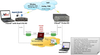
The VQT software can work either independently, in conjunction with VQuad™ - Dual UTA HD, or in conjunction with VQuad™ Probe. The VQuad™ Probe HD(combines with VQuad™-Dual UTA - PC into one single box) provides multiple interfaces for connecting to any communication device on a network using an efficient, portable, single box solution. The VQuad™ Probe HD can work with variety of networks, including Wireless (Bluetooth®, Wi-fi, 3G, 4G, LTE, PTT), VoIP, Analog, and TDM, practically allowing any end-point interfaces to be tested for voice, data, and video quality. Various associated applications (Voice Quality, Video Quality, Data tests, Echo and Delay tests, Fax tests, VBA) works with VQuad™ Probe HD to provide "end-to-end assessment" with additional test and measuring capabilities. GL's NetTestVQT app (rooted Android devices), supports both manual and automated testing of Voice Quality within the network. All recorded voice files, whether recorded at the NetTest VQT app (on the Android phone) or recorded at the VQuad™ system, are automatically transferred to the Central VQT system for analysis. All results associated with the VQT analysis as well as the call control events are transferred to the Central Database and accessed using GL’s web-based WebViewer™.

Third party Goldwave software (SA048) is required for playback, viewing, and analysis of audio from within VQT software.

Main Features

  • Evaluate audio quality with MOS, E-Model, SNR, jitter, clipping, signal level, noise level, and delay measurements
  • Manual or Automated mode of operations using GL's VQuad™, MAPS™, or T1/E1 Analysis Cards
  • Measuring the effect of Packet Jitter in VoIP Network.
  • Analyze the effects of Codec Compression in Wireless Networks
  • Supports PESQ ITU-P.862.2 and POLQA for Wideband
  • VQT supports analysis of PCM16 files consisting raw data as well as u-law/a-law encoded data.
  • VQT also support analysis of uncompressed wav files consisting of narrow band, wide band and super wide band signals.
  • POLQA ITU-T P.863 for next generation voice quality testing supporting NB (8000 sampling), WB (16000 sampling) and SWB (Super Wideband) (48000 sampling)
  • Provides POLQA and PESQ Mean Opinion Score (MOS) results.
  • Tabular as well as Graphical Results.
  • Playback and display of audio files from within VQT using Goldwave software.
  • Complete automatic logging of all results (both file and database) with the ability to import log back into VQT.
  • All results along with call control information are sent to central database. Query results remotely using the WebViewer™.
  • Support for Central DB Primary and Secondary IP addresses for backup and redundancy
  • Real-time mapping (most countries supported) of results when optional GPS is used in conjunction with VQuad™.
  • Sophisticated search features on the results within the VQT application
  • Command Line Interface (CLI) support to control VQT nodes remotely. Supported on Windows® and Linux

Supplier's Site Datasheet

Technical Specifications

  GL Communications, Inc.
Product Category Network Simulation Software
Product Number VQT002
Product Name Voice Quality Testing (VQT) Software
Unlock Full Specs
to access all available technical data