GL Communications, Inc. OC-3 / STM-1 and OC-12 / STM-4 Analyzer for ATM Mode LTS200

Description
Asynchronous Transfer Mode (ATM) is a flexible network protocol carrying voice, video, and data in fixed length cells. ATM network has two kinds of interfaces, UNI (Interface between ATM User and Public ATM switch) and NNI (Interface between two Public ATM switches). Similar to the OSI Protocol model, ATM has an ATM Layer as Layer 2, ATM Adaptation Layer (AAL) as Layer 3 and other higher layers depending on C-Plane, U-Plane or Layer Management Plane. GL’s LightSpeed1000™ analyzer supports ATM interfaces on both ports and can be configured for either OC3 or OC12 rate. Multiple cards can be installed in a PC making it scalable to monitor or generate OC3 or OC12 traffic on multiple boards. Each port on a card can work independent of others, which extends analyzer’s flexibility as test equipment. The LightSpeed1000™ complies with ITU-T ATM standards. The ATM layer architecture and ATM cell structure in UNI and NNI formats are shown below: ATM layer architecture ATM cell structure in UNI and NNI formats Features Supports signal rates of 155.52 Mbps for OC-3 and 622.08 Mbps for OC-12 interface. Emulation and analysis modes are supported on UNI or NNI per port. Wire speed cell generation and processing on single or multiple ports using internal logic. Capture to file on individual ports, limited only by hard disk size. Simultaneous synchronous capture or transmit is possible on both optical ports Comprehensive transmit/receive testing capabilities; transmitting and verifying with incrementing sequence numbers with each packet/cell. ATM Tx/Rx application – Supports ATM traffic generation and cell analysis. Ability to configure ATM headers (GFC, VPI, VCI, PT, and CLP fields), and bandwidth during traffic generation. Rx cell analysis reports resync count errors and sequence errors. Multistage loopback - Supports Rx-to-Tx memory loopback, line loopback, diagnostic loopback and PL3 loopback options. Ability to capture real-time traffic and playback the traffic for simulation. Complex and flexible hardware based filtering includes sixteen 128 bit independent filters with bit masks, for both ports with AND/OR include/exclude conditions ATM and UMTS protocol analysis supported on single or multiple ports Supports both AAL2 and AAL5 decoding. Bit Error Rate Test module supports generation and analysis of payloads at wire speed. Supports ATM header configuration, PRBS patterns and user-defined patterns as payload. Report on error count, error rate, sync loss, SES, and others is provided. Received cells hardware time stamping to the accuracy of 10ns. SONET level statistics for both Tx and Rx cells. Additional statistics for errors, alarms, and BERT test cells. Monitor and configure section, line, and path overhead bytes.
Description
Asynchronous Transfer Mode (ATM) is a flexible network protocol carrying voice, video, and data in fixed length cells. ATM network has two kinds of interfaces, UNI (Interface between ATM User and Public ATM switch) and NNI (Interface between two Public ATM switches). Similar to the OSI Protocol model, ATM has an ATM Layer as Layer 2, ATM Adaptation Layer (AAL) as Layer 3 and other higher layers depending on C-Plane, U-Plane or Layer Management Plane. GL’s LightSpeed1000™ analyzer supports ATM interfaces on both ports and can be configured for either OC3 or OC12 rate. Multiple cards can be installed in a PC making it scalable to monitor or generate OC3 or OC12 traffic on multiple boards. Each port on a card can work independent of others, which extends analyzer’s flexibility as test equipment. The LightSpeed1000™ complies with ITU-T ATM standards. The ATM layer architecture and ATM cell structure in UNI and NNI formats are shown below: ATM layer architecture ATM cell structure in UNI and NNI formats Features Supports signal rates of 155.52 Mbps for OC-3 and 622.08 Mbps for OC-12 interface. Emulation and analysis modes are supported on UNI or NNI per port. Wire speed cell generation and processing on single or multiple ports using internal logic. Capture to file on individual ports, limited only by hard disk size. Simultaneous synchronous capture or transmit is possible on both optical ports Comprehensive transmit/receive testing capabilities; transmitting and verifying with incrementing sequence numbers with each packet/cell. ATM Tx/Rx application – Supports ATM traffic generation and cell analysis. Ability to configure ATM headers (GFC, VPI, VCI, PT, and CLP fields), and bandwidth during traffic generation. Rx cell analysis reports resync count errors and sequence errors. Multistage loopback - Supports Rx-to-Tx memory loopback, line loopback, diagnostic loopback and PL3 loopback options. Ability to capture real-time traffic and playback the traffic for simulation. Complex and flexible hardware based filtering includes sixteen 128 bit independent filters with bit masks, for both ports with AND/OR include/exclude conditions ATM and UMTS protocol analysis supported on single or multiple ports Supports both AAL2 and AAL5 decoding. Bit Error Rate Test module supports generation and analysis of payloads at wire speed. Supports ATM header configuration, PRBS patterns and user-defined patterns as payload. Report on error count, error rate, sync loss, SES, and others is provided. Received cells hardware time stamping to the accuracy of 10ns. SONET level statistics for both Tx and Rx cells. Additional statistics for errors, alarms, and BERT test cells. Monitor and configure section, line, and path overhead bytes.

Suppliers

Company
Product
Description
Supplier Links
OC-3 / STM-1 and OC-12 / STM-4 Analyzer for ATM Mode - LTS200 - GL Communications, Inc.
Gaithersburg, MD, United States
OC-3 / STM-1 and OC-12 / STM-4 Analyzer for ATM Mode
LTS200
OC-3 / STM-1 and OC-12 / STM-4 Analyzer for ATM Mode LTS200
Asynchronous Transfer Mode (ATM) is a flexible network protocol carrying voice, video, and data in fixed length cells. ATM network has two kinds of interfaces, UNI (Interface between ATM User and Public ATM switch) and NNI (Interface between two Public ATM switches). Similar to the OSI Protocol model, ATM has an ATM Layer as Layer 2, ATM Adaptation Layer (AAL) as Layer 3 and other higher layers depending on C-Plane, U-Plane or Layer Management Plane. GL’s LightSpeed1000™ analyzer supports ATM interfaces on both ports and can be configured for either OC3 or OC12 rate. Multiple cards can be installed in a PC making it scalable to monitor or generate OC3 or OC12 traffic on multiple boards. Each port on a card can work independent of others, which extends analyzer’s flexibility as test equipment. The LightSpeed1000™ complies with ITU-T ATM standards. The ATM layer architecture and ATM cell structure in UNI and NNI formats are shown below: ATM layer architecture ATM cell structure in UNI and NNI formats Features Supports signal rates of 155.52 Mbps for OC-3 and 622.08 Mbps for OC-12 interface. Emulation and analysis modes are supported on UNI or NNI per port. Wire speed cell generation and processing on single or multiple ports using internal logic. Capture to file on individual ports, limited only by hard disk size. Simultaneous synchronous capture or transmit is possible on both optical ports Comprehensive transmit/receive testing capabilities; transmitting and verifying with incrementing sequence numbers with each packet/cell. ATM Tx/Rx application – Supports ATM traffic generation and cell analysis. Ability to configure ATM headers (GFC, VPI, VCI, PT, and CLP fields), and bandwidth during traffic generation. Rx cell analysis reports resync count errors and sequence errors. Multistage loopback - Supports Rx-to-Tx memory loopback, line loopback, diagnostic loopback and PL3 loopback options. Ability to capture real-time traffic and playback the traffic for simulation. Complex and flexible hardware based filtering includes sixteen 128 bit independent filters with bit masks, for both ports with AND/OR include/exclude conditions ATM and UMTS protocol analysis supported on single or multiple ports Supports both AAL2 and AAL5 decoding. Bit Error Rate Test module supports generation and analysis of payloads at wire speed. Supports ATM header configuration, PRBS patterns and user-defined patterns as payload. Report on error count, error rate, sync loss, SES, and others is provided. Received cells hardware time stamping to the accuracy of 10ns. SONET level statistics for both Tx and Rx cells. Additional statistics for errors, alarms, and BERT test cells. Monitor and configure section, line, and path overhead bytes.
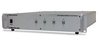
Asynchronous Transfer Mode (ATM) is a flexible network protocol carrying voice, video, and data in fixed length cells. ATM network has two kinds of interfaces, UNI (Interface between ATM User and Public ATM switch) and NNI (Interface between two Public ATM switches). Similar to the OSI Protocol model, ATM has an ATM Layer as Layer 2, ATM Adaptation Layer (AAL) as Layer 3 and other higher layers depending on C-Plane, U-Plane or Layer Management Plane.

GL’s LightSpeed1000™ analyzer supports ATM interfaces on both ports and can be configured for either OC3 or OC12 rate. Multiple cards can be installed in a PC making it scalable to monitor or generate OC3 or OC12 traffic on multiple boards. Each port on a card can work independent of others, which extends analyzer’s flexibility as test equipment.

The LightSpeed1000™ complies with ITU-T ATM standards. The ATM layer architecture and ATM cell structure in UNI and NNI formats are shown below:

ATM layer architecture

ATM cell structure in UNI and NNI formats

Features

  • Supports signal rates of 155.52 Mbps for OC-3 and 622.08 Mbps for OC-12 interface.
  • Emulation and analysis modes are supported on UNI or NNI per port.
  • Wire speed cell generation and processing on single or multiple ports using internal logic.
  • Capture to file on individual ports, limited only by hard disk size.
  • Simultaneous synchronous capture or transmit is possible on both optical ports
  • Comprehensive transmit/receive testing capabilities; transmitting and verifying with incrementing sequence numbers with each packet/cell.
  • ATM Tx/Rx application – Supports ATM traffic generation and cell analysis.
  • Ability to configure ATM headers (GFC, VPI, VCI, PT, and CLP fields), and bandwidth during traffic generation.
  • Rx cell analysis reports resync count errors and sequence errors.
  • Multistage loopback - Supports Rx-to-Tx memory loopback, line loopback, diagnostic loopback and PL3 loopback options.
  • Ability to capture real-time traffic and playback the traffic for simulation.
  • Complex and flexible hardware based filtering includes sixteen 128 bit independent filters with bit masks, for both ports with AND/OR include/exclude conditions
  • ATM and UMTS protocol analysis supported on single or multiple ports
  • Supports both AAL2 and AAL5 decoding.
  • Bit Error Rate Test module supports generation and analysis of payloads at wire speed. Supports ATM header configuration, PRBS patterns and user-defined patterns as payload. Report on error count, error rate, sync loss, SES, and others is provided.
  • Received cells hardware time stamping to the accuracy of 10ns.
  • SONET level statistics for both Tx and Rx cells. Additional statistics for errors, alarms, and BERT test cells.
  • Monitor and configure section, line, and path overhead bytes.
Supplier's Site

Technical Specifications

  GL Communications, Inc.
Product Category Network Test Equipment
Product Number LTS200
Product Name OC-3 / STM-1 and OC-12 / STM-4 Analyzer for ATM Mode
Equipment Type Protocol Analyzer
Unlock Full Specs
to access all available technical data

Similar Products

Analyzer IE -  - Softing Inc. Industrial Automation
Softing Inc. Industrial Automation
Specs
Equipment Type Protocol Analyzer
View Details
Network Testers - 468539 - RS Components, Ltd.
RS Components, Ltd.
Specs
Equipment Type Network Tester
Port Type RJ-45; USB; USB Type C, USB Type-A, SFP, SD card slot, RJ45
Standards and Certifications RoHS
View Details
Mesh Network Emulator, 10-Port, 30 MHz - 2.5 GHz, 95 dB / 1W, 5U, N-type - ZTMN-1095A-N - Mini-Circuits
Specs
Network Protocol supporting SSH, HTTP & Telnet protocols
Number of Ports 10
Port Type USB
View Details
SCA Platform - Quad-Fold - VIAVI Solutions, Inc.
VIAVI Solutions, Inc.
Specs
Network Protocol Gigabit Ethernet; Wi-Fi, USB, PCIe, Clock I/O, Trigger I/O, Backplane I/O
Form Factor Rackmount
Port Type BNC (Coaxial) Connectors; RJ-45; USB
View Details