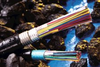
General Cable Telecommunications Cable

Description
Telecommunications is the communication of information over distances and includes electronic transmission of impulses by telephone, computer and television. The beginning of telecommunications started with the invention of the telephone in 1874. Today, it has evolved from basic voice conversation to combining voice, video and data. Since communications in only one direction is ineffective, telecommunication systems can handle two-way communications. There are essentially four types of telecom copper cables, all of which are manufactured by General Cable. The first three types qualify as outside plant cables and include: aerial cables, which are used above ground; duct/buried cables, which are used below ground; and wire products used as the last link in bringing telecommunication services to the subscriber. In addition, central office cables round out the group and serve to distribute or cross-connect signals within buildings. Our Telecommunications cable constructions contain no halogens, which mean they are less toxic and more environmentally friendly. General Cable proudly manufactures our Telco cables here in the U.S.A. Air Core Cable Enabling the distribution of telco signals for outside use, either underground or aerially. Filled Core Cable For underground or aerial installation where protection against water and moisture entry is required. Wire Products Small distribution wires used as the last link in bringing telco services to the subscriber. Central Office Products Cables with the ability to run both analog and digital services and interconnect equipment. Telecommunications Technical Information Find Cross-Reference Tables, FAQs and Sag and Tension Tables.
Datasheet
Description
Telecommunications is the communication of information over distances and includes electronic transmission of impulses by telephone, computer and television. The beginning of telecommunications started with the invention of the telephone in 1874. Today, it has evolved from basic voice conversation to combining voice, video and data. Since communications in only one direction is ineffective, telecommunication systems can handle two-way communications. There are essentially four types of telecom copper cables, all of which are manufactured by General Cable. The first three types qualify as outside plant cables and include: aerial cables, which are used above ground; duct/buried cables, which are used below ground; and wire products used as the last link in bringing telecommunication services to the subscriber. In addition, central office cables round out the group and serve to distribute or cross-connect signals within buildings. Our Telecommunications cable constructions contain no halogens, which mean they are less toxic and more environmentally friendly. General Cable proudly manufactures our Telco cables here in the U.S.A. Air Core Cable Enabling the distribution of telco signals for outside use, either underground or aerially. Filled Core Cable For underground or aerial installation where protection against water and moisture entry is required. Wire Products Small distribution wires used as the last link in bringing telco services to the subscriber. Central Office Products Cables with the ability to run both analog and digital services and interconnect equipment. Telecommunications Technical Information Find Cross-Reference Tables, FAQs and Sag and Tension Tables.
Datasheet

Suppliers

Company
Product
Description
Supplier Links
Telecommunications Cable -  - General Cable
Highland Heights, KY, USA
Telecommunications Cable
Telecommunications is the communication of information over distances and includes electronic transmission of impulses by telephone, computer and television. The beginning of telecommunications started with the invention of the telephone in 1874. Today, it has evolved from basic voice conversation to combining voice, video and data. Since communications in only one direction is ineffective, telecommunication systems can handle two-way communications. There are essentially four types of telecom copper cables, all of which are manufactured by General Cable. The first three types qualify as outside plant cables and include: aerial cables, which are used above ground; duct/buried cables, which are used below ground; and wire products used as the last link in bringing telecommunication services to the subscriber. In addition, central office cables round out the group and serve to distribute or cross-connect signals within buildings. Our Telecommunications cable constructions contain no halogens, which mean they are less toxic and more environmentally friendly. General Cable proudly manufactures our Telco cables here in the U.S.A. Air Core Cable Enabling the distribution of telco signals for outside use, either underground or aerially. Filled Core Cable For underground or aerial installation where protection against water and moisture entry is required. Wire Products Small distribution wires used as the last link in bringing telco services to the subscriber. Central Office Products Cables with the ability to run both analog and digital services and interconnect equipment. Telecommunications Technical Information Find Cross-Reference Tables, FAQs and Sag and Tension Tables.

Telecommunications is the communication of information over distances and includes electronic transmission of impulses by telephone, computer and television. The beginning of telecommunications started with the invention of the telephone in 1874. Today, it has evolved from basic voice conversation to combining voice, video and data.

Since communications in only one direction is ineffective, telecommunication systems can handle two-way communications. There are essentially four types of telecom copper cables, all of which are manufactured by General Cable. The first three types qualify as outside plant cables and include: aerial cables, which are used above ground; duct/buried cables, which are used below ground; and wire products used as the last link in bringing telecommunication services to the subscriber. In addition, central office cables round out the group and serve to distribute or cross-connect signals within buildings.

Our Telecommunications cable constructions contain no halogens, which mean they are less toxic and more environmentally friendly. General Cable proudly manufactures our Telco cables here in the U.S.A.

Air Core Cable

Enabling the distribution of telco signals for outside use, either underground or aerially.

Filled Core Cable

For underground or aerial installation where protection against water and moisture entry is required.

Wire Products

Small distribution wires used as the last link in bringing telco services to the subscriber.

Central Office Products

Cables with the ability to run both analog and digital services and interconnect equipment.

Telecommunications Technical Information

Find Cross-Reference Tables, FAQs and Sag and Tension Tables.

Supplier's Site Datasheet

Technical Specifications

  General Cable
Product Category Multiconductor Cables
Product Name Telecommunications Cable
Product Category Cable
Cable Jacket Polyethylene
Cable Insulation Polyethylene
Cable Conductor Copper
Cable Shielding Foil
Unlock Full Specs
to access all available technical data

Similar Products

FEP Multiconductor Cable - CZ 1323-1F - Cooner Wire Company
Specs
Product Category Cable
Cable Jacket FEP
Cable Conductor Copper
View Details
Ribbon Cable - 1792505 - RS Components, Ltd.
RS Components, Ltd.
Specs
Product Category Cable Assembly
Cable Conductor Tin Copper Wire
Standards / Certifications RoHS
View Details
Custom Cable Assemblies -  - LEMO USA, Inc.
Specs
Product Category Cable Assembly
Cable Jacket PTFE, PUR
Standards / Certifications CSA Mark; ISO; IEC; UL Recognized Component Mark (US and Canadian)
View Details
Besilen®-Silicone Sheathed Cables acc. to UL and CSA, SC 600 HDTRS -  - SAB BRÖCKSKES GmbH & Co. KG
Specs
Cable Jacket Besilen® better than EM9 acc. to EN 50363-2-1 + VDE 0207-363-2-1
Cable Insulation Besilen® 722 insulation
Cable Conductor tinned copper strands acc. to IEC 60228, VDE 0295, class 5
View Details