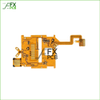
FX PCB Co., Ltd. Multilayer Flex PCB

Description
Description What is Multilayer Flex PCB The PCB is made up of multiple layers of thin, flexible material called Multilayer flex PCB, which is widely used in various applications such as automotive, aerospace, medical, industrial electronics, and consumer electronics. Multilayer flexible printed circuit board is just like a sandwich, as it has copper foil between layers of insulating material. The layers are interconnected with the help of vias and through holes. The use of multiple layers in multilayer flex PCB allows designers to incorporate more components and functionality into a smaller space. Advantages of Multilayer Flex PCB: 1. Space-saving: Multilayer flex PCBs can fit in small and compact spaces, making them ideal for applications where space is a constraint. 2. Flexible: One of the most significant advantages of multilayer flex PCBs is their flexibility. They can bend and twist without breaking, making them a great choice for applications where flexibility is required. 3. Good Signal Quality: Multilayer flex PCBs offer low signal loss and excellent signal quality. 4. Cost-effective: Multilayer flex PCBs are cost-effective since they can replace traditional rigid PCBs and eliminate the need for connectors and cables. 5. High-Density Interconnect (HDI): Multilayer flex PCBs have high-density interconnect capabilities, which allow for efficient routing of signals and power. Applications of Multilayer Flex PCB: 1. Consumer Electronics: Multilayer flex PCBs are used in many consumer electronics applications, including mobile phones, laptops, and tablets. 2. Medical: Multilayer flex PCBs are used in medical devices such as pacemakers and defibrillators. 3. Automotive: Multilayer flex PCBs are used in various automotive applications, including engine control modules and dashboards. 4. Aerospace: Multilayer flex PCBs are used in aerospace applications such as GPS systems, avionics, and satellite communications. 5. Robotics: Multilayer flex PCBs are used in robotics applications for the efficient and flexible connection of sensors, motors, and other electronic components. Conclusion: Multilayer flex PCB is a flexible and cost-effective solution for various industries. With its high-density interconnect capabilities, good signal quality, and space-saving benefits, it is ideal for applications where space is a constraint. At [company name], FX PCB offers high-quality multilayer flex PCBs for a wide range of applications. Contact us today for more information. Flex PCB Capability: Items Mass Production Low Volume Layer of flex board Single and double panel 8L PCB Thickness ≤0.3mm / Line width/Line space Inner layer 3mil/3mil (HOz) 2.5mil/2.5mil (HOz) Outer layer 4mil/4mil (1Oz) 3mil/3mil (1Oz) Annular Ring ≥4mil / BGA 0.15mm BGA 0.15mm BGA Tolerance of outline (Board edge to board edge) +/-0.025mm / Tolerance of outline (Mark to board edge) +/-0.05mm +/-0.025mm Impedance control +/-10% / Drilling Machine drilling ≥8mil 6mil Laser drilling 5mil/6mil 4mil Surface coating ENIG, OSP Flex PCB Attributes: Material PI Layers 6L Copper thickness 1oz Board thickness 0.1mm Surface treatment ENIG Track width/Space 4/4mil Hole size 0.25mm
Request a Quote
Description
Description What is Multilayer Flex PCB The PCB is made up of multiple layers of thin, flexible material called Multilayer flex PCB, which is widely used in various applications such as automotive, aerospace, medical, industrial electronics, and consumer electronics. Multilayer flexible printed circuit board is just like a sandwich, as it has copper foil between layers of insulating material. The layers are interconnected with the help of vias and through holes. The use of multiple layers in multilayer flex PCB allows designers to incorporate more components and functionality into a smaller space. Advantages of Multilayer Flex PCB: 1. Space-saving: Multilayer flex PCBs can fit in small and compact spaces, making them ideal for applications where space is a constraint. 2. Flexible: One of the most significant advantages of multilayer flex PCBs is their flexibility. They can bend and twist without breaking, making them a great choice for applications where flexibility is required. 3. Good Signal Quality: Multilayer flex PCBs offer low signal loss and excellent signal quality. 4. Cost-effective: Multilayer flex PCBs are cost-effective since they can replace traditional rigid PCBs and eliminate the need for connectors and cables. 5. High-Density Interconnect (HDI): Multilayer flex PCBs have high-density interconnect capabilities, which allow for efficient routing of signals and power. Applications of Multilayer Flex PCB: 1. Consumer Electronics: Multilayer flex PCBs are used in many consumer electronics applications, including mobile phones, laptops, and tablets. 2. Medical: Multilayer flex PCBs are used in medical devices such as pacemakers and defibrillators. 3. Automotive: Multilayer flex PCBs are used in various automotive applications, including engine control modules and dashboards. 4. Aerospace: Multilayer flex PCBs are used in aerospace applications such as GPS systems, avionics, and satellite communications. 5. Robotics: Multilayer flex PCBs are used in robotics applications for the efficient and flexible connection of sensors, motors, and other electronic components. Conclusion: Multilayer flex PCB is a flexible and cost-effective solution for various industries. With its high-density interconnect capabilities, good signal quality, and space-saving benefits, it is ideal for applications where space is a constraint. At [company name], FX PCB offers high-quality multilayer flex PCBs for a wide range of applications. Contact us today for more information. Flex PCB Capability: Items Mass Production Low Volume Layer of flex board Single and double panel 8L PCB Thickness ≤0.3mm / Line width/Line space Inner layer 3mil/3mil (HOz) 2.5mil/2.5mil (HOz) Outer layer 4mil/4mil (1Oz) 3mil/3mil (1Oz) Annular Ring ≥4mil / BGA 0.15mm BGA 0.15mm BGA Tolerance of outline (Board edge to board edge) +/-0.025mm / Tolerance of outline (Mark to board edge) +/-0.05mm +/-0.025mm Impedance control +/-10% / Drilling Machine drilling ≥8mil 6mil Laser drilling 5mil/6mil 4mil Surface coating ENIG, OSP Flex PCB Attributes: Material PI Layers 6L Copper thickness 1oz Board thickness 0.1mm Surface treatment ENIG Track width/Space 4/4mil Hole size 0.25mm
Request a Quote

Suppliers

Company
Product
Description
Supplier Links
Multilayer Flex PCB -  - FX PCB Co., Ltd.
Shenzhen, Guangdong, China
Multilayer Flex PCB
Multilayer Flex PCB
Description What is Multilayer Flex PCB The PCB is made up of multiple layers of thin, flexible material called Multilayer flex PCB, which is widely used in various applications such as automotive, aerospace, medical, industrial electronics, and consumer electronics. Multilayer flexible printed circuit board is just like a sandwich, as it has copper foil between layers of insulating material. The layers are interconnected with the help of vias and through holes. The use of multiple layers in multilayer flex PCB allows designers to incorporate more components and functionality into a smaller space. Advantages of Multilayer Flex PCB: 1. Space-saving: Multilayer flex PCBs can fit in small and compact spaces, making them ideal for applications where space is a constraint. 2. Flexible: One of the most significant advantages of multilayer flex PCBs is their flexibility. They can bend and twist without breaking, making them a great choice for applications where flexibility is required. 3. Good Signal Quality: Multilayer flex PCBs offer low signal loss and excellent signal quality. 4. Cost-effective: Multilayer flex PCBs are cost-effective since they can replace traditional rigid PCBs and eliminate the need for connectors and cables. 5. High-Density Interconnect (HDI): Multilayer flex PCBs have high-density interconnect capabilities, which allow for efficient routing of signals and power. Applications of Multilayer Flex PCB: 1. Consumer Electronics: Multilayer flex PCBs are used in many consumer electronics applications, including mobile phones, laptops, and tablets. 2. Medical: Multilayer flex PCBs are used in medical devices such as pacemakers and defibrillators. 3. Automotive: Multilayer flex PCBs are used in various automotive applications, including engine control modules and dashboards. 4. Aerospace: Multilayer flex PCBs are used in aerospace applications such as GPS systems, avionics, and satellite communications. 5. Robotics: Multilayer flex PCBs are used in robotics applications for the efficient and flexible connection of sensors, motors, and other electronic components. Conclusion: Multilayer flex PCB is a flexible and cost-effective solution for various industries. With its high-density interconnect capabilities, good signal quality, and space-saving benefits, it is ideal for applications where space is a constraint. At [company name], FX PCB offers high-quality multilayer flex PCBs for a wide range of applications. Contact us today for more information. Flex PCB Capability: Items Mass Production Low Volume Layer of flex board Single and double panel 8L PCB Thickness ≤0.3mm / Line width/Line space Inner layer 3mil/3mil (HOz) 2.5mil/2.5mil (HOz) Outer layer 4mil/4mil (1Oz) 3mil/3mil (1Oz) Annular Ring ≥4mil / BGA 0.15mm BGA 0.15mm BGA Tolerance of outline (Board edge to board edge) +/-0.025mm / Tolerance of outline (Mark to board edge) +/-0.05mm +/-0.025mm Impedance control +/-10% / Drilling Machine drilling ≥8mil 6mil Laser drilling 5mil/6mil 4mil Surface coating ENIG, OSP Flex PCB Attributes: Material PI Layers 6L Copper thickness 1oz Board thickness 0.1mm Surface treatment ENIG Track width/Space 4/4mil Hole size 0.25mm

Description

What is Multilayer Flex PCB

The PCB is made up of multiple layers of thin, flexible material called Multilayer flex PCB, which is widely used in various applications such as automotive, aerospace, medical, industrial electronics, and consumer electronics.

Multilayer flexible printed circuit board is just like a sandwich, as it has copper foil between layers of insulating material. The layers are interconnected with the help of vias and through holes. The use of multiple layers in multilayer flex PCB allows designers to incorporate more components and functionality into a smaller space.

Advantages of Multilayer Flex PCB:

1. Space-saving:
Multilayer flex PCBs can fit in small and compact spaces, making them ideal for applications where space is a constraint.

2. Flexible:
One of the most significant advantages of multilayer flex PCBs is their flexibility. They can bend and twist without breaking, making them a great choice for applications where flexibility is required.

3. Good Signal Quality:
Multilayer flex PCBs offer low signal loss and excellent signal quality.

4. Cost-effective:
Multilayer flex PCBs are cost-effective since they can replace traditional rigid PCBs and eliminate the need for connectors and cables.

5. High-Density Interconnect (HDI):
Multilayer flex PCBs have high-density interconnect capabilities, which allow for efficient routing of signals and power.

Applications of Multilayer Flex PCB:

1. Consumer Electronics:
Multilayer flex PCBs are used in many consumer electronics applications, including mobile phones, laptops, and tablets.

2. Medical:
Multilayer flex PCBs are used in medical devices such as pacemakers and defibrillators.

3. Automotive:
Multilayer flex PCBs are used in various automotive applications, including engine control modules and dashboards.

4. Aerospace:
Multilayer flex PCBs are used in aerospace applications such as GPS systems, avionics, and satellite communications.

5. Robotics:
Multilayer flex PCBs are used in robotics applications for the efficient and flexible connection of sensors, motors, and other electronic components.

Conclusion:

Multilayer flex PCB is a flexible and cost-effective solution for various industries. With its high-density interconnect capabilities, good signal quality, and space-saving benefits, it is ideal for applications where space is a constraint. At [company name], FX PCB offers high-quality multilayer flex PCBs for a wide range of applications. Contact us today for more information.

Flex PCB Capability:

Items Mass Production Low Volume
Layer of flex board Single and double panel 8L
PCB Thickness ≤0.3mm /
Line width/Line space Inner layer 3mil/3mil (HOz) 2.5mil/2.5mil (HOz)
Outer layer 4mil/4mil (1Oz) 3mil/3mil (1Oz)
Annular Ring ≥4mil /
BGA 0.15mm BGA 0.15mm BGA
Tolerance of outline (Board edge to board edge) +/-0.025mm /
Tolerance of outline (Mark to board edge) +/-0.05mm +/-0.025mm
Impedance control +/-10% /
Drilling Machine drilling ≥8mil 6mil
Laser drilling 5mil/6mil 4mil
Surface coating ENIG, OSP

Flex PCB Attributes:

Material PI
Layers 6L
Copper thickness 1oz
Board thickness 0.1mm
Surface treatment ENIG
Track width/Space 4/4mil
Hole size 0.25mm

Supplier's Site

Technical Specifications

  FX PCB Co., Ltd.
Product Category Printed Circuit Substrate Materials (PCB / PWB)
Product Name Multilayer Flex PCB
Type Film / Flexible
Unlock Full Specs
to access all available technical data

Similar Products

FLEX PCB -  - FX PCB Co., Ltd.
FX PCB Co., Ltd.
Specs
Type Film / Flexible
Thickness 0.0118 inches (0.3000 mm)
View Details
Ceramic PCB 13 -  - FX PCB Co., Ltd.
FX PCB Co., Ltd.
Specs
Materials AIN, AI203
Thickness 0.0098 to 0.1181 inches (0.2500 to 3 mm)
Resistivity 10 ohm-cm
View Details
Ceramic PCB 12 -  - FX PCB Co., Ltd.
FX PCB Co., Ltd.
Specs
Materials AIN, AI203
Thickness 0.0098 to 0.1181 inches (0.2500 to 3 mm)
Resistivity 10 ohm-cm
View Details