Fluoro-Plastics, Inc. PTFE Plate

Description
Molded plate is available in thicknesses from 3/8ths of an inch up to four inches. Plate is inventoried in sizes from one-foot square to four feet square (sixteen square feet per sheet). Thickness tolerances range from plus .038" to minus .019" for 3/8th” plate, up to plus .087", minus .043" for one-inch plate. Fluoro-Plastics will build special size molds for production quantities of non-standard dimensional plate. Unless otherwise specified, the edges are not trimmed and all plate is oversized so that blanks can be cut without significant kerf waste. All material is white. Plate is ideal for cutting into blanks for machining into smaller parts. All material conforms to ASTM D3294 and MIL-P22241. Teflon® is a registered trademark of E.I. Du Pont De Nemours and Company used under License by Fluoro-Plastics, Inc. Only Dupont makes TEFLON®. Applications of PTFE & Teflon® ASTM Specifications PTFE is used extensively in many different industries: Petrochemical and chemical processing: PTFE is the material of choice for gaskets, vessel linings, pump interiors, washers, rings, seals, spacers, dip tubes and well-drilling components because it is corrosion resistant and chemically inert; it is unaffected by virtually all acids and caustics and functions in environments to 500 degrees F.. Electrical applications: PTFE is one of the best insulators known. In thin sections, it will insulate to 500 volts per mil. There are grades if PTFE which have even greater dielectric strength. It is frequently used in wire and cable wrap, and to separate conductive surfaces in capacitors. Thick walled close-tolerance extruded tubing is the PTFE shape of choice where machining or drilling long lengths to close tolerances is impossible. Multi-hole tubing can be extruded. PTFE can be machined into standoff insulators, and many different types of high voltage encapsulation devices for electrical components. Semi-Conductor Industry: PTFE is inert, and its operating temperature range is from minus 350 degrees Fahrenheit to 550 degrees Fahrenheit. When made to ultra pure standards it is the material of choice for various items used in chip manufacturing, including encapsulation devices for quartz heaters, and the like. Food, Beverage and Pharmaceutical industries: Virgin PTFE is approved by the Food and Drug Administration for use in the food, beverage, cosmetics and pharmaceutical industries. Thin Film and sheets make an inert, no-toxic slide surface without microscopic depressions where microbes can grow. Conveyancing components - profiles, guide rails and slides - can withstand high temperatures inside baking and drying ovens and other heated segments of the food, cosmetics or pharmaceuticals manufacturing processes. Laboratory applications: PTFE piping, tubing and vessels are used in various laboratory ware because of their chemical resistance, and inertness. No contaminants adhere to the surface. Bearing pads: Glass filled PTFE can be cut or stamped into bearing pads, and will resist all weather-related degradation while remaining an inert interface between disparate construction materials, like steel and concrete. PTFE Compounds: Various fillers can be blended with the PTFE base resin to enhance certain properties, e.g. glass fiber, glass bead, carbon, graphite, molybdenum disulfide, bronze, etc. PTFE does not melt; it cannot be molded into complex shapes, but must be machined. PTFE is easily machined using standard mechanical woodworking and stamping equipment and tooling. Most shapes are sold slightly oversized for easy trimming and machining to exact sizes.
Description
Molded plate is available in thicknesses from 3/8ths of an inch up to four inches. Plate is inventoried in sizes from one-foot square to four feet square (sixteen square feet per sheet). Thickness tolerances range from plus .038" to minus .019" for 3/8th” plate, up to plus .087", minus .043" for one-inch plate. Fluoro-Plastics will build special size molds for production quantities of non-standard dimensional plate. Unless otherwise specified, the edges are not trimmed and all plate is oversized so that blanks can be cut without significant kerf waste. All material is white. Plate is ideal for cutting into blanks for machining into smaller parts. All material conforms to ASTM D3294 and MIL-P22241. Teflon® is a registered trademark of E.I. Du Pont De Nemours and Company used under License by Fluoro-Plastics, Inc. Only Dupont makes TEFLON®. Applications of PTFE & Teflon® ASTM Specifications PTFE is used extensively in many different industries: Petrochemical and chemical processing: PTFE is the material of choice for gaskets, vessel linings, pump interiors, washers, rings, seals, spacers, dip tubes and well-drilling components because it is corrosion resistant and chemically inert; it is unaffected by virtually all acids and caustics and functions in environments to 500 degrees F.. Electrical applications: PTFE is one of the best insulators known. In thin sections, it will insulate to 500 volts per mil. There are grades if PTFE which have even greater dielectric strength. It is frequently used in wire and cable wrap, and to separate conductive surfaces in capacitors. Thick walled close-tolerance extruded tubing is the PTFE shape of choice where machining or drilling long lengths to close tolerances is impossible. Multi-hole tubing can be extruded. PTFE can be machined into standoff insulators, and many different types of high voltage encapsulation devices for electrical components. Semi-Conductor Industry: PTFE is inert, and its operating temperature range is from minus 350 degrees Fahrenheit to 550 degrees Fahrenheit. When made to ultra pure standards it is the material of choice for various items used in chip manufacturing, including encapsulation devices for quartz heaters, and the like. Food, Beverage and Pharmaceutical industries: Virgin PTFE is approved by the Food and Drug Administration for use in the food, beverage, cosmetics and pharmaceutical industries. Thin Film and sheets make an inert, no-toxic slide surface without microscopic depressions where microbes can grow. Conveyancing components - profiles, guide rails and slides - can withstand high temperatures inside baking and drying ovens and other heated segments of the food, cosmetics or pharmaceuticals manufacturing processes. Laboratory applications: PTFE piping, tubing and vessels are used in various laboratory ware because of their chemical resistance, and inertness. No contaminants adhere to the surface. Bearing pads: Glass filled PTFE can be cut or stamped into bearing pads, and will resist all weather-related degradation while remaining an inert interface between disparate construction materials, like steel and concrete. PTFE Compounds: Various fillers can be blended with the PTFE base resin to enhance certain properties, e.g. glass fiber, glass bead, carbon, graphite, molybdenum disulfide, bronze, etc. PTFE does not melt; it cannot be molded into complex shapes, but must be machined. PTFE is easily machined using standard mechanical woodworking and stamping equipment and tooling. Most shapes are sold slightly oversized for easy trimming and machining to exact sizes.

Suppliers

Company
Product
Description
Supplier Links
PTFE Plate -  - Fluoro-Plastics, Inc.
Philadelphia, PA, USA
PTFE Plate
PTFE Plate
Molded plate is available in thicknesses from 3/8ths of an inch up to four inches. Plate is inventoried in sizes from one-foot square to four feet square (sixteen square feet per sheet). Thickness tolerances range from plus .038" to minus .019" for 3/8th” plate, up to plus .087", minus .043" for one-inch plate. Fluoro-Plastics will build special size molds for production quantities of non-standard dimensional plate. Unless otherwise specified, the edges are not trimmed and all plate is oversized so that blanks can be cut without significant kerf waste. All material is white. Plate is ideal for cutting into blanks for machining into smaller parts. All material conforms to ASTM D3294 and MIL-P22241. Teflon® is a registered trademark of E.I. Du Pont De Nemours and Company used under License by Fluoro-Plastics, Inc. Only Dupont makes TEFLON®. Applications of PTFE & Teflon® ASTM Specifications PTFE is used extensively in many different industries: Petrochemical and chemical processing: PTFE is the material of choice for gaskets, vessel linings, pump interiors, washers, rings, seals, spacers, dip tubes and well-drilling components because it is corrosion resistant and chemically inert; it is unaffected by virtually all acids and caustics and functions in environments to 500 degrees F.. Electrical applications: PTFE is one of the best insulators known. In thin sections, it will insulate to 500 volts per mil. There are grades if PTFE which have even greater dielectric strength. It is frequently used in wire and cable wrap, and to separate conductive surfaces in capacitors. Thick walled close-tolerance extruded tubing is the PTFE shape of choice where machining or drilling long lengths to close tolerances is impossible. Multi-hole tubing can be extruded. PTFE can be machined into standoff insulators, and many different types of high voltage encapsulation devices for electrical components. Semi-Conductor Industry: PTFE is inert, and its operating temperature range is from minus 350 degrees Fahrenheit to 550 degrees Fahrenheit. When made to ultra pure standards it is the material of choice for various items used in chip manufacturing, including encapsulation devices for quartz heaters, and the like. Food, Beverage and Pharmaceutical industries: Virgin PTFE is approved by the Food and Drug Administration for use in the food, beverage, cosmetics and pharmaceutical industries. Thin Film and sheets make an inert, no-toxic slide surface without microscopic depressions where microbes can grow. Conveyancing components - profiles, guide rails and slides - can withstand high temperatures inside baking and drying ovens and other heated segments of the food, cosmetics or pharmaceuticals manufacturing processes. Laboratory applications: PTFE piping, tubing and vessels are used in various laboratory ware because of their chemical resistance, and inertness. No contaminants adhere to the surface. Bearing pads: Glass filled PTFE can be cut or stamped into bearing pads, and will resist all weather-related degradation while remaining an inert interface between disparate construction materials, like steel and concrete. PTFE Compounds: Various fillers can be blended with the PTFE base resin to enhance certain properties, e.g. glass fiber, glass bead, carbon, graphite, molybdenum disulfide, bronze, etc. PTFE does not melt; it cannot be molded into complex shapes, but must be machined. PTFE is easily machined using standard mechanical woodworking and stamping equipment and tooling. Most shapes are sold slightly oversized for easy trimming and machining to exact sizes.

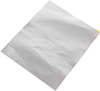
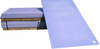
Molded plate is available in thicknesses from 3/8ths of an inch up to four inches. Plate is inventoried in sizes from one-foot square to four feet square (sixteen square feet per sheet). Thickness tolerances range from plus .038" to minus .019" for 3/8th” plate, up to plus .087", minus .043" for one-inch plate. Fluoro-Plastics will build special size molds for production quantities of non-standard dimensional plate. Unless otherwise specified, the edges are not trimmed and all plate is oversized so that blanks can be cut without significant kerf waste. All material is white. Plate is ideal for cutting into blanks for machining into smaller parts. All material conforms to ASTM D3294 and MIL-P22241.

Teflon® is a registered trademark of E.I. Du Pont De Nemours and Company used under License by Fluoro-Plastics, Inc. Only Dupont makes TEFLON®.

Applications of PTFE & Teflon® ASTM Specifications

PTFE is used extensively in many different industries:

Petrochemical and chemical processing: PTFE is the material of choice for gaskets, vessel linings, pump interiors, washers, rings, seals, spacers, dip tubes and well-drilling components because it is corrosion resistant and chemically inert; it is unaffected by virtually all acids and caustics and functions in environments to 500 degrees F..

Electrical applications: PTFE is one of the best insulators known. In thin sections, it will insulate to 500 volts per mil. There are grades if PTFE which have even greater dielectric strength. It is frequently used in wire and cable wrap, and to separate conductive surfaces in capacitors. Thick walled close-tolerance extruded tubing is the PTFE shape of choice where machining or drilling long lengths to close tolerances is impossible. Multi-hole tubing can be extruded. PTFE can be machined into standoff insulators, and many different types of high voltage encapsulation devices for electrical components.

Semi-Conductor Industry: PTFE is inert, and its operating temperature range is from minus 350 degrees Fahrenheit to 550 degrees Fahrenheit. When made to ultra pure standards it is the material of choice for various items used in chip manufacturing, including encapsulation devices for quartz heaters, and the like.

Food, Beverage and Pharmaceutical industries: Virgin PTFE is approved by the Food and Drug Administration for use in the food, beverage, cosmetics and pharmaceutical industries. Thin Film and sheets make an inert, no-toxic slide surface without microscopic depressions where microbes can grow. Conveyancing components - profiles, guide rails and slides - can withstand high temperatures inside baking and drying ovens and other heated segments of the food, cosmetics or pharmaceuticals manufacturing processes.

Laboratory applications: PTFE piping, tubing and vessels are used in various laboratory ware because of their chemical resistance, and inertness. No contaminants adhere to the surface.

Bearing pads: Glass filled PTFE can be cut or stamped into bearing pads, and will resist all weather-related degradation while remaining an inert interface between disparate construction materials, like steel and concrete.

PTFE Compounds: Various fillers can be blended with the PTFE base resin to enhance certain properties, e.g. glass fiber, glass bead, carbon, graphite, molybdenum disulfide, bronze, etc.

PTFE does not melt; it cannot be molded into complex shapes, but must be machined. PTFE is easily machined using standard mechanical woodworking and stamping equipment and tooling. Most shapes are sold slightly oversized for easy trimming and machining to exact sizes.

Technical Specifications

  Fluoro-Plastics, Inc.
Product Category Fabricated Plastic Parts and Semi-Finished Shapes
Product Name PTFE Plate
Form / Shape Plate
Chemical System Fluoropolymer
Filler Unfilled
Thickness 0.3750 to 6 inch (9.52 to 152 mm)
Width / O.D. 12 to 48 inch (305 to 1219 mm)
Unlock Full Specs
to access all available technical data

Similar Products

Enflon® Extruded Rods -  - Pexco
Specs
Form / Shape Rod or Round Stock; Profile or Structural Shape
Chemical System Fluoropolymer
Width / O.D. 0.1250 to 5 inch (3.17 to 127 mm)
View Details
ptfe bush -  - Jinshiling (Heyuan) Technology Co., Ltd.
Jinshiling (Heyuan) Technology Co., Ltd.
Specs
Chemical System Fluoropolymer
Industry Sanitary; Chemical processing equipment,Food and beverage machinery,Pharmaceutical manufacturing
View Details
PEEK structural parts -  - Fountyl Technologies Pte. Ltd.
Fountyl Technologies Pte. Ltd.
Specs
Chemical System PEEK
Industry Aerospace; Automotive; Electronics; Sanitary; Military; OEM or Industrial
View Details
Plastic Sheets - 1970073 - RS Components, Ltd.
RS Components, Ltd.
Specs
Form / Shape Sheet or Film
Chemical System Ptfe
Thickness 0.3937 inch (10 mm)
View Details