Operation
Starting Fulload Operation
The operator lowers each selected spreader into the hatch until the vent cowling is properly positioned on the lip of the hatch.
Pressing the reset switch on the hoist pendant activates the spreader heads.
The filling process begins by starting the conveying blower and rotary air lock.
Automatic Pressure Sensing
When the hopper is full, the overhead diverter automatically switches flow to the next activated spreader when this pressure exceeds a preset level.
The last spreader in a set is the KEY spreader which senses the material level before the head is covered. The rotary airlock is signalled to stop, sensing the filled condition and allowing room in the hopper for the material from the conveying line.
The blower continues to operated, purging the conveying system.
Cleaning the System
The operator activates the hoist to raise the spreader several inches.
The reset button is held and conveying air is diverted to the spreader.
Any residual material inside the spreader heads is air washed into the hopper.
The spreader is raised to its stored position.
Application
The FULLOAD railcar system can fill railcar hoppers with:
Plastic Pellets
Plastic Powders
Engineered Resins
Grains
Coffee Beans
Any Pelletized Materials
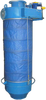
The FULLOAD system is an automated railcar loading system for pelletized or granular materials. Functioning as an extension of a conventional pneumatic transfer system to distribute material in railcar hoppers, the FULLOAD system eliminates the need for conventional gravity loading systems and mechanical spreaders, while achieving a high percentage of fill. The FULLOAD spreader head consists of two dished surfaces appropriately spaced so the conveying air accelerates the material in a radially outward pattern with a slightly upward velocity. The head itself has no moving parts. In addition, the FULLOAD system is equipped with a full complement of features to enhance the safety of personnel and equipment.
Operation
Starting Fulload Operation
- The operator lowers each selected spreader into the hatch until the vent cowling is properly positioned on the lip of the hatch.
- Pressing the reset switch on the hoist pendant activates the spreader heads.
- The filling process begins by starting the conveying blower and rotary air lock.
Automatic Pressure Sensing
- When the hopper is full, the overhead diverter automatically switches flow to the next activated spreader when this pressure exceeds a preset level.
- The last spreader in a set is the KEY spreader which senses the material level before the head is covered. The rotary airlock is signalled to stop, sensing the filled condition and allowing room in the hopper for the material from the conveying line.
- The blower continues to operated, purging the conveying system.
Cleaning the System
- The operator activates the hoist to raise the spreader several inches.
- The reset button is held and conveying air is diverted to the spreader.
- Any residual material inside the spreader heads is air washed into the hopper.
- The spreader is raised to its stored position.
Application
The FULLOAD railcar system can fill railcar hoppers with:
- Plastic Pellets
- Plastic Powders
- Engineered Resins
- Grains
- Coffee Beans
- Any Pelletized Materials
The FULLOAD system is an automated railcar loading system for pelletized or granular materials. Functioning as an extension of a conventional pneumatic transfer system to distribute material in railcar hoppers, the FULLOAD system eliminates the need for conventional gravity loading systems and mechanical spreaders, while achieving a high percentage of fill. The FULLOAD spreader head consists of two dished surfaces appropriately spaced so the conveying air accelerates the material in a radially outward pattern with a slightly upward velocity. The head itself has no moving parts. In addition, the FULLOAD system is equipped with a full complement of features to enhance the safety of personnel and equipment.