Flottweg SE Three-Phase Decanter Centrifuge Tricanter®

Description
The Flottweg Tricanter® For Three-Phase Separation In three-phase separation, it is possible to separated two liquid phases from one solid phase at the same time. The Flottweg Tricanter® is the perfect partner for separating these three phases. The different densities of the (immiscible) liquids and the solid mean that all three phases can be discharged simultaneously using the Tricanter®. This is the reason for the name Tricanter® (tri for three). To ensure that the separation process can take place, the solid phase must be the specifically heaviest phase and the liquid phases must have different densities. Otherwise, the scroll of the decanter will not be able to transport the solid at all, or only inadequately, and this has an affect on the separation result. The structure and function of the Tricanter® are similar to those of a decanter (two-phase separation). The decisive difference between these two machines concerns the way that the liquid is discharged. There are two liquid phases in a Tricanter®. A "heavy" liquid phase (higher density and discharged under pressure) as well as a "light" liquid phase (lower density and discharged without pressure). An adjustable impeller discharges the "heavy" liquid phase. Furthermore, the operator can use the adjustable impeller to adjust the pond depth of the heavy liquid without difficulty during ongoing operation. An adjustment mechanism causes the position of the impeller to change, thus changing the separation line of the liquids. The process engineering results can thus be influenced so as to achieve the required separation result. Tricanter® - Typical Applications For Three-Phase Separation Processing of sludges containing oil from refineries, oil ponds, etc. Extracting animal/vegetable fats and oils Starch manufacture for separating wheat starch and gluten Tricanter® - Advantages And Customer Benefits Greatest possible purity of the liquids to be separated, by using the impeller Other processing steps/separating stages can be dispensed with, or are no longer required, thereby offering cost savings for the plant owner Adaptation to changing conditions (product in the feed) possible at any time Automation is possible Produced, manufactured and developed in Germany, for the highest possible production quality
Datasheet
Description
The Flottweg Tricanter® For Three-Phase Separation In three-phase separation, it is possible to separated two liquid phases from one solid phase at the same time. The Flottweg Tricanter® is the perfect partner for separating these three phases. The different densities of the (immiscible) liquids and the solid mean that all three phases can be discharged simultaneously using the Tricanter®. This is the reason for the name Tricanter® (tri for three). To ensure that the separation process can take place, the solid phase must be the specifically heaviest phase and the liquid phases must have different densities. Otherwise, the scroll of the decanter will not be able to transport the solid at all, or only inadequately, and this has an affect on the separation result. The structure and function of the Tricanter® are similar to those of a decanter (two-phase separation). The decisive difference between these two machines concerns the way that the liquid is discharged. There are two liquid phases in a Tricanter®. A "heavy" liquid phase (higher density and discharged under pressure) as well as a "light" liquid phase (lower density and discharged without pressure). An adjustable impeller discharges the "heavy" liquid phase. Furthermore, the operator can use the adjustable impeller to adjust the pond depth of the heavy liquid without difficulty during ongoing operation. An adjustment mechanism causes the position of the impeller to change, thus changing the separation line of the liquids. The process engineering results can thus be influenced so as to achieve the required separation result. Tricanter® - Typical Applications For Three-Phase Separation Processing of sludges containing oil from refineries, oil ponds, etc. Extracting animal/vegetable fats and oils Starch manufacture for separating wheat starch and gluten Tricanter® - Advantages And Customer Benefits Greatest possible purity of the liquids to be separated, by using the impeller Other processing steps/separating stages can be dispensed with, or are no longer required, thereby offering cost savings for the plant owner Adaptation to changing conditions (product in the feed) possible at any time Automation is possible Produced, manufactured and developed in Germany, for the highest possible production quality
Datasheet

Suppliers

Company
Product
Description
Supplier Links
Three-Phase Decanter Centrifuge - Tricanter® - Flottweg SE
Vilsbiburg, Germany
Three-Phase Decanter Centrifuge
Tricanter®
Three-Phase Decanter Centrifuge Tricanter®
The Flottweg Tricanter® For Three-Phase Separation In three-phase separation, it is possible to separated two liquid phases from one solid phase at the same time. The Flottweg Tricanter® is the perfect partner for separating these three phases. The different densities of the (immiscible) liquids and the solid mean that all three phases can be discharged simultaneously using the Tricanter®. This is the reason for the name Tricanter® (tri for three). To ensure that the separation process can take place, the solid phase must be the specifically heaviest phase and the liquid phases must have different densities. Otherwise, the scroll of the decanter will not be able to transport the solid at all, or only inadequately, and this has an affect on the separation result. The structure and function of the Tricanter® are similar to those of a decanter (two-phase separation). The decisive difference between these two machines concerns the way that the liquid is discharged. There are two liquid phases in a Tricanter®. A "heavy" liquid phase (higher density and discharged under pressure) as well as a "light" liquid phase (lower density and discharged without pressure). An adjustable impeller discharges the "heavy" liquid phase. Furthermore, the operator can use the adjustable impeller to adjust the pond depth of the heavy liquid without difficulty during ongoing operation. An adjustment mechanism causes the position of the impeller to change, thus changing the separation line of the liquids. The process engineering results can thus be influenced so as to achieve the required separation result. Tricanter® - Typical Applications For Three-Phase Separation Processing of sludges containing oil from refineries, oil ponds, etc. Extracting animal/vegetable fats and oils Starch manufacture for separating wheat starch and gluten Tricanter® - Advantages And Customer Benefits Greatest possible purity of the liquids to be separated, by using the impeller Other processing steps/separating stages can be dispensed with, or are no longer required, thereby offering cost savings for the plant owner Adaptation to changing conditions (product in the feed) possible at any time Automation is possible Produced, manufactured and developed in Germany, for the highest possible production quality
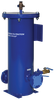
The Flottweg Tricanter® For Three-Phase Separation

In three-phase separation, it is possible to separated two liquid phases from one solid phase at the same time. The Flottweg Tricanter® is the perfect partner for separating these three phases. The different densities of the (immiscible) liquids and the solid mean that all three phases can be discharged simultaneously using the Tricanter®. This is the reason for the name Tricanter® (tri for three).
To ensure that the separation process can take place, the solid phase must be the specifically heaviest phase and the liquid phases must have different densities. Otherwise, the scroll of the decanter will not be able to transport the solid at all, or only inadequately, and this has an affect on the separation result.
The structure and function of the Tricanter® are similar to those of a decanter (two-phase separation). The decisive difference between these two machines concerns the way that the liquid is discharged. There are two liquid phases in a Tricanter®. A "heavy" liquid phase (higher density and discharged under pressure) as well as a "light" liquid phase (lower density and discharged without pressure).
An adjustable impeller discharges the "heavy" liquid phase. Furthermore, the operator can use the adjustable impeller to adjust the pond depth of the heavy liquid without difficulty during ongoing operation. An adjustment mechanism causes the position of the impeller to change, thus changing the separation line of the liquids. The process engineering results can thus be influenced so as to achieve the required separation result.

Tricanter® - Typical Applications For Three-Phase Separation

  • Processing of sludges containing oil from refineries, oil ponds, etc.
  • Extracting animal/vegetable fats and oils
  • Starch manufacture for separating wheat starch and gluten

Tricanter® - Advantages And Customer Benefits

  • Greatest possible purity of the liquids to be separated, by using the impeller
  • Other processing steps/separating stages can be dispensed with, or are no longer required, thereby offering cost savings for the plant owner
  • Adaptation to changing conditions (product in the feed) possible at any time
  • Automation is possible
  • Produced, manufactured and developed in Germany, for the highest possible production quality

Supplier's Site Datasheet

Technical Specifications

  Flottweg SE
Product Category Filtration Equipment
Product Number Tricanter®
Product Name Three-Phase Decanter Centrifuge
Equipment Type Centrifuge
Unlock Full Specs
to access all available technical data

Similar Products

Diesel Filtration Vessel - V Series - Kaydon Filtration Corporation
Kaydon Filtration Corporation
Specs
Description / Other Type Particulate Filtration
Application / Industry Oil / Fuel
View Details
Clarifier -  - Smith & Loveless, Inc.
Smith & Loveless, Inc.
Specs
Equipment Type Conventional Clarifier
Application / Industry Waste / Sludge
View Details