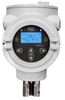
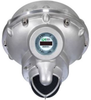
ENMET Corporation SDS-97D Series Sensor/Transmitter Hydrogen Chloride, HCl P/N 10022-0400

Description
P/N 10022-0400, SDS-97D Series Sensor/Transmitter Hydrogen Chloride, HCl Features Non-intrusive push button calibration Excellent chemical selectivity 4-20 mA output, 24 VDC powered One-person calibration Digital display Electrochemical sensors RFI/EMI resistant Optional Precalibrated Sensor Exchange SDS-97D Series Sensor/Transmitters utilize electrochemical type cells to detect the target gas. These cells consist of electrodes, electrolyte and an air/liquid separation barrier. Gas molecules enter the cell and, as a result of an oxidation/reduction reaction, generate an electrical current proportional to the gas concentration. This current is measured, conditioned, converted to the gas concentration, digitally displayed and transmitted as a 4-20 mA output signal. ENMET offers a variety of multi-channel controller/alarm modules that provide the 24 VDC power and receive the 4-20 mA signal from the sensor/transmitters. These sensor/transmitters can also be connected to various computer based instrumentation, PLCs, etc. The use of a gas sampler generally improves monitoring performance for all gases. It is particularly recommended for Cl2, HCl, AsH3, and it is required for monitoring HF and O3. The standard SDS-97D Sensor/Transmitters (P/N 10022-XXXX) incorporate an external push button for non-intrusive zeroing and gas calibration of the device. An optional version of the SDS-97D Sensor/Transmitters (P/N 10021-XXXX) feature a communication port and hand-held programming module (P/N 10021-001) which facilitate the elimination of the need for on-site gas calibration.
Description
P/N 10022-0400, SDS-97D Series Sensor/Transmitter Hydrogen Chloride, HCl Features Non-intrusive push button calibration Excellent chemical selectivity 4-20 mA output, 24 VDC powered One-person calibration Digital display Electrochemical sensors RFI/EMI resistant Optional Precalibrated Sensor Exchange SDS-97D Series Sensor/Transmitters utilize electrochemical type cells to detect the target gas. These cells consist of electrodes, electrolyte and an air/liquid separation barrier. Gas molecules enter the cell and, as a result of an oxidation/reduction reaction, generate an electrical current proportional to the gas concentration. This current is measured, conditioned, converted to the gas concentration, digitally displayed and transmitted as a 4-20 mA output signal. ENMET offers a variety of multi-channel controller/alarm modules that provide the 24 VDC power and receive the 4-20 mA signal from the sensor/transmitters. These sensor/transmitters can also be connected to various computer based instrumentation, PLCs, etc. The use of a gas sampler generally improves monitoring performance for all gases. It is particularly recommended for Cl2, HCl, AsH3, and it is required for monitoring HF and O3. The standard SDS-97D Sensor/Transmitters (P/N 10022-XXXX) incorporate an external push button for non-intrusive zeroing and gas calibration of the device. An optional version of the SDS-97D Sensor/Transmitters (P/N 10021-XXXX) feature a communication port and hand-held programming module (P/N 10021-001) which facilitate the elimination of the need for on-site gas calibration.

Suppliers

Company
Product
Description
Supplier Links
SDS-97D Series Sensor/Transmitter Hydrogen Chloride, HCl - P/N 10022-0400 - ENMET Corporation
Ann Arbor, MI, USA
SDS-97D Series Sensor/Transmitter Hydrogen Chloride, HCl
P/N 10022-0400
SDS-97D Series Sensor/Transmitter Hydrogen Chloride, HCl P/N 10022-0400
P/N 10022-0400, SDS-97D Series Sensor/Transmitter Hydrogen Chloride, HCl Features Non-intrusive push button calibration Excellent chemical selectivity 4-20 mA output, 24 VDC powered One-person calibration Digital display Electrochemical sensors RFI/EMI resistant Optional Precalibrated Sensor Exchange SDS-97D Series Sensor/Transmitters utilize electrochemical type cells to detect the target gas. These cells consist of electrodes, electrolyte and an air/liquid separation barrier. Gas molecules enter the cell and, as a result of an oxidation/reduction reaction, generate an electrical current proportional to the gas concentration. This current is measured, conditioned, converted to the gas concentration, digitally displayed and transmitted as a 4-20 mA output signal. ENMET offers a variety of multi-channel controller/alarm modules that provide the 24 VDC power and receive the 4-20 mA signal from the sensor/transmitters. These sensor/transmitters can also be connected to various computer based instrumentation, PLCs, etc. The use of a gas sampler generally improves monitoring performance for all gases. It is particularly recommended for Cl2, HCl, AsH3, and it is required for monitoring HF and O3. The standard SDS-97D Sensor/Transmitters (P/N 10022-XXXX) incorporate an external push button for non-intrusive zeroing and gas calibration of the device. An optional version of the SDS-97D Sensor/Transmitters (P/N 10021-XXXX) feature a communication port and hand-held programming module (P/N 10021-001) which facilitate the elimination of the need for on-site gas calibration.
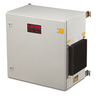
P/N 10022-0400, SDS-97D Series Sensor/Transmitter Hydrogen Chloride, HCl
Features

  • Non-intrusive push button calibration
  • Excellent chemical selectivity
  • 4-20 mA output, 24 VDC powered
  • One-person calibration
  • Digital display
  • Electrochemical sensors
  • RFI/EMI resistant
  • Optional Precalibrated Sensor Exchange

SDS-97D Series Sensor/Transmitters utilize electrochemical type cells to detect the target gas. These cells consist of electrodes, electrolyte and an air/liquid separation barrier. Gas molecules enter the cell and, as a result of an oxidation/reduction reaction, generate an electrical current proportional to the gas concentration. This current is measured, conditioned, converted to the gas concentration, digitally displayed and transmitted as a 4-20 mA output signal. ENMET offers a variety of multi-channel controller/alarm modules that provide the 24 VDC power and receive the 4-20 mA signal from the sensor/transmitters. These sensor/transmitters can also be connected to various computer based instrumentation, PLCs, etc.
The use of a gas sampler generally improves monitoring performance for all gases. It is particularly recommended for Cl2, HCl, AsH3, and it is required for monitoring HF and O3.
The standard SDS-97D Sensor/Transmitters (P/N 10022-XXXX) incorporate an external push button for non-intrusive zeroing and gas calibration of the device. An optional version of the SDS-97D Sensor/Transmitters (P/N 10021-XXXX) feature a communication port and hand-held programming module (P/N 10021-001) which facilitate the elimination of the need for on-site gas calibration.

Supplier's Site

Technical Specifications

  ENMET Corporation
Product Category Gas Transmitters
Product Number P/N 10022-0400
Product Name SDS-97D Series Sensor/Transmitter Hydrogen Chloride, HCl
Gas Types HCl
Electrical Outputs Current
Display Digital
Unlock Full Specs
to access all available technical data

Similar Products

GPR-1500 & GPR-2500 Trace (ppm) & Percent (%) Oxygen Transmitters -  - Analytical Industries Inc.
Specs
Gas Types O2; (from 0…10 ppm to 0…25 %)
Features Hazardous Environment
View Details
Toxic Gas Sensor/Transmitter - GasPost II, RS485 Series - Acme Engineering Products
Specs
Measurement Type Trace
Gas Types Toxic; Combustible; CO; (0-200 PPM); NO2; (0-10 PPM)
Electrical Outputs Voltage (optional feature)
View Details
Fixed Point Gas Detector - Vanguard WirelessHART® - United Electric Controls Company
Specs
Measurement Type %LEL or %LFL; Trace
Gas Types Toxic; Combustible; NH3; (0 - 100 ppm); CO; (0 - 500 ppm); H2S; (0 - 100 ppm); (Propane (C3H8) 0 to 100% LEL)
Display Digital
View Details