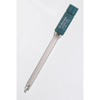
Emerson Automation Solutions – Rosemount HF Resistant pH Sensor Model 372

Description
ENHANCED RESISTANCE TO PROCESS ATTACK provided by field-proven pH glass formulation. EXTENDED SENSOR LIFE provided by double junction reference cell for process solutions that contain poisoning ions. MULTIPLE MOUNTING OPTIONS are accommodated by one-piece construction with process threads in two places. SUPERIOR CHEMICAL RESISTANCE due to rugged Ultem¹ body, completely sealed to eliminate sensor leakage. PH measurement has historically been conducted using thin glass membrane electrodes that slowly dissolve in water, creating a pH sensitive surface layer. Some chemicals and/or conditions accelerate this dissolution process, causing the electrodes to become very fragile and prone to breakage. Examples include high temperatures, caustic exposure, steam exposure, and exposure to hydrofluoric acid. Hydrofluoric acid (HF) is commonly used to etch glass and chemically attacks the silicon-oxygen bonds that hold the glass matrix together. Rosemount Analytical's new Model 372 sensor uses a new glass formulation that slows down this attack considerably, making measurements in up to 1% (10,000 ppm) HF cost effective and economical. The presence of hydrofluoric acid in an application is affected by the pH. When the pH is high, nearly all the fluoride ion will be present in the relatively benign free F- form. Lower pH values will convert the free fluoride to HF and present a much harsher solution to measure. The Rosemount Analytical Model 372 is an easy to install combination sensor that enables pH measurement of solutions containing HF. Although sensor lifetime will differ based on the temperature, pH, and HF exposure, it will last much longer than conventional glass electrodes.
Datasheet
Description
ENHANCED RESISTANCE TO PROCESS ATTACK provided by field-proven pH glass formulation. EXTENDED SENSOR LIFE provided by double junction reference cell for process solutions that contain poisoning ions. MULTIPLE MOUNTING OPTIONS are accommodated by one-piece construction with process threads in two places. SUPERIOR CHEMICAL RESISTANCE due to rugged Ultem¹ body, completely sealed to eliminate sensor leakage. PH measurement has historically been conducted using thin glass membrane electrodes that slowly dissolve in water, creating a pH sensitive surface layer. Some chemicals and/or conditions accelerate this dissolution process, causing the electrodes to become very fragile and prone to breakage. Examples include high temperatures, caustic exposure, steam exposure, and exposure to hydrofluoric acid. Hydrofluoric acid (HF) is commonly used to etch glass and chemically attacks the silicon-oxygen bonds that hold the glass matrix together. Rosemount Analytical's new Model 372 sensor uses a new glass formulation that slows down this attack considerably, making measurements in up to 1% (10,000 ppm) HF cost effective and economical. The presence of hydrofluoric acid in an application is affected by the pH. When the pH is high, nearly all the fluoride ion will be present in the relatively benign free F- form. Lower pH values will convert the free fluoride to HF and present a much harsher solution to measure. The Rosemount Analytical Model 372 is an easy to install combination sensor that enables pH measurement of solutions containing HF. Although sensor lifetime will differ based on the temperature, pH, and HF exposure, it will last much longer than conventional glass electrodes.
Datasheet

Suppliers

Company
Product
Description
Supplier Links
HF Resistant pH Sensor - Model 372 - Emerson Automation Solutions – Rosemount
Irvine, CA, USA
HF Resistant pH Sensor
Model 372
HF Resistant pH Sensor Model 372
ENHANCED RESISTANCE TO PROCESS ATTACK provided by field-proven pH glass formulation. EXTENDED SENSOR LIFE provided by double junction reference cell for process solutions that contain poisoning ions. MULTIPLE MOUNTING OPTIONS are accommodated by one-piece construction with process threads in two places. SUPERIOR CHEMICAL RESISTANCE due to rugged Ultem¹ body, completely sealed to eliminate sensor leakage. PH measurement has historically been conducted using thin glass membrane electrodes that slowly dissolve in water, creating a pH sensitive surface layer. Some chemicals and/or conditions accelerate this dissolution process, causing the electrodes to become very fragile and prone to breakage. Examples include high temperatures, caustic exposure, steam exposure, and exposure to hydrofluoric acid. Hydrofluoric acid (HF) is commonly used to etch glass and chemically attacks the silicon-oxygen bonds that hold the glass matrix together. Rosemount Analytical's new Model 372 sensor uses a new glass formulation that slows down this attack considerably, making measurements in up to 1% (10,000 ppm) HF cost effective and economical. The presence of hydrofluoric acid in an application is affected by the pH. When the pH is high, nearly all the fluoride ion will be present in the relatively benign free F- form. Lower pH values will convert the free fluoride to HF and present a much harsher solution to measure. The Rosemount Analytical Model 372 is an easy to install combination sensor that enables pH measurement of solutions containing HF. Although sensor lifetime will differ based on the temperature, pH, and HF exposure, it will last much longer than conventional glass electrodes.
  • ENHANCED RESISTANCE TO PROCESS ATTACK provided by field-proven pH glass formulation.
  • EXTENDED SENSOR LIFE provided by double junction reference cell for process solutions that contain poisoning ions.
  • MULTIPLE MOUNTING OPTIONS are accommodated by one-piece construction with process threads in two places.
  • SUPERIOR CHEMICAL RESISTANCE due to rugged Ultem¹ body, completely sealed to eliminate sensor leakage.

PH measurement has historically been conducted using thin glass membrane electrodes that slowly dissolve in water, creating a pH sensitive surface layer. Some chemicals and/or conditions accelerate this dissolution process, causing the electrodes to become very fragile and prone to breakage. Examples include high temperatures, caustic exposure, steam exposure, and exposure to hydrofluoric acid. Hydrofluoric acid (HF) is commonly used to etch glass and chemically attacks the silicon-oxygen bonds that hold the glass matrix together.
Rosemount Analytical's new Model 372 sensor uses a new glass formulation that slows down this attack considerably, making measurements in up to 1% (10,000 ppm) HF cost effective and economical.
The presence of hydrofluoric acid in an application is affected by the pH. When the pH is high, nearly all the fluoride ion will be present in the relatively benign free F- form. Lower pH values will convert the free fluoride to HF and present a much harsher solution to measure.
The Rosemount Analytical Model 372 is an easy to install combination sensor that enables pH measurement of solutions containing HF. Although sensor lifetime will differ based on the temperature, pH, and HF exposure, it will last much longer than conventional glass electrodes.

Supplier's Site Datasheet

Technical Specifications

  Emerson Automation Solutions – Rosemount
Product Category pH Electrodes
Product Number Model 372
Product Name HF Resistant pH Sensor
Electrode Configuration Combination
Reference Solution Options Sealed
Junction Type Double Junction
Mounting Options In-Line (Insertion)
Body Material Glass
Unlock Full Specs
to access all available technical data

Similar Products

pH Sensor EASYFERM PLUS K8 120 - 238625 - Hamilton Company
Specs
Electrode Configuration Combination
Mounting Options Hand Held or Portable
Body Material Glass
View Details
Ecotrode Gel - 6.0221.100 - Metrohm USA, Inc.
Specs
Diameter/ Width 0.4724 inch (12 mm)
Length 4.92 inch (125 mm)
pH Range 1 to 11 ph
View Details
Soil pH Meter - PCE-PH 18 - PCE Instruments / PCE Americas Inc.
PCE Instruments / PCE Americas Inc.
Specs
Mounting Options Hand Held or Portable
Body Material Glass
pH Range 0.0 to 14 ph
View Details
AdvantEDGE pH Electrode Sensor -  - HF scientific
Specs
Electrode Configuration SingleCell / No Reference
Junction Type Quad Junction
Mounting Options In-Line (Insertion)
View Details