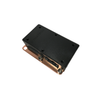
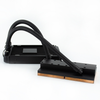
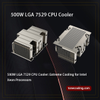
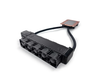
Liquid Cooling Solutions· Precision structure, saving space · No pipe welding technology, reducing the risk of leakage · Simple and convenient installation · Reduce the number of unnecessary joints to reduce the risk of leakage
1. Superior Heat Transfer: Liquid cooling can conduct heat between 50 and 1,000 times more efficiently than air, ensuring effective heat dissipation from critical components like CPUs and GPUs
2. Energy Efficiency: By using liquids to transfer heat, these solutions can significantly reduce energy consumption compared to traditional air cooling methods
3. Compact Design: Liquid cooling systems are often more compact, allowing for higher density installations and better space utilization in data centers and other environmentsh
4. Enhanced Performance: These systems support higher operating temperatures per rack, which can improve overall system performance and reliability
1. Data Centers: Liquid cooling is highly effective in data centers, where it helps manage the heat generated by high-density servers and other hardware. This method is more efficient than traditional air cooling, reducing energy consumption and operational costs
2. High-Performance Computing (HPC): In HPC environments, liquid cooling is essential for maintaining optimal temperatures of powerful processors and GPUs, ensuring peak performance and reliability
3. Telecommunications: As telecom networks expand and demand increases, liquid cooling helps maintain the performance and longevity of critical infrastructure
4. Automotive Industry: Electric vehicles (EVs) and autonomous driving systems benefit from liquid cooling to manage the heat produced by batteries and electronic components, enhancing efficiency and safety
Battery Cold Plates is a precision-engineered thermal management component designed for high-power electronics cooling. ToneCooling provides battery cold plates solutions […]
EV battery cooling methods – air cooling, liquid cooling and direct refrigerant cooling – all manage pack temperature differently and […]
This comprehensive guide covers how does ev battery solutions for industrial and OEM applications. ToneCooling provides expert insights on how […]
Water cooling provides superior heat dissipation for processors. This method allows higher clock speeds and greater system stability. Users achieve […]
Data centers today face growing challenges in thermal management as high-performance servers, AI workloads, and dense storage systems generate unprecedented […]
This comprehensive guide covers best gpu cooling solution solutions for industrial and OEM applications. ToneCooling provides expert insights on best […]
Choosing the best coolant for copper cold plate and aluminum radiator in AIO cooling systems ensures optimal performance and long-term […]
This comprehensive guide covers are they worth considering solutions for industrial and OEM applications. ToneCooling provides expert insights on are […]
Liquid Cooling Solutions· Precision structure, saving space
· No pipe welding technology, reducing the risk of leakage
· Simple and convenient installation
· Reduce the number of unnecessary joints to reduce the risk of leakage
1. Superior Heat Transfer: Liquid cooling can conduct heat between 50 and 1,000 times more efficiently than air, ensuring effective heat dissipation from critical components like CPUs and GPUs
2. Energy Efficiency: By using liquids to transfer heat, these solutions can significantly reduce energy consumption compared to traditional air cooling methods
3. Compact Design: Liquid cooling systems are often more compact, allowing for higher density installations and better space utilization in data centers and other environmentsh
4. Enhanced Performance: These systems support higher operating temperatures per rack, which can improve overall system performance and reliability
1.
Data Centers: Liquid cooling is highly effective in data centers, where it helps manage the heat generated by high-density servers and other hardware. This method is more efficient than traditional air cooling, reducing energy consumption and operational costs
2. High-Performance Computing (HPC): In HPC environments, liquid cooling is essential for maintaining optimal temperatures of powerful processors and GPUs, ensuring peak performance and reliability
3. Telecommunications: As telecom networks expand and demand increases, liquid cooling helps maintain the performance and longevity of critical infrastructure
4. Automotive Industry: Electric vehicles (EVs) and autonomous driving systems benefit from liquid cooling to manage the heat produced by batteries and electronic components, enhancing efficiency and safety
Battery Cold Plates is a precision-engineered thermal management component designed for high-power electronics cooling. ToneCooling provides battery cold plates solutions […]
EV battery cooling methods – air cooling, liquid cooling and direct refrigerant cooling – all manage pack temperature differently and […]
This comprehensive guide covers how does ev battery solutions for industrial and OEM applications. ToneCooling provides expert insights on how […]
Water cooling provides superior heat dissipation for processors. This method allows higher clock speeds and greater system stability. Users achieve […]
Data centers today face growing challenges in thermal management as high-performance servers, AI workloads, and dense storage systems generate unprecedented […]
This comprehensive guide covers best gpu cooling solution solutions for industrial and OEM applications. ToneCooling provides expert insights on best […]
Choosing the best coolant for copper cold plate and aluminum radiator in AIO cooling systems ensures optimal performance and long-term […]
This comprehensive guide covers are they worth considering solutions for industrial and OEM applications. ToneCooling provides expert insights on are […]