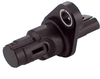
For the engine management, speed sensors provide information on the exact position of the crankshaft or camshaft. This information provides the basis for the modern engine control for the regulation of ignition and injection times, and the fresh gas and exhaust gas regulation. In addition to observing legal exhaust gas levels, this also ensures optimization of the engine performance, a reduction in fuel consumption and improved running smoothness.
Benefits and Features
Determination of the turning speed of the engine (speed of the target wheel)
Determination of the exact position of the crankshaft / camshaft = piston position (electronic mapping of the target wheel position)
"True Power on" (camshaft) and “direction sensing” (crankshaft) respectively
Axial or radial reading
Use of “self-learning” IC (“optimization” of the signal precision by the “adaptive” reading of the target wheel profile)
Very high level of precision (± 1° typical) and reliability of the signal (repetition accuracy)
High temperature resistance (-40 to +150°C) / vibration resistance
Technical Data
Phase accuracy ± 2,5° full space, Target wheel dependant, device calibrated
Air gap range 0.1..1.9 mm
Temperature range -40..160 °C
Speed range 0..4000 rpm
Voltage range 5..18 V (jump start 28 V)
For the engine management, speed sensors provide information on the exact position of the crankshaft or camshaft. This information provides the basis for the modern engine control for the regulation of ignition and injection times, and the fresh gas and exhaust gas regulation. In addition to observing legal exhaust gas levels, this also ensures optimization of the engine performance, a reduction in fuel consumption and improved running smoothness.
Benefits and Features
- Determination of the turning speed of the engine (speed of the target wheel)
- Determination of the exact position of the crankshaft / camshaft = piston position (electronic mapping of the target wheel position)
- "True Power on" (camshaft) and “direction sensing” (crankshaft) respectively
- Axial or radial reading
- Use of “self-learning” IC (“optimization” of the signal precision by the “adaptive” reading of the target wheel profile)
- Very high level of precision (± 1° typical) and reliability of the signal (repetition accuracy)
- High temperature resistance (-40 to +150°C) / vibration resistance
Technical Data
- Phase accuracy ± 2,5° full space, Target wheel dependant, device calibrated
- Air gap range 0.1..1.9 mm
- Temperature range -40..160 °C
- Speed range 0..4000 rpm
- Voltage range 5..18 V (jump start 28 V)