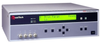
Chroma Systems Solutions, Inc. LCR Meter 1910

Description
The 1910 is a 1 MHz LCR meter from QuadTech. An LCR meter is a piece of electronic test equipment that measures inductance (L), capacitance (C), and resistance (R) of electronic components. The LCR meter accurately measures these elements on an electronic device, usually one subjected to an alternating current (AC) voltage source. The LCR meter measures the current through and voltage across the device under test. Additional Features: 20Hz to 1MHz Frequency Range 0.1% Basic Measurement Accuracy Selectable source Impedence Displays Voltage and Current Measurements Wide Measurement Range with 5 Digit Measurement Resolution Four-terminal Kelvin connections to maintain measurement integrity 1A DC Bias PC Software Configurable Multiple Steps Sequence Testing up to six individual tests in one pass Menu driven interface provides user friendly operation Measurement auto ranging or manual hold 15 total bins Measurement averaging from 1 to 1000 IEEE-488.2, RS-232, handler, and serial printer interfaces all standard Display of DUT actual voltage Display of DUT current Load Correction Specifications Test Frequency Range: 20Hz to 1MHz, Continuous Resolution: 1Hz from 20Hz to 1KHz 4 digits >1KHz Accuracy: +/- (0.01% +0.02 Hz) Measurement Speed Fast: 40 meas/sec Medium: 8 meas/sec Slow: 1 meas/sec Ranging Automatic, Range Hold or user selectable Trigger Internal (automatic) External: Via RS-232, IEEE-488.2 or Handler interfaces Manual Source Impedance 5V, 25V, 50V, 100V, or matched impedance, range dependent AC Test Signal Voltage: 20mV to 1.0V (open circuit) in 5 mV steps DC Bias Current Internal: 0.0 to 1.0A in 1mA steps External: 0.0 to 20.0A in 5mA steps using QuadTech 1320 Display LCD Display with backlight Results Formats Engineering numeric format % Deviation from nominal of primary parameter Deviation from nominal of primary parameter Pass/Fail No Display Mode for maximum throughput Sequencing: Displays up to 6 sequential test results, primary and/or secondary Standard Interfaces IEEE-488.2 • RS-232 • Handler • Serial Printer Measurement Delay Programmable from 0 to 1000 ms in 1ms steps Averaging Programmable from 1 to 1000 Median Value Averaged over last three measurements Calibration Recommended interval 1 year NIST traceable calibration Built-in automatic calibration procedure Usage & Cal Data Displays last calibration date, standard values used in calibration Self Test Verifies critical instrument operation at power-up or when selected from menu Test Terminals Front panel, four terminal (BNC) Optional Test Fixtures Available Mechanical Bench mount with tilt bail Rack mount kit optional Dimensions: 17x 5.25x 16in (432x 133x 406 mm) Enviromental Meets MIL-T-28800E, Type3, Class 5, Style E & F Operating 0° to +50°C Humidity < 75% for 11° to 30°C operating Storage -40° to +71° C The 1910 Inductance Analyzer is designed to perform inductance and impedance measurements on coils and wire wound devices over a frequency range from 20Hz to 1MHz. Emphasis has been placed on ease of use through menu programming, and fast accurate production testing via its remote control capability 15 Different Impedance Parameters/20 Total Parameters Measure and display any two parameters simutaneously, to achieve coverage and flexibility not previously available. Automatic Test Sequencing Run up to six different tests in sequence with a single push of the start button. Each test can have different conditions and limits. Program and Data Storage Test setups can be stored and recalled from internal memory. The front panel can be locked out, with password protection, to ensure procedures are run the same way every time. Load Correction Substantially improves instrument accuracy by performing measurements on a known standard and applying correction to subsequent measurements. Ideal for repetitive testing of identical devices at like test conditions.
Datasheet
Description
The 1910 is a 1 MHz LCR meter from QuadTech. An LCR meter is a piece of electronic test equipment that measures inductance (L), capacitance (C), and resistance (R) of electronic components. The LCR meter accurately measures these elements on an electronic device, usually one subjected to an alternating current (AC) voltage source. The LCR meter measures the current through and voltage across the device under test. Additional Features: 20Hz to 1MHz Frequency Range 0.1% Basic Measurement Accuracy Selectable source Impedence Displays Voltage and Current Measurements Wide Measurement Range with 5 Digit Measurement Resolution Four-terminal Kelvin connections to maintain measurement integrity 1A DC Bias PC Software Configurable Multiple Steps Sequence Testing up to six individual tests in one pass Menu driven interface provides user friendly operation Measurement auto ranging or manual hold 15 total bins Measurement averaging from 1 to 1000 IEEE-488.2, RS-232, handler, and serial printer interfaces all standard Display of DUT actual voltage Display of DUT current Load Correction Specifications Test Frequency Range: 20Hz to 1MHz, Continuous Resolution: 1Hz from 20Hz to 1KHz 4 digits >1KHz Accuracy: +/- (0.01% +0.02 Hz) Measurement Speed Fast: 40 meas/sec Medium: 8 meas/sec Slow: 1 meas/sec Ranging Automatic, Range Hold or user selectable Trigger Internal (automatic) External: Via RS-232, IEEE-488.2 or Handler interfaces Manual Source Impedance 5V, 25V, 50V, 100V, or matched impedance, range dependent AC Test Signal Voltage: 20mV to 1.0V (open circuit) in 5 mV steps DC Bias Current Internal: 0.0 to 1.0A in 1mA steps External: 0.0 to 20.0A in 5mA steps using QuadTech 1320 Display LCD Display with backlight Results Formats Engineering numeric format % Deviation from nominal of primary parameter Deviation from nominal of primary parameter Pass/Fail No Display Mode for maximum throughput Sequencing: Displays up to 6 sequential test results, primary and/or secondary Standard Interfaces IEEE-488.2 • RS-232 • Handler • Serial Printer Measurement Delay Programmable from 0 to 1000 ms in 1ms steps Averaging Programmable from 1 to 1000 Median Value Averaged over last three measurements Calibration Recommended interval 1 year NIST traceable calibration Built-in automatic calibration procedure Usage & Cal Data Displays last calibration date, standard values used in calibration Self Test Verifies critical instrument operation at power-up or when selected from menu Test Terminals Front panel, four terminal (BNC) Optional Test Fixtures Available Mechanical Bench mount with tilt bail Rack mount kit optional Dimensions: 17x 5.25x 16in (432x 133x 406 mm) Enviromental Meets MIL-T-28800E, Type3, Class 5, Style E & F Operating 0° to +50°C Humidity < 75% for 11° to 30°C operating Storage -40° to +71° C The 1910 Inductance Analyzer is designed to perform inductance and impedance measurements on coils and wire wound devices over a frequency range from 20Hz to 1MHz. Emphasis has been placed on ease of use through menu programming, and fast accurate production testing via its remote control capability 15 Different Impedance Parameters/20 Total Parameters Measure and display any two parameters simutaneously, to achieve coverage and flexibility not previously available. Automatic Test Sequencing Run up to six different tests in sequence with a single push of the start button. Each test can have different conditions and limits. Program and Data Storage Test setups can be stored and recalled from internal memory. The front panel can be locked out, with password protection, to ensure procedures are run the same way every time. Load Correction Substantially improves instrument accuracy by performing measurements on a known standard and applying correction to subsequent measurements. Ideal for repetitive testing of identical devices at like test conditions.
Datasheet

Suppliers

Company
Product
Description
Supplier Links
LCR Meter 1910
The 1910 is a 1 MHz LCR meter from QuadTech. An LCR meter is a piece of electronic test equipment that measures inductance (L), capacitance (C), and resistance (R) of electronic components. The LCR meter accurately measures these elements on an electronic device, usually one subjected to an alternating current (AC) voltage source. The LCR meter measures the current through and voltage across the device under test. Additional Features: 20Hz to 1MHz Frequency Range 0.1% Basic Measurement Accuracy Selectable source Impedence Displays Voltage and Current Measurements Wide Measurement Range with 5 Digit Measurement Resolution Four-terminal Kelvin connections to maintain measurement integrity 1A DC Bias PC Software Configurable Multiple Steps Sequence Testing up to six individual tests in one pass Menu driven interface provides user friendly operation Measurement auto ranging or manual hold 15 total bins Measurement averaging from 1 to 1000 IEEE-488.2, RS-232, handler, and serial printer interfaces all standard Display of DUT actual voltage Display of DUT current Load Correction Specifications Test Frequency Range: 20Hz to 1MHz, Continuous Resolution: 1Hz from 20Hz to 1KHz 4 digits >1KHz Accuracy: +/- (0.01% +0.02 Hz) Measurement Speed Fast: 40 meas/sec Medium: 8 meas/sec Slow: 1 meas/sec Ranging Automatic, Range Hold or user selectable Trigger Internal (automatic) External: Via RS-232, IEEE-488.2 or Handler interfaces Manual Source Impedance 5V, 25V, 50V, 100V, or matched impedance, range dependent AC Test Signal Voltage: 20mV to 1.0V (open circuit) in 5 mV steps DC Bias Current Internal: 0.0 to 1.0A in 1mA steps External: 0.0 to 20.0A in 5mA steps using QuadTech 1320 Display LCD Display with backlight Results Formats Engineering numeric format % Deviation from nominal of primary parameter Deviation from nominal of primary parameter Pass/Fail No Display Mode for maximum throughput Sequencing: Displays up to 6 sequential test results, primary and/or secondary Standard Interfaces IEEE-488.2 • RS-232 • Handler • Serial Printer Measurement Delay Programmable from 0 to 1000 ms in 1ms steps Averaging Programmable from 1 to 1000 Median Value Averaged over last three measurements Calibration Recommended interval 1 year NIST traceable calibration Built-in automatic calibration procedure Usage & Cal Data Displays last calibration date, standard values used in calibration Self Test Verifies critical instrument operation at power-up or when selected from menu Test Terminals Front panel, four terminal (BNC) Optional Test Fixtures Available Mechanical Bench mount with tilt bail Rack mount kit optional Dimensions: 17x 5.25x 16in (432x 133x 406 mm) Enviromental Meets MIL-T-28800E, Type3, Class 5, Style E & F Operating 0° to +50°C Humidity < 75% for 11° to 30°C operating Storage -40° to +71° C The 1910 Inductance Analyzer is designed to perform inductance and impedance measurements on coils and wire wound devices over a frequency range from 20Hz to 1MHz. Emphasis has been placed on ease of use through menu programming, and fast accurate production testing via its remote control capability 15 Different Impedance Parameters/20 Total Parameters Measure and display any two parameters simutaneously, to achieve coverage and flexibility not previously available. Automatic Test Sequencing Run up to six different tests in sequence with a single push of the start button. Each test can have different conditions and limits. Program and Data Storage Test setups can be stored and recalled from internal memory. The front panel can be locked out, with password protection, to ensure procedures are run the same way every time. Load Correction Substantially improves instrument accuracy by performing measurements on a known standard and applying correction to subsequent measurements. Ideal for repetitive testing of identical devices at like test conditions.

The 1910 is a 1 MHz LCR meter from QuadTech. An LCR meter is a piece of electronic test equipment that measures inductance (L), capacitance (C), and resistance (R) of electronic components. The LCR meter accurately measures these elements on an electronic device, usually one subjected to an alternating current (AC) voltage source. The LCR meter measures the current through and voltage across the device under test.

Additional Features:

  • 20Hz to 1MHz Frequency Range
  • 0.1% Basic Measurement Accuracy
  • Selectable source Impedence
  • Displays Voltage and Current Measurements
  • Wide Measurement Range with 5 Digit Measurement Resolution
  • Four-terminal Kelvin connections to maintain measurement integrity
  • 1A DC Bias
  • PC Software Configurable
  • Multiple Steps
  • Sequence Testing up to six individual tests in one pass
  • Menu driven interface provides user friendly operation
  • Measurement auto ranging or manual hold
  • 15 total bins
  • Measurement averaging from 1 to 1000
  • IEEE-488.2, RS-232, handler, and serial printer interfaces all standard
  • Display of DUT actual voltage
  • Display of DUT current
  • Load Correction

Specifications

Test Frequency

  • Range: 20Hz to 1MHz, Continuous
  • Resolution: 1Hz from 20Hz to 1KHz
  • 4 digits >1KHz
  • Accuracy: +/- (0.01% +0.02 Hz)

Measurement Speed

  • Fast: 40 meas/sec
  • Medium: 8 meas/sec
  • Slow: 1 meas/sec

Ranging

  • Automatic, Range Hold or user selectable

Trigger

  • Internal (automatic)
  • External: Via RS-232, IEEE-488.2 or Handler interfaces
  • Manual

Source Impedance

  • 5V, 25V, 50V, 100V, or matched impedance, range dependent

AC Test Signal

  • Voltage: 20mV to 1.0V (open circuit) in 5 mV steps

DC Bias Current

  • Internal: 0.0 to 1.0A in 1mA steps
  • External: 0.0 to 20.0A in 5mA steps using QuadTech 1320

Display

  • LCD Display with backlight

Results Formats

  • Engineering numeric format
  • % Deviation from nominal of primary parameter
  • Deviation from nominal of primary parameter
  • Pass/Fail
  • No Display Mode for maximum throughput

Sequencing:

  • Displays up to 6 sequential test results, primary and/or secondary

Standard Interfaces

  • IEEE-488.2 • RS-232 • Handler • Serial Printer

Measurement Delay

  • Programmable from 0 to 1000 ms in 1ms steps

Averaging

  • Programmable from 1 to 1000

Median Value

  • Averaged over last three measurements

Calibration

  • Recommended interval 1 year
  • NIST traceable calibration
  • Built-in automatic calibration procedure

Usage & Cal Data

  • Displays last calibration date, standard values used in calibration

Self Test

  • Verifies critical instrument operation at power-up or when selected from menu

Test Terminals

  • Front panel, four terminal (BNC)
  • Optional Test Fixtures Available

Mechanical

  • Bench mount with tilt bail
  • Rack mount kit optional
  • Dimensions: 17x 5.25x 16in (432x 133x 406 mm)

Enviromental

  • Meets MIL-T-28800E, Type3, Class 5, Style E & F
  • Operating 0° to +50°C
  • Humidity < 75% for 11° to 30°C operating
  • Storage -40° to +71° C

The 1910 Inductance Analyzer is designed to perform inductance and impedance measurements on coils and wire wound devices over a frequency range from 20Hz to 1MHz. Emphasis has been placed on ease of use through menu programming, and fast accurate production testing via its remote control capability

15 Different Impedance Parameters/20 Total Parameters

Measure and display any two parameters simutaneously, to achieve coverage and flexibility not previously available.

Automatic Test Sequencing

Run up to six different tests in sequence with a single push of the start button. Each test can have different conditions and limits.

Program and Data Storage

Test setups can be stored and recalled from internal memory. The front panel can be locked out, with password protection, to ensure procedures are run the same way every time.

Load Correction

Substantially improves instrument accuracy by performing measurements on a known standard and applying correction to subsequent measurements. Ideal for repetitive testing of identical devices at like test conditions.

Supplier's Site Datasheet

Technical Specifications

  ValueTronics International, Inc.
Product Category LCR Meters
Product Number 1910
Product Name LCR Meter
Unlock Full Specs
to access all available technical data

Similar Products

UT622A LCR Meter - UT622A - Uni-Trend US
Specs
Form Factor Handheld
Standards and Certifications RoHS
View Details
LCR Meter - K5050 - REED-Direct
Specs
Form Factor Handheld
Display Type Digital
Display Digits 3 Digits; Plus a 1/2 digit
View Details
Impedance Analyzer - MFIA - Zurich Instruments
Zurich Instruments
Specs
Form Factor Bench top
Options & Features Has Application Software for Host Computer (optional feature)
Output Interface Universal Serial Bus; LAN 1GbE
View Details
