Bio-Rad Laboratories, Inc. HRP Conjugate Substrate Kit 170-6431

Description
Colorimetric HRP substrate reagent kit, includes premixed 4CN, hydrogen peroxide solutions, color development buffer; makes 1 L color development solution Enzymes such as HRP or AP convert several substrates to a colored precipitate. As the precipitate accumulates on the blot, a colored signal develops. The reaction can be monitored and stopped when the desired signal over background is observed. Colorimetric detection is easier to perform than film-based chemiluminescence detection; however, the method's single endpoint result does not allow the multiple exposures of chemiluminescence methods. Colorimetric detection is typically considered a medium-sensitivity method compared to radioactive or chemiluminescence detection. Bio-Rad's HRP-based colorimetric detection systems offer a choice of HRP-conjugated secondary antibodies and HRP-conjugated protein A or protein G using the detection reagent 4-chloro-1-naphthol( 4CN). Bio-Rad offers three types of kits based on this chemistry for colorimetric HRP detection; individual reagents are also available, including 3,3'-diaminobenzidin e (DAB), an alternative reagent.
Description
Colorimetric HRP substrate reagent kit, includes premixed 4CN, hydrogen peroxide solutions, color development buffer; makes 1 L color development solution Enzymes such as HRP or AP convert several substrates to a colored precipitate. As the precipitate accumulates on the blot, a colored signal develops. The reaction can be monitored and stopped when the desired signal over background is observed. Colorimetric detection is easier to perform than film-based chemiluminescence detection; however, the method's single endpoint result does not allow the multiple exposures of chemiluminescence methods. Colorimetric detection is typically considered a medium-sensitivity method compared to radioactive or chemiluminescence detection. Bio-Rad's HRP-based colorimetric detection systems offer a choice of HRP-conjugated secondary antibodies and HRP-conjugated protein A or protein G using the detection reagent 4-chloro-1-naphthol( 4CN). Bio-Rad offers three types of kits based on this chemistry for colorimetric HRP detection; individual reagents are also available, including 3,3'-diaminobenzidin e (DAB), an alternative reagent.

Suppliers

Company
Product
Description
Supplier Links
HRP Conjugate Substrate Kit - 170-6431 - Bio-Rad Laboratories, Inc.
Hercules, CA, USA
HRP Conjugate Substrate Kit
170-6431
HRP Conjugate Substrate Kit 170-6431
Colorimetric HRP substrate reagent kit, includes premixed 4CN, hydrogen peroxide solutions, color development buffer; makes 1 L color development solution Enzymes such as HRP or AP convert several substrates to a colored precipitate. As the precipitate accumulates on the blot, a colored signal develops. The reaction can be monitored and stopped when the desired signal over background is observed. Colorimetric detection is easier to perform than film-based chemiluminescence detection; however, the method's single endpoint result does not allow the multiple exposures of chemiluminescence methods. Colorimetric detection is typically considered a medium-sensitivity method compared to radioactive or chemiluminescence detection. Bio-Rad's HRP-based colorimetric detection systems offer a choice of HRP-conjugated secondary antibodies and HRP-conjugated protein A or protein G using the detection reagent 4-chloro-1-naphthol( 4CN). Bio-Rad offers three types of kits based on this chemistry for colorimetric HRP detection; individual reagents are also available, including 3,3'-diaminobenzidin e (DAB), an alternative reagent.

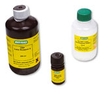
Colorimetric HRP substrate reagent kit, includes premixed 4CN, hydrogen peroxide solutions, color development buffer; makes 1 L color development solution

Enzymes such as HRP or AP convert several substrates to a colored precipitate. As the precipitate accumulates on the blot, a colored signal develops. The reaction can be monitored and stopped when the desired signal over background is observed. Colorimetric detection is easier to perform than film-based chemiluminescence detection; however, the method's single endpoint result does not allow the multiple exposures of chemiluminescence methods. Colorimetric detection is typically considered a medium-sensitivity method compared to radioactive or chemiluminescence detection.

Bio-Rad's HRP-based colorimetric detection systems offer a choice of HRP-conjugated secondary antibodies and HRP-conjugated protein A or protein G using the detection reagent 4-chloro-1-naphthol(4CN). Bio-Rad offers three types of kits based on this chemistry for colorimetric HRP detection; individual reagents are also available, including 3,3'-diaminobenzidine (DAB), an alternative reagent.
Supplier's Site

Technical Specifications

  Bio-Rad Laboratories, Inc.
Product Category Organic Chemicals
Product Number 170-6431
Product Name HRP Conjugate Substrate Kit
Trigger Base
Unlock Full Specs
to access all available technical data

Similar Products

AsahiKlin Precision Cleaning Solvent - AE3100E - AGC Chemicals Americas, Inc.
Specs
Trigger Solvent
Chemical Family All Halogenated; All Ethers; Ethanol
Chemical Name 1,1,2,2- tetra fluoroethyl-2,2,2- trifluoro ethyl ether
View Details
DMI 1,3 Dimethyl-2-Imidazolidinone -  - Mitsui Chemicals America, Inc.
Mitsui Chemicals America, Inc.
Specs
Trigger Solvent
Chemical Name DMI 1,3 Dimethyl-2-Imidazolidinone
State of Matter Liquid / Solution
View Details
Ferrous Gluconate USP/FCC Powder - 2387 - Jost Chemical USA
Specs
Chemical Name Ferrous Gluconate USP/FCC Powder
Chemical Formula Fe(C6H11O7)2 · 2H2O
CAS Number 299-29-6
View Details
Piedmont Chemical Industries, Inc.
View Details