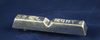
Belmont Metals, Inc. 35% Tin Pewter Alloy 5632A

Description
Pewter Featuring Lead Free Pewter and Lead Free Pewter alloyed with Silver, Indium, and Bismuth, as well as Brittania, and Genuine Pewter Pewter is a malleable metal alloy, traditionally 85 -95% Tin, with the remainder consisting of Copper, Antimony, Bismuth and sometimes, less commonly today, Lead. Silver is also sometimes used. Copper and Antimony act as hardeners while Lead is common in the lower grades of Pewter, which have a bluish tint. It has a melting point, around 338 – 446 F ( 170 – 230 C ), depending on the exact mixture. Pewter was first used around the beginning of the Bronze Age in the Near East. The earliest piece of Pewter found is from an Egyptian tomb from 1450 BC. Pewters containing Lead are no longer used in items such as cups, plates, or jewelry ) that will come in contact with the human body due to health concerns stemming from the Lead content. Modern Pewters are available that are completely free of Lead, although many Pewters containing Lead are still being produced for other purposes. Applications: Pewter is used in decorative objects, mainly collectible statuettes and figurines, game figures, aircraft and other models, (replica ) coins, pendants, and plated jewelry. Forms: 5 Section – 6 Lb. Ingot, 5 Section – 8 Lb. Ingot, Shot

Suppliers

Company
Product
Description
Supplier Links
35% Tin Pewter Alloy - 5632A - Belmont Metals, Inc.
Brooklyn, NY, USA
35% Tin Pewter Alloy
5632A
35% Tin Pewter Alloy 5632A
Pewter Featuring Lead Free Pewter and Lead Free Pewter alloyed with Silver, Indium, and Bismuth, as well as Brittania, and Genuine Pewter Pewter is a malleable metal alloy, traditionally 85 -95% Tin, with the remainder consisting of Copper, Antimony, Bismuth and sometimes, less commonly today, Lead. Silver is also sometimes used. Copper and Antimony act as hardeners while Lead is common in the lower grades of Pewter, which have a bluish tint. It has a melting point, around 338 – 446 F ( 170 – 230 C ), depending on the exact mixture. Pewter was first used around the beginning of the Bronze Age in the Near East. The earliest piece of Pewter found is from an Egyptian tomb from 1450 BC. Pewters containing Lead are no longer used in items such as cups, plates, or jewelry ) that will come in contact with the human body due to health concerns stemming from the Lead content. Modern Pewters are available that are completely free of Lead, although many Pewters containing Lead are still being produced for other purposes. Applications: Pewter is used in decorative objects, mainly collectible statuettes and figurines, game figures, aircraft and other models, (replica ) coins, pendants, and plated jewelry. Forms: 5 Section – 6 Lb. Ingot, 5 Section – 8 Lb. Ingot, Shot

Pewter

Featuring Lead Free Pewter and Lead Free Pewter alloyed with Silver, Indium, and Bismuth, as well as Brittania, and Genuine Pewter

Pewter is a malleable metal alloy, traditionally 85 -95% Tin, with the remainder consisting of Copper, Antimony, Bismuth and sometimes, less commonly today, Lead. Silver is also sometimes used. Copper and Antimony act as hardeners while Lead is common in the lower grades of Pewter, which have a bluish tint. It has a melting point, around 338 – 446 F ( 170 – 230 C ), depending on the exact mixture.

Pewter was first used around the beginning of the Bronze Age in the Near East. The earliest piece of Pewter found is from an Egyptian tomb from 1450 BC. Pewters containing Lead are no longer used in items such as cups, plates, or jewelry ) that will come in contact with the human body due to health concerns stemming from the Lead content. Modern Pewters are available that are completely free of Lead, although many Pewters containing Lead are still being produced for other purposes.

Applications:

Pewter is used in decorative objects, mainly collectible statuettes and figurines, game figures, aircraft and other models, (replica ) coins, pendants, and plated jewelry.

Forms:

5 Section – 6 Lb. Ingot, 5 Section – 8 Lb. Ingot, Shot

Supplier's Site
35% Tin Pewter Alloy - 5632A - Belmont Metals, Inc.
Brooklyn, NY, USA
35% Tin Pewter Alloy
5632A
35% Tin Pewter Alloy 5632A
Lead Alloys Featuring 99.99% Lead in a variety of forms, Pb-Base Babbitt and casting alloys for jewelry and ornamental products, and Pb-Base Solders Lead has been commonly used for thousands of years because it is widespread, easy to extract and easy to work with since it is highly malleable as well as easy to smelt. The largest preindustrial producer of lead was the Roman economy, with an estimated annual output of 80,000 tonnes used for many applications including the water system. In modern times, Lead is used in building construction, lead-acid batteries, bullet and shot, weights, as part of solders, pewters, fusible alloys, and as a radiation shield. Applications: Babbitt Alloys, Casting Alloys, Lead Weights, Bricks for Radiation Protection, Accoustical Sheet, Fusible Alloys Forms: Pig, Ingot, Shot, Sheet

Lead Alloys

Featuring 99.99% Lead in a variety of forms, Pb-Base Babbitt and casting alloys for jewelry and ornamental products, and Pb-Base Solders

Lead has been commonly used for thousands of years because it is widespread, easy to extract and easy to work with since it is highly malleable as well as easy to smelt. The largest preindustrial producer of lead was the Roman economy, with an estimated annual output of 80,000 tonnes used for many applications including the water system. In modern times, Lead is used in building construction, lead-acid batteries, bullet and shot, weights, as part of solders, pewters, fusible alloys, and as a radiation shield.

Applications:

Babbitt Alloys, Casting Alloys, Lead Weights, Bricks for Radiation Protection, Accoustical Sheet, Fusible Alloys

Forms:

Pig, Ingot, Shot, Sheet

Supplier's Site

Technical Specifications

  Belmont Metals, Inc. Belmont Metals, Inc.
Product Category Metal Shapes and Stock Metal Shapes and Stock
Product Number 5632A 5632A
Product Name 35% Tin Pewter Alloy 35% Tin Pewter Alloy
Type LowMelting; Lead; Tin LowMelting; Lead; Tin
Unlock Full Specs
to access all available technical data

Similar Products

Thermoelectric Alloy - ISA®-MINUS - Isabellenhutte USA
Specs
Type Copper; Alloy
Shape / Form Sheet; Semi-finished, Mill Stock or Near Net Shapes
Specifications EN
View Details
Custom Roll Formed Heat Transfer Plates -  - MP Metal Products
Specs
Processing, Temper & Finish Wrought
Applications Automotive or Vehicular; BuildingConstruction; HV / Electrical; Agricultural, Transportation, Construction, Material Handling, Storage, Medical, Furniture, Recreation, and Other Markets
View Details
Precision Thin Nickel & Nickel Alloys -  - Arnold Magnetic Technologies
Arnold Magnetic Technologies
Specs
Type Nickel
Shape / Form Sheet; Semi-finished, Mill Stock or Near Net Shapes; Strip; Foil
Features Corrosion Resistant
View Details
 - Haynes 25® / L605 - Sheet - High Performance Alloys, Inc.
High Performance Alloys, Inc.
Specs
Type Cobalt; Alloy; Miscellaneous Nonferrous Metal or Alloy
Shape / Form Profile or Structural Shape; Sheet; Semi-finished, Mill Stock or Near Net Shapes
Features Austenitic; Corrosion Resistant; Heat Resistant; Superalloy; Wear Resistant
View Details