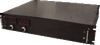
American High Voltage, Inc. FR Series FR-30P

Description
Full Rack Laboratory Use Output Voltage: FR series are available in multiple output voltages ranging from +/-1,000VDC to +/-125,000VDC Power: 250W Dimension: Full Rack Electrical Characteristics & Description The standard input voltage is 115 VAC, 50 - 100 Hz. Other voltages are available upon request. All units offer SLO-start feature with ramp up time less than 3 seconds. The high voltage output is through a coax cable assembly located in the rear of the chassis. This chassis is not grounded and allows the output to be floated above the case by 50 VDC. All units feature arc protection and stability greater than 200 ppm/Cº. The FR Series high voltage power supplies are regulated by virtue of a resonant -sine wave Pulse Width Modulation topology. Here, a pulse driver converts a duty-cycle modulated square wave into a sinusoidal waveform by means of a high-Q resonant tank circuit. By using a resonant circuit, the high efficiency pulse dive is now converted to an amplitude modulated waveform which is stepped up by a high frequency high voltage transformer. The output from the transformer is fed into a high voltage multiplier circuit which converts the AC into a high voltage DC output. The DC output is regulated by a high gain closed loop circuit which adjusts for both line and load variations to within 0.01%. Since the IP series is both voltage and current regulated, two independent control loops operate in an automatic cross-over method. The front panel knobs for voltage and current set the limiting values. The FR series may be both voltage and resistance programmed. An internal reference voltage of 11.5 VDC is adjusted down as shown in Figure 1 below and used as signal input to the non-inverting pin of an operational amplifier. The closed feedback loop senses the output voltage and feeds this signal back to the inverting pin of the operational amplifier. Both voltage and current are regulated in this manner. By adjusting the control with either a resistance to ground or an external voltage source, the feedback loop is adjusted which varies the regulated output. A voltage of 0 to 10 VDC placed on the voltage control line will vary the output voltage from 0 to 100%. Likewise, a voltage of 0 to 10 VDC placed on the current control line will wary the maximum output current from 0 to 100%. Resistance programming is achieved by placing a resistance between the control line and ground. A value of 1 kOhm will lower the output (voltage or current) to 50%. In this configuration, it is possible to short the control line to zero to lower the output to the minimum. If an control voltage of above 12 volts is placed on the control lin?
Description
Full Rack Laboratory Use Output Voltage: FR series are available in multiple output voltages ranging from +/-1,000VDC to +/-125,000VDC Power: 250W Dimension: Full Rack Electrical Characteristics & Description The standard input voltage is 115 VAC, 50 - 100 Hz. Other voltages are available upon request. All units offer SLO-start feature with ramp up time less than 3 seconds. The high voltage output is through a coax cable assembly located in the rear of the chassis. This chassis is not grounded and allows the output to be floated above the case by 50 VDC. All units feature arc protection and stability greater than 200 ppm/Cº. The FR Series high voltage power supplies are regulated by virtue of a resonant -sine wave Pulse Width Modulation topology. Here, a pulse driver converts a duty-cycle modulated square wave into a sinusoidal waveform by means of a high-Q resonant tank circuit. By using a resonant circuit, the high efficiency pulse dive is now converted to an amplitude modulated waveform which is stepped up by a high frequency high voltage transformer. The output from the transformer is fed into a high voltage multiplier circuit which converts the AC into a high voltage DC output. The DC output is regulated by a high gain closed loop circuit which adjusts for both line and load variations to within 0.01%. Since the IP series is both voltage and current regulated, two independent control loops operate in an automatic cross-over method. The front panel knobs for voltage and current set the limiting values. The FR series may be both voltage and resistance programmed. An internal reference voltage of 11.5 VDC is adjusted down as shown in Figure 1 below and used as signal input to the non-inverting pin of an operational amplifier. The closed feedback loop senses the output voltage and feeds this signal back to the inverting pin of the operational amplifier. Both voltage and current are regulated in this manner. By adjusting the control with either a resistance to ground or an external voltage source, the feedback loop is adjusted which varies the regulated output. A voltage of 0 to 10 VDC placed on the voltage control line will vary the output voltage from 0 to 100%. Likewise, a voltage of 0 to 10 VDC placed on the current control line will wary the maximum output current from 0 to 100%. Resistance programming is achieved by placing a resistance between the control line and ground. A value of 1 kOhm will lower the output (voltage or current) to 50%. In this configuration, it is possible to short the control line to zero to lower the output to the minimum. If an control voltage of above 12 volts is placed on the control lin?

Suppliers

Company
Product
Description
Supplier Links
FR Series FR-30P
Full Rack Laboratory Use Output Voltage: FR series are available in multiple output voltages ranging from +/-1,000VDC to +/-125,000VDC Power: 250W Dimension: Full Rack Electrical Characteristics & Description The standard input voltage is 115 VAC, 50 - 100 Hz. Other voltages are available upon request. All units offer SLO-start feature with ramp up time less than 3 seconds. The high voltage output is through a coax cable assembly located in the rear of the chassis. This chassis is not grounded and allows the output to be floated above the case by 50 VDC. All units feature arc protection and stability greater than 200 ppm/Cº. The FR Series high voltage power supplies are regulated by virtue of a resonant -sine wave Pulse Width Modulation topology. Here, a pulse driver converts a duty-cycle modulated square wave into a sinusoidal waveform by means of a high-Q resonant tank circuit. By using a resonant circuit, the high efficiency pulse dive is now converted to an amplitude modulated waveform which is stepped up by a high frequency high voltage transformer. The output from the transformer is fed into a high voltage multiplier circuit which converts the AC into a high voltage DC output. The DC output is regulated by a high gain closed loop circuit which adjusts for both line and load variations to within 0.01%. Since the IP series is both voltage and current regulated, two independent control loops operate in an automatic cross-over method. The front panel knobs for voltage and current set the limiting values. The FR series may be both voltage and resistance programmed. An internal reference voltage of 11.5 VDC is adjusted down as shown in Figure 1 below and used as signal input to the non-inverting pin of an operational amplifier. The closed feedback loop senses the output voltage and feeds this signal back to the inverting pin of the operational amplifier. Both voltage and current are regulated in this manner. By adjusting the control with either a resistance to ground or an external voltage source, the feedback loop is adjusted which varies the regulated output. A voltage of 0 to 10 VDC placed on the voltage control line will vary the output voltage from 0 to 100%. Likewise, a voltage of 0 to 10 VDC placed on the current control line will wary the maximum output current from 0 to 100%. Resistance programming is achieved by placing a resistance between the control line and ground. A value of 1 kOhm will lower the output (voltage or current) to 50%. In this configuration, it is possible to short the control line to zero to lower the output to the minimum. If an control voltage of above 12 volts is placed on the control lin?

Full Rack Laboratory Use
Output Voltage: FR series are available in multiple output voltages ranging from +/-1,000VDC to +/-125,000VDC

Power: 250W
Dimension: Full Rack

Electrical Characteristics & Description
The standard input voltage is 115 VAC, 50 - 100 Hz. Other voltages are available upon request. All units offer SLO-start feature with ramp up time less than 3 seconds.

The high voltage output is through a coax cable assembly located in the rear of the chassis. This chassis is not grounded and allows the output to be floated above the case by 50 VDC. All units feature arc protection and stability greater than 200 ppm/Cº.

The FR Series high voltage power supplies are regulated by virtue of a resonant -sine wave Pulse Width Modulation topology. Here, a pulse driver converts a duty-cycle modulated square wave into a sinusoidal waveform by means of a high-Q resonant tank circuit. By using a resonant circuit, the high efficiency pulse dive is now converted to an amplitude modulated waveform which is stepped up by a high frequency high voltage transformer. The output from the transformer is fed into a high voltage multiplier circuit which converts the AC into a high voltage DC output. The DC output is regulated by a high gain closed loop circuit which adjusts for both line and load variations to within 0.01%.

Since the IP series is both voltage and current regulated, two independent control loops operate in an automatic cross-over method. The front panel knobs for voltage and current set the limiting values.

The FR series may be both voltage and resistance programmed. An internal reference voltage of 11.5 VDC is adjusted down as shown in Figure 1 below and used as signal input to the non-inverting pin of an operational amplifier. The closed feedback loop senses the output voltage and feeds this signal back to the inverting pin of the operational amplifier. Both voltage and current are regulated in this manner.

By adjusting the control with either a resistance to ground or an external voltage source, the feedback loop is adjusted which varies the regulated output. A voltage of 0 to 10 VDC placed on the voltage control line will vary the output voltage from 0 to 100%. Likewise, a voltage of 0 to 10 VDC placed on the current control line will wary the maximum output current from 0 to 100%. Resistance programming is achieved by placing a resistance between the control line and ground. A value of 1 kOhm will lower the output (voltage or current) to 50%. In this configuration, it is possible to short the control line to zero to lower the output to the minimum. If an control voltage of above 12 volts is placed on the control lin?

Supplier's Site

Technical Specifications

  American High Voltage, Inc.
Product Category DC Power Supplies
Product Number FR-30P
Product Name FR Series
DC Output Voltage 0.0 to 30000.0 volts
Unlock Full Specs
to access all available technical data

Similar Products

Power Supply For Encoders and Controllers -  - Sensata Technologies
Specs
Type DC-DC Converter
Operating Temperature -25 to 70 C (-13 to 158 F)
DC Output Voltage 5.0 to 24.0 volts
View Details
Modular Redundant Systems, Switching Regulated -  - Acopian Power Supplies
Specs
Type AC/DC Converter
Technology Linear Power Supply
Form Factor DIN Rail; Wall Mount
View Details
VIPA SLIO Module, Power - 007-1AB00 - Yaskawa America, Inc. - Motion Division
Yaskawa America, Inc. - Motion Division
Specs
Type DC-DC Converter
Applications Instrumentation
Operating Temperature 0 to 60 C (32 to 140 F)
View Details
Solenoid Power Supply - PHu - GEEPLUS Inc.
Specs
Type Programmable Power Supply
Features Adjustable Current
DC Output Voltage 8.0 to 50.0 volts
View Details
