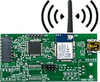
ACCES I/O Products, Inc. ISA Bus RS-422/485 Communications Card ICOM-2S

Description
Features Completely configurable, asychronous serial port (ICOM-2S has two ports). Opto-Isolated against noisy environments Support conventional High-speed RS-422, and Multi-drop RS-485 Can be wired for 2 or 4 wire RS-422/485 communications Support RS-485 handshaking on-board without special drivers to support Windows and non-DOS programs Built-in support for local echo, line termination, and line bias supplies Supports extended AT interrupts LED status monitors on transmit and receive lines for troubleshooting Model ICOM-2S is a dual-port card that can be used in ISA Bus computers and is designed for transmission/recepti on over long bus lines in noisy environments. Model ICOM-1S is a single-port, de-populated version of this card. The opto-isolators assure reliable communication when large common mode noise is superimposed on the transmit/receive lines. Opto-isolators are also provided on the RTS and CTS handshaking control lines. Further, an on-board DC-DC converter provides isolated +5 VDC to power the transceiver and RTS and CTS circuits. Transorbs are optionally available to absorb potentially damaging voltage spikes created by equipment or lightning. The card supports all of the most popular asynchronous communication protocols. RS-422 mode differential drivers extend the distance and speed. RS-485 mode uses tri-state drivers to produce a multi-drop network of up to 32 cards on a single twisted pair. RS-485 multidrop communications requires the transmitter drivers to be enabled and disabled as needed to allow the ports to share the common communication lines. These cards have two methods to control the drivers: automatic (AUTO) and Request to Send (RTS) control. Under automatic control, the port is normally in the receive mode and the driver is enabled only when data is ready to be transmitted. The driver is then enabled and remains enabled throughout the transmission plus the transmission time of one character after data transfer is complete. Then it is disabled. The cards automatically adjusts their timing to the baud rate of the data. When operating with Windows programs, this AUTO mode is mandatory. With RTS control, your application software must enable/disable the driver. The card is 100 percent compatible with MS-DOS with support for the standard COM1 through COM4 serial port address. However, you are not limited only to those addresses. Continuous address selection is available anywhere in the I/O address range of 000 to 3FF (hex). Interrupt levels from IRQ2 to IRQ14 (Except for IRQ 8, 9, and 13 which are always reserved by the IBM hardware) are supported. A crystal controlled oscillator is located on the card. This oscillator permits selection from standard baud rates from 50 to 115,200 baud. The opto-isolators limit operation to 38,400 baud but higher speed isolators are optionally available. For operation above 115K baud a non-isolated card, such as the COM-2S, which has the capability of even higher speeds should be considered. The transceiver used, a type 75176, is capable of driving extremely long communication lines at high baud rates. It is capable of driving up to 60 mA on balanced lines and receiving inputs as low as 200 mV differential signal. Also, in case of communication conflict, the transceivers feature thermal shutdown. In addition to differential Transmit and Receive lines, single-ended, buffered RTS and CTS lines are provided at the I/O connector. Normally, CTS must be pulled up to +5 VDC for the card to operate but you can position a jumper so that the cardwill auto-detect the transition between transmit and receive operations. These cards support full duplex, half duplex and simplex operations selected by jumpers. A transmission line should be terminated at the receiving end in its characteristic impedance. You can install a jumper (LD) which applies a 136 ohm load across the input for RS-422 mode and across the transmit/receive input/output for RS-485 operation. When noise is a potential problem on long lines, the terminating resistor should be divided and its center point grounded to help reduce noise voltage pickup. To accomplish this, you can also install a jumper (LD GND) for 68-ohm termination resistance on the positive and negative branches of the receiving line. In RS-485 operations, where there are multiple terminals, only the RS-485 ports at each end of the network should have terminating resistors as described above. If the card is to have an ungrounded load, do as above except do not install the LD GND jumper. Also, for RS-485 operation, there must be a bias on the RX+ and RX- lines. If the COM422/485 card is to provide that bias, install jumpers at the locations labeled +BIAS and -BIAS. OPTIONS Tranzorbs to absorb potentially damaging voltage spikes occurring due to lightning or other transmitted electrical interference. High-speed crystal oscillators to achieve unique or higher baud rates.
Description
Features Completely configurable, asychronous serial port (ICOM-2S has two ports). Opto-Isolated against noisy environments Support conventional High-speed RS-422, and Multi-drop RS-485 Can be wired for 2 or 4 wire RS-422/485 communications Support RS-485 handshaking on-board without special drivers to support Windows and non-DOS programs Built-in support for local echo, line termination, and line bias supplies Supports extended AT interrupts LED status monitors on transmit and receive lines for troubleshooting Model ICOM-2S is a dual-port card that can be used in ISA Bus computers and is designed for transmission/recepti on over long bus lines in noisy environments. Model ICOM-1S is a single-port, de-populated version of this card. The opto-isolators assure reliable communication when large common mode noise is superimposed on the transmit/receive lines. Opto-isolators are also provided on the RTS and CTS handshaking control lines. Further, an on-board DC-DC converter provides isolated +5 VDC to power the transceiver and RTS and CTS circuits. Transorbs are optionally available to absorb potentially damaging voltage spikes created by equipment or lightning. The card supports all of the most popular asynchronous communication protocols. RS-422 mode differential drivers extend the distance and speed. RS-485 mode uses tri-state drivers to produce a multi-drop network of up to 32 cards on a single twisted pair. RS-485 multidrop communications requires the transmitter drivers to be enabled and disabled as needed to allow the ports to share the common communication lines. These cards have two methods to control the drivers: automatic (AUTO) and Request to Send (RTS) control. Under automatic control, the port is normally in the receive mode and the driver is enabled only when data is ready to be transmitted. The driver is then enabled and remains enabled throughout the transmission plus the transmission time of one character after data transfer is complete. Then it is disabled. The cards automatically adjusts their timing to the baud rate of the data. When operating with Windows programs, this AUTO mode is mandatory. With RTS control, your application software must enable/disable the driver. The card is 100 percent compatible with MS-DOS with support for the standard COM1 through COM4 serial port address. However, you are not limited only to those addresses. Continuous address selection is available anywhere in the I/O address range of 000 to 3FF (hex). Interrupt levels from IRQ2 to IRQ14 (Except for IRQ 8, 9, and 13 which are always reserved by the IBM hardware) are supported. A crystal controlled oscillator is located on the card. This oscillator permits selection from standard baud rates from 50 to 115,200 baud. The opto-isolators limit operation to 38,400 baud but higher speed isolators are optionally available. For operation above 115K baud a non-isolated card, such as the COM-2S, which has the capability of even higher speeds should be considered. The transceiver used, a type 75176, is capable of driving extremely long communication lines at high baud rates. It is capable of driving up to 60 mA on balanced lines and receiving inputs as low as 200 mV differential signal. Also, in case of communication conflict, the transceivers feature thermal shutdown. In addition to differential Transmit and Receive lines, single-ended, buffered RTS and CTS lines are provided at the I/O connector. Normally, CTS must be pulled up to +5 VDC for the card to operate but you can position a jumper so that the cardwill auto-detect the transition between transmit and receive operations. These cards support full duplex, half duplex and simplex operations selected by jumpers. A transmission line should be terminated at the receiving end in its characteristic impedance. You can install a jumper (LD) which applies a 136 ohm load across the input for RS-422 mode and across the transmit/receive input/output for RS-485 operation. When noise is a potential problem on long lines, the terminating resistor should be divided and its center point grounded to help reduce noise voltage pickup. To accomplish this, you can also install a jumper (LD GND) for 68-ohm termination resistance on the positive and negative branches of the receiving line. In RS-485 operations, where there are multiple terminals, only the RS-485 ports at each end of the network should have terminating resistors as described above. If the card is to have an ungrounded load, do as above except do not install the LD GND jumper. Also, for RS-485 operation, there must be a bias on the RX+ and RX- lines. If the COM422/485 card is to provide that bias, install jumpers at the locations labeled +BIAS and -BIAS. OPTIONS Tranzorbs to absorb potentially damaging voltage spikes occurring due to lightning or other transmitted electrical interference. High-speed crystal oscillators to achieve unique or higher baud rates.

Suppliers

Company
Product
Description
Supplier Links
ISA Bus RS-422/485 Communications Card - ICOM-2S - ACCES I/O Products, Inc.
San Diego, CA, USA
ISA Bus RS-422/485 Communications Card
ICOM-2S
ISA Bus RS-422/485 Communications Card ICOM-2S
Features Completely configurable, asychronous serial port (ICOM-2S has two ports). Opto-Isolated against noisy environments Support conventional High-speed RS-422, and Multi-drop RS-485 Can be wired for 2 or 4 wire RS-422/485 communications Support RS-485 handshaking on-board without special drivers to support Windows and non-DOS programs Built-in support for local echo, line termination, and line bias supplies Supports extended AT interrupts LED status monitors on transmit and receive lines for troubleshooting Model ICOM-2S is a dual-port card that can be used in ISA Bus computers and is designed for transmission/recepti on over long bus lines in noisy environments. Model ICOM-1S is a single-port, de-populated version of this card. The opto-isolators assure reliable communication when large common mode noise is superimposed on the transmit/receive lines. Opto-isolators are also provided on the RTS and CTS handshaking control lines. Further, an on-board DC-DC converter provides isolated +5 VDC to power the transceiver and RTS and CTS circuits. Transorbs are optionally available to absorb potentially damaging voltage spikes created by equipment or lightning. The card supports all of the most popular asynchronous communication protocols. RS-422 mode differential drivers extend the distance and speed. RS-485 mode uses tri-state drivers to produce a multi-drop network of up to 32 cards on a single twisted pair. RS-485 multidrop communications requires the transmitter drivers to be enabled and disabled as needed to allow the ports to share the common communication lines. These cards have two methods to control the drivers: automatic (AUTO) and Request to Send (RTS) control. Under automatic control, the port is normally in the receive mode and the driver is enabled only when data is ready to be transmitted. The driver is then enabled and remains enabled throughout the transmission plus the transmission time of one character after data transfer is complete. Then it is disabled. The cards automatically adjusts their timing to the baud rate of the data. When operating with Windows programs, this AUTO mode is mandatory. With RTS control, your application software must enable/disable the driver. The card is 100 percent compatible with MS-DOS with support for the standard COM1 through COM4 serial port address. However, you are not limited only to those addresses. Continuous address selection is available anywhere in the I/O address range of 000 to 3FF (hex). Interrupt levels from IRQ2 to IRQ14 (Except for IRQ 8, 9, and 13 which are always reserved by the IBM hardware) are supported. A crystal controlled oscillator is located on the card. This oscillator permits selection from standard baud rates from 50 to 115,200 baud. The opto-isolators limit operation to 38,400 baud but higher speed isolators are optionally available. For operation above 115K baud a non-isolated card, such as the COM-2S, which has the capability of even higher speeds should be considered. The transceiver used, a type 75176, is capable of driving extremely long communication lines at high baud rates. It is capable of driving up to 60 mA on balanced lines and receiving inputs as low as 200 mV differential signal. Also, in case of communication conflict, the transceivers feature thermal shutdown. In addition to differential Transmit and Receive lines, single-ended, buffered RTS and CTS lines are provided at the I/O connector. Normally, CTS must be pulled up to +5 VDC for the card to operate but you can position a jumper so that the cardwill auto-detect the transition between transmit and receive operations. These cards support full duplex, half duplex and simplex operations selected by jumpers. A transmission line should be terminated at the receiving end in its characteristic impedance. You can install a jumper (LD) which applies a 136 ohm load across the input for RS-422 mode and across the transmit/receive input/output for RS-485 operation. When noise is a potential problem on long lines, the terminating resistor should be divided and its center point grounded to help reduce noise voltage pickup. To accomplish this, you can also install a jumper (LD GND) for 68-ohm termination resistance on the positive and negative branches of the receiving line. In RS-485 operations, where there are multiple terminals, only the RS-485 ports at each end of the network should have terminating resistors as described above. If the card is to have an ungrounded load, do as above except do not install the LD GND jumper. Also, for RS-485 operation, there must be a bias on the RX+ and RX- lines. If the COM422/485 card is to provide that bias, install jumpers at the locations labeled +BIAS and -BIAS. OPTIONS Tranzorbs to absorb potentially damaging voltage spikes occurring due to lightning or other transmitted electrical interference. High-speed crystal oscillators to achieve unique or higher baud rates.

Features

  • Completely configurable, asychronous serial port (ICOM-2S has two ports).
  • Opto-Isolated against noisy environments
  • Support conventional High-speed RS-422, and Multi-drop RS-485
  • Can be wired for 2 or 4 wire RS-422/485 communications
  • Support RS-485 handshaking on-board without special drivers to support Windows and non-DOS programs
  • Built-in support for local echo, line termination, and line bias supplies
  • Supports extended AT interrupts
  • LED status monitors on transmit and receive lines for troubleshooting

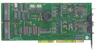
Model ICOM-2S is a dual-port card that can be used in ISA Bus computers and is designed for transmission/reception over long bus lines in noisy environments. Model ICOM-1S is a single-port, de-populated version of this card. The opto-isolators assure reliable communication when large common mode noise is superimposed on the transmit/receive lines. Opto-isolators are also provided on the RTS and CTS handshaking control lines. Further, an on-board DC-DC converter provides isolated +5 VDC to power the transceiver and RTS and CTS circuits. Transorbs are optionally available to absorb potentially damaging voltage spikes created by equipment or lightning.

The card supports all of the most popular asynchronous communication protocols. RS-422 mode differential drivers extend the distance and speed. RS-485 mode uses tri-state drivers to produce a multi-drop network of up to 32 cards on a single twisted pair. RS-485 multidrop communications requires the transmitter drivers to be enabled and disabled as needed to allow the ports to share the common communication lines. These cards have two methods to control the drivers: automatic (AUTO) and Request to Send (RTS) control. Under automatic control, the port is normally in the receive mode and the driver is enabled only when data is ready to be transmitted. The driver is then enabled and remains enabled throughout the transmission plus the transmission time of one character after data transfer is complete. Then it is disabled. The cards automatically adjusts their timing to the baud rate of the data. When operating with Windows programs, this AUTO mode is mandatory. With RTS control, your application software must enable/disable the driver.

The card is 100 percent compatible with MS-DOS with support for the standard COM1 through COM4 serial port address. However, you are not limited only to those addresses. Continuous address selection is available anywhere in the I/O address range of 000 to 3FF (hex). Interrupt levels from IRQ2 to IRQ14 (Except for IRQ 8, 9, and 13 which are always reserved by the IBM hardware) are supported. A crystal controlled oscillator is located on the card. This oscillator permits selection from standard baud rates from 50 to 115,200 baud. The opto-isolators limit operation to 38,400 baud but higher speed isolators are optionally available. For operation above 115K baud a non-isolated card, such as the COM-2S, which has the capability of even higher speeds should be considered.

The transceiver used, a type 75176, is capable of driving extremely long communication lines at high baud rates. It is capable of driving up to 60 mA on balanced lines and receiving inputs as low as 200 mV differential signal. Also, in case of communication conflict, the transceivers feature thermal shutdown.

In addition to differential Transmit and Receive lines, single-ended, buffered RTS and CTS lines are provided at the I/O connector. Normally, CTS must be pulled up to +5 VDC for the card to operate but you can position a jumper so that the cardwill auto-detect the transition between transmit and receive operations. These cards support full duplex, half duplex and simplex operations selected by jumpers.

A transmission line should be terminated at the receiving end in its characteristic impedance. You can install a jumper (LD) which applies a 136 ohm load across the input for RS-422 mode and across the transmit/receive input/output for RS-485 operation. When noise is a potential problem on long lines, the terminating resistor should be divided and its center point grounded to help reduce noise voltage pickup. To accomplish this, you can also install a jumper (LD GND) for 68-ohm termination resistance on the positive and negative branches of the receiving line.

In RS-485 operations, where there are multiple terminals, only the RS-485 ports at each end of the network should have terminating resistors as described above. If the card is to have an ungrounded load, do as above except do not install the LD GND jumper. Also, for RS-485 operation, there must be a bias on the RX+ and RX- lines. If the COM422/485 card is to provide that bias, install jumpers at the locations labeled +BIAS and -BIAS.

OPTIONS

  • Tranzorbs to absorb potentially damaging voltage spikes occurring due to lightning or other transmitted electrical interference.
  • High-speed crystal oscillators to achieve unique or higher baud rates.
Supplier's Site

Technical Specifications

  ACCES I/O Products, Inc.
Product Category Network Cards and Network Controllers
Product Number ICOM-2S
Product Name ISA Bus RS-422/485 Communications Card
Protocol / Network Serial
Data Rate 38.4 kbps
Host Bus ISA
Number of Ports 2
Unlock Full Specs
to access all available technical data

Similar Products

VIPA SLIO Module, Interface Modules - 053-1CA00 - Yaskawa America, Inc. - Motion Division
Yaskawa America, Inc. - Motion Division
Specs
Protocol / Network CANbus
Data Rate 10 to 1000 kbps
Port Type Sub-D, 9-pin Male
View Details
Factor 202 Raspberry Pi Industrial Controller - FR202 - OnLogic Inc.
Specs
Operating Temperature -20 to 60 C (-4 to 140 F)
View Details
PCIe 3.0, x8 Crypto/ Compression Intel C625 & C626 Server Adapter - PCIE-3030NP-01A1E - Advantech
Specs
Processor Type PCIe 3.0, x8 Crypto/ Compression Intel C625 & C626 Server Adapter
View Details
eATM tManager® IPC -  - Softing Inc. Industrial Automation
Softing Inc. Industrial Automation
View Details