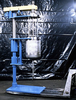
Pickering Laboratories, Inc. UVE™ Photochemical Reactor 1100-3347

Description
Used for Detection Enhancement for Aflatoxins, Phenylurea Pesticides, Barbiturates and Other Compounds. Photochemical derivatization is a simple, inexpensive and flexible technique that improves sensitivity and selectivity of detection for a broad range of analytes. Among the applications for the photochemical reactor are analysis of Aflatoxins in foods, Phenylurea Pesticides in water and Barbiturates in biological samples. Photochemical derivatization also allows identification of closely related compounds such as polyphenols. Pickering Laboratories Multi-residue Mycotoxins method for DON, Aflatoxins, Fumonisins, Ochratoxin A and Zearalenone employs photochemical derivatization for Afl atoxins, allowing detection at sub-ppb levels. The photochemical reactor has a 254 nm lamp and a knitted reactor coil. FEATURE HIGHLIGHTS 254 nm UV Low Pressure Lamp With Cooled Reflector Tube Long Term Stability Of Lamp And Coil High Light Transmission Safety Shut-off Turns Off Lamp If Cover Is Removed Robust Steel Housing To Meet Laboratory Requirements Special Designed Fluorocarbon Coil Comparable To Electrochemical Derivatization With Cobra Cell (DG Joint Research Center Of The European Commission In The Institute For Health And Consumer Protection) AOAC Accepted Methodology Standard Reactor Volume Is 1.0 mL
Description
Used for Detection Enhancement for Aflatoxins, Phenylurea Pesticides, Barbiturates and Other Compounds. Photochemical derivatization is a simple, inexpensive and flexible technique that improves sensitivity and selectivity of detection for a broad range of analytes. Among the applications for the photochemical reactor are analysis of Aflatoxins in foods, Phenylurea Pesticides in water and Barbiturates in biological samples. Photochemical derivatization also allows identification of closely related compounds such as polyphenols. Pickering Laboratories Multi-residue Mycotoxins method for DON, Aflatoxins, Fumonisins, Ochratoxin A and Zearalenone employs photochemical derivatization for Afl atoxins, allowing detection at sub-ppb levels. The photochemical reactor has a 254 nm lamp and a knitted reactor coil. FEATURE HIGHLIGHTS 254 nm UV Low Pressure Lamp With Cooled Reflector Tube Long Term Stability Of Lamp And Coil High Light Transmission Safety Shut-off Turns Off Lamp If Cover Is Removed Robust Steel Housing To Meet Laboratory Requirements Special Designed Fluorocarbon Coil Comparable To Electrochemical Derivatization With Cobra Cell (DG Joint Research Center Of The European Commission In The Institute For Health And Consumer Protection) AOAC Accepted Methodology Standard Reactor Volume Is 1.0 mL

Suppliers

Company
Product
Description
Supplier Links
UVE™ Photochemical Reactor - 1100-3347 - Pickering Laboratories, Inc.
Mountain View, CA, USA
UVE™ Photochemical Reactor
1100-3347
UVE™ Photochemical Reactor 1100-3347
Used for Detection Enhancement for Aflatoxins, Phenylurea Pesticides, Barbiturates and Other Compounds. Photochemical derivatization is a simple, inexpensive and flexible technique that improves sensitivity and selectivity of detection for a broad range of analytes. Among the applications for the photochemical reactor are analysis of Aflatoxins in foods, Phenylurea Pesticides in water and Barbiturates in biological samples. Photochemical derivatization also allows identification of closely related compounds such as polyphenols. Pickering Laboratories Multi-residue Mycotoxins method for DON, Aflatoxins, Fumonisins, Ochratoxin A and Zearalenone employs photochemical derivatization for Afl atoxins, allowing detection at sub-ppb levels. The photochemical reactor has a 254 nm lamp and a knitted reactor coil. FEATURE HIGHLIGHTS 254 nm UV Low Pressure Lamp With Cooled Reflector Tube Long Term Stability Of Lamp And Coil High Light Transmission Safety Shut-off Turns Off Lamp If Cover Is Removed Robust Steel Housing To Meet Laboratory Requirements Special Designed Fluorocarbon Coil Comparable To Electrochemical Derivatization With Cobra Cell (DG Joint Research Center Of The European Commission In The Institute For Health And Consumer Protection) AOAC Accepted Methodology Standard Reactor Volume Is 1.0 mL

Used for Detection Enhancement for Aflatoxins, Phenylurea Pesticides, Barbiturates and Other Compounds. Photochemical
derivatization is a simple, inexpensive and flexible technique that improves sensitivity and selectivity of detection for a broad range of analytes. Among the applications for the photochemical reactor are analysis of Aflatoxins in foods, Phenylurea Pesticides in water and Barbiturates in biological samples. Photochemical derivatization also allows identification of closely related compounds such as polyphenols.

Pickering Laboratories Multi-residue Mycotoxins method for DON, Aflatoxins, Fumonisins, Ochratoxin A and Zearalenone employs photochemical derivatization for Afl atoxins, allowing detection at sub-ppb levels.

The photochemical reactor has a 254 nm lamp and a knitted reactor coil.

FEATURE HIGHLIGHTS

  • 254 nm UV Low Pressure Lamp With Cooled Reflector Tube
  • Long Term Stability Of Lamp And Coil
  • High Light Transmission
  • Safety Shut-off Turns Off Lamp If Cover Is Removed
  • Robust Steel Housing To Meet Laboratory Requirements
  • Special Designed Fluorocarbon Coil
  • Comparable To Electrochemical Derivatization With Cobra Cell (DG Joint Research Center Of The European
    Commission In The Institute For Health And Consumer Protection)
  • AOAC Accepted Methodology
  • Standard Reactor Volume Is 1.0 mL
Supplier's Site

Technical Specifications

  Pickering Laboratories, Inc.
Product Category Laboratory Reactors
Product Number 1100-3347
Product Name UVE™ Photochemical Reactor
Unlock Full Specs
to access all available technical data

Similar Products

K1050X Plasma Etcher/Asher/Cleaner -  - Quorum Technologies
Specs
Reactor Design Other Reactor Design; Plasma Reactor
View Details
Diessel Fermentation and Bioreactor Systems -  - GEA Process Engineering Inc.
Specs
Vessel Volume 100 to 10000 liters (106 to 10567 quarts)
Parameters Controlled Speed; Temperature
Features Jacketed
View Details
Sartorius Lab Instruments GmbH & Co. KG
Specs
Reactor Design Other Reactor Design; Rocking Motion
Reactor Operation Batch
Number of Vessels 1 #
View Details