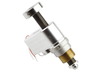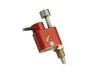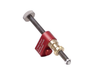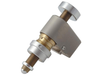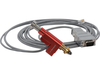
Newport MKS Closed Loop Picomotor Actuator, 12.7 mm Travel, Compact 8311

Description
The 8311 Compact Closed Loop Picomotor™ Actuator is ideal for applications where closed-loop control is required and space is limited. With an integrated rotary encoder this unique device offers the best attributes of the standard Picomotor™ actuator : <30 nm MIM, >5 lb. (22 N) of force along with set-and-forget long-term stability, and exceptional accuracy with less than 50 nm closed loop resolution, with minimal size increase. <30 nm Positioning Resolution Operating in open-loop mode, the Closed-Loop Picomotor actuator has a step size of < 30 nm, allowing for very small movements. In closed-loop mode, the encoder has a resolution of 52.9 nm, allowing for very small, controlled, and repeatable movements. Easy-to-use Flexible Motion Controllers and Drivers Our Closed-Loop Picomotor controllers and drivers are modular. You can daisy-chain up to 31 drivers together with two channels each, so you can have a network of up to 62 Closed-Loop Picomotor actuators. You have two interface options with the controller system: hand pad or computer, both providing plug-and-play use. Patented Picomotor Technology Picomotor actuators rely on the basic difference between dynamic and static friction. An example of this is the magician's "tablecloth trick," in which a quick pull (low dynamic friction) of the cloth leaves the dishes on the table, while a slow pull (high static friction) would pull the dishes off the table and cause a big mess! Our Picomotor actuator uses the same principle with a threaded jaw, similar to two halves of a split nut, clamped around a precision 80-pitch screw. One jaw is connected to one end of a piezoelectric transducer, and the other jaw is connected to the other end of the transducer. A slow electrical signal applied to the piezo slowly changes the length, causing the two jaws to slide in opposite directions. This slow sliding motion makes the screw turn (static friction). At the end of the transducer motion, a fast electrical signal quickly returns the jaws to their starting positions. Because of the screw’s inertia and low dynamic friction, it remains motionless, holding its position. Simply reversing the order of the fast and slow signals reverses the direction of rotation. Set-and-forget stability with virtually no backlash The Closed-Loop Picomotor actuator moves when voltage is applied to the piezo, changing its length and in turn moving the jaws which turn the screw. When no power is applied, the actuator does not move. You can feel confident that your set-up will stay put, even when you power down your system. Simple Integration The standard sized 0.375 inch shank of the Closed-Loop Picomotor actuator allows it to easily be integrated into standard micrometer mounting holes.
Request a Quote Datasheet
Description
The 8311 Compact Closed Loop Picomotor™ Actuator is ideal for applications where closed-loop control is required and space is limited. With an integrated rotary encoder this unique device offers the best attributes of the standard Picomotor™ actuator : <30 nm MIM, >5 lb. (22 N) of force along with set-and-forget long-term stability, and exceptional accuracy with less than 50 nm closed loop resolution, with minimal size increase. <30 nm Positioning Resolution Operating in open-loop mode, the Closed-Loop Picomotor actuator has a step size of < 30 nm, allowing for very small movements. In closed-loop mode, the encoder has a resolution of 52.9 nm, allowing for very small, controlled, and repeatable movements. Easy-to-use Flexible Motion Controllers and Drivers Our Closed-Loop Picomotor controllers and drivers are modular. You can daisy-chain up to 31 drivers together with two channels each, so you can have a network of up to 62 Closed-Loop Picomotor actuators. You have two interface options with the controller system: hand pad or computer, both providing plug-and-play use. Patented Picomotor Technology Picomotor actuators rely on the basic difference between dynamic and static friction. An example of this is the magician's "tablecloth trick," in which a quick pull (low dynamic friction) of the cloth leaves the dishes on the table, while a slow pull (high static friction) would pull the dishes off the table and cause a big mess! Our Picomotor actuator uses the same principle with a threaded jaw, similar to two halves of a split nut, clamped around a precision 80-pitch screw. One jaw is connected to one end of a piezoelectric transducer, and the other jaw is connected to the other end of the transducer. A slow electrical signal applied to the piezo slowly changes the length, causing the two jaws to slide in opposite directions. This slow sliding motion makes the screw turn (static friction). At the end of the transducer motion, a fast electrical signal quickly returns the jaws to their starting positions. Because of the screw’s inertia and low dynamic friction, it remains motionless, holding its position. Simply reversing the order of the fast and slow signals reverses the direction of rotation. Set-and-forget stability with virtually no backlash The Closed-Loop Picomotor actuator moves when voltage is applied to the piezo, changing its length and in turn moving the jaws which turn the screw. When no power is applied, the actuator does not move. You can feel confident that your set-up will stay put, even when you power down your system. Simple Integration The standard sized 0.375 inch shank of the Closed-Loop Picomotor actuator allows it to easily be integrated into standard micrometer mounting holes.
Request a Quote Datasheet

Suppliers

Company
Product
Description
Supplier Links
Closed Loop Picomotor Actuator, 12.7 mm Travel, Compact - 8311 - Newport MKS
Irvine, CA, United States
Closed Loop Picomotor Actuator, 12.7 mm Travel, Compact
8311
Closed Loop Picomotor Actuator, 12.7 mm Travel, Compact 8311
The 8311 Compact Closed Loop Picomotor™ Actuator is ideal for applications where closed-loop control is required and space is limited. With an integrated rotary encoder this unique device offers the best attributes of the standard Picomotor™ actuator : <30 nm MIM, >5 lb. (22 N) of force along with set-and-forget long-term stability, and exceptional accuracy with less than 50 nm closed loop resolution, with minimal size increase. <30 nm Positioning Resolution Operating in open-loop mode, the Closed-Loop Picomotor actuator has a step size of < 30 nm, allowing for very small movements. In closed-loop mode, the encoder has a resolution of 52.9 nm, allowing for very small, controlled, and repeatable movements. Easy-to-use Flexible Motion Controllers and Drivers Our Closed-Loop Picomotor controllers and drivers are modular. You can daisy-chain up to 31 drivers together with two channels each, so you can have a network of up to 62 Closed-Loop Picomotor actuators. You have two interface options with the controller system: hand pad or computer, both providing plug-and-play use. Patented Picomotor Technology Picomotor actuators rely on the basic difference between dynamic and static friction. An example of this is the magician's "tablecloth trick," in which a quick pull (low dynamic friction) of the cloth leaves the dishes on the table, while a slow pull (high static friction) would pull the dishes off the table and cause a big mess! Our Picomotor actuator uses the same principle with a threaded jaw, similar to two halves of a split nut, clamped around a precision 80-pitch screw. One jaw is connected to one end of a piezoelectric transducer, and the other jaw is connected to the other end of the transducer. A slow electrical signal applied to the piezo slowly changes the length, causing the two jaws to slide in opposite directions. This slow sliding motion makes the screw turn (static friction). At the end of the transducer motion, a fast electrical signal quickly returns the jaws to their starting positions. Because of the screw’s inertia and low dynamic friction, it remains motionless, holding its position. Simply reversing the order of the fast and slow signals reverses the direction of rotation. Set-and-forget stability with virtually no backlash The Closed-Loop Picomotor actuator moves when voltage is applied to the piezo, changing its length and in turn moving the jaws which turn the screw. When no power is applied, the actuator does not move. You can feel confident that your set-up will stay put, even when you power down your system. Simple Integration The standard sized 0.375 inch shank of the Closed-Loop Picomotor actuator allows it to easily be integrated into standard micrometer mounting holes.

The 8311 Compact Closed Loop Picomotor™ Actuator is ideal for applications where closed-loop control is required and space is limited. With an integrated rotary encoder this unique device offers the best attributes of the standard Picomotor™ actuator : <30 nm MIM, >5 lb. (22 N) of force along with set-and-forget long-term stability, and exceptional accuracy with less than 50 nm closed loop resolution, with minimal size increase.

<30 nm Positioning Resolution

Operating in open-loop mode, the Closed-Loop Picomotor actuator has a step size of < 30 nm, allowing for very small movements. In closed-loop mode, the encoder has a resolution of 52.9 nm, allowing for very small, controlled, and repeatable movements.


Easy-to-use Flexible Motion Controllers and Drivers

Our Closed-Loop Picomotor controllers and drivers are modular. You can daisy-chain up to 31 drivers together with two channels each, so you can have a network of up to 62 Closed-Loop Picomotor actuators. You have two interface options with the controller system: hand pad or computer, both providing plug-and-play use.


Patented Picomotor Technology

Picomotor actuators rely on the basic difference between dynamic and static friction. An example of this is the magician's "tablecloth trick," in which a quick pull (low dynamic friction) of the cloth leaves the dishes on the table, while a slow pull (high static friction) would pull the dishes off the table and cause a big mess! Our Picomotor actuator uses the same principle with a threaded jaw, similar to two halves of a split nut, clamped around a precision 80-pitch screw. One jaw is connected to one end of a piezoelectric transducer, and the other jaw is connected to the other end of the transducer. A slow electrical signal applied to the piezo slowly changes the length, causing the two jaws to slide in opposite directions. This slow sliding motion makes the screw turn (static friction). At the end of the transducer motion, a fast electrical signal quickly returns the jaws to their starting positions. Because of the screw’s inertia and low dynamic friction, it remains motionless, holding its position. Simply reversing the order of the fast and slow signals reverses the direction of rotation.


Set-and-forget stability with virtually no backlash


The Closed-Loop Picomotor actuator moves when voltage is applied to the piezo, changing its length and in turn moving the jaws which turn the screw. When no power is applied, the actuator does not move. You can feel confident that your set-up will stay put, even when you power down your system.

Simple Integration


The standard sized 0.375 inch shank of the Closed-Loop Picomotor actuator allows it to easily be integrated into standard micrometer mounting holes.

Supplier's Site Datasheet

Technical Specifications

  Newport MKS
Product Category Piezoelectric Actuators
Product Number 8311
Product Name Closed Loop Picomotor Actuator, 12.7 mm Travel, Compact
Electrical Connector 15-pin D-sub HD & 4-pin RJ-22
Unlock Full Specs
to access all available technical data

Similar Products

Picomotor Piezo Actuator, Closed Loop, 12.7 mm Travel - 8310CE - Newport MKS
Specs
Electrical Connector 15-pin D-sub HD & 4-pin RJ-22
Blocked Force 22 N (79.13 oz)
View Details
Picomotor Piezo Linear Actuator, 1 in. Travel, 30 nm Res., M12 x 0.5 mm Thread - 8322NF - Newport MKS
Specs
Electrical Connector 4-Pin RJ-22
Blocked Force 22 N (79.13 oz)
View Details