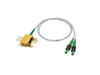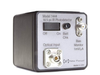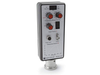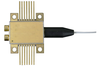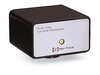
Newport MKS Free Space Optical Receiver, 900-1700 nm InGaAs, 30 kHz to 850 MHz, AC-Coupled 1611FS-AC

Description
The 1611FS-AC InGaAs Optical Receiver is used for experiments requiring up to 850 MHz bandwidths and 400 ps rise times. This free space photoreceiver offers a well-balanced combination of gain, bandwidth and very low noise. The InGaAs detector wavelength range is 900 to 1700 nm. For mounting it has an 8-32 mounting thread, and we include an M4 metric thread adaptor and tool. An external ±15 VDC power supply, which must be purchased separately, is required. Power supply cables and are included with each detector.
Request a Quote
Description
The 1611FS-AC InGaAs Optical Receiver is used for experiments requiring up to 850 MHz bandwidths and 400 ps rise times. This free space photoreceiver offers a well-balanced combination of gain, bandwidth and very low noise. The InGaAs detector wavelength range is 900 to 1700 nm. For mounting it has an 8-32 mounting thread, and we include an M4 metric thread adaptor and tool. An external ±15 VDC power supply, which must be purchased separately, is required. Power supply cables and are included with each detector.
Request a Quote

Suppliers

Company
Product
Description
Supplier Links
Free Space Optical Receiver, 900-1700 nm InGaAs, 30 kHz to 850 MHz, AC-Coupled - 1611FS-AC - Newport MKS
Irvine, CA, United States
Free Space Optical Receiver, 900-1700 nm InGaAs, 30 kHz to 850 MHz, AC-Coupled
1611FS-AC
Free Space Optical Receiver, 900-1700 nm InGaAs, 30 kHz to 850 MHz, AC-Coupled 1611FS-AC
The 1611FS-AC InGaAs Optical Receiver is used for experiments requiring up to 850 MHz bandwidths and 400 ps rise times. This free space photoreceiver offers a well-balanced combination of gain, bandwidth and very low noise. The InGaAs detector wavelength range is 900 to 1700 nm. For mounting it has an 8-32 mounting thread, and we include an M4 metric thread adaptor and tool. An external ±15 VDC power supply, which must be purchased separately, is required. Power supply cables and are included with each detector.

The 1611FS-AC InGaAs Optical Receiver is used for experiments requiring up to 850 MHz bandwidths and 400 ps rise times. This free space photoreceiver offers a well-balanced combination of gain, bandwidth and very low noise. The InGaAs detector wavelength range is 900 to 1700 nm. For mounting it has an 8-32 mounting thread, and we include an M4 metric thread adaptor and tool.

An external ±15 VDC power supply, which must be purchased separately, is required. Power supply cables and are included with each detector.

Supplier's Site

Technical Specifications

  Newport MKS
Product Category Fiber Optic Receivers
Product Number 1611FS-AC
Product Name Free Space Optical Receiver, 900-1700 nm InGaAs, 30 kHz to 850 MHz, AC-Coupled
Receiver Type PIN Photodiode
Unlock Full Specs
to access all available technical data

Similar Products

Balanced Optical Receiver, InGaAs, 900-1700 nm, 800 MHz, Free Space - 1617-AC-FS - Newport MKS
Specs
Rise Time 0.8000 ns
Bandwidth 0.0400 to 800 MHz
View Details
Adjustable Balanced Receiver, 320-1000 nm, 10 MHz, Free Space, M4 - 2107-FS-M - Newport MKS
Specs
Receiver Type PIN Photodiode
Rise Time 80 ns
Bandwidth 0.1500 to 10 MHz
View Details
Optical Receiver, Silicon, 300-1050 nm, 200 kHz Bandwidth, M4 - 2001-FS-M - Newport MKS
Specs
Receiver Type PIN Photodiode
Rise Time 2000 ns
Bandwidth 0.0 to 0.2000 MHz
View Details
Balanced Fiber-Optic Receiver, Adjustable, 800-1700 nm, 10 MHz, 8-32 [Phase out] - 2117-FC - Newport MKS
Specs
Receiver Type PIN Photodiode
Rise Time 80 ns
Bandwidth 0.1500 to 10 MHz
View Details