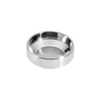
Platinum Crucibles
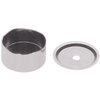
For measurements above 640 °C Platinum (or more precisely PtRh 80:20%) crucibles are mainly used for TGA/DSC or TGA measurements at temperatures above 640 °C.
High enthalpy result quality Enthalpy results obtained with platinum crucibles are normally better than with AlOx crucibles due to better thermal conductivity.
PtRh crucibles for humidity applications For humidity measurements with salts, PtRh crucibles are the best choice. Pt crucibles are not recommended in combination with metals.
Wet chemistry and ash testing Typical applications that are performed with Pt/Rh crucibles lie in the field of wet chemistry. In addition, ash testing is often performed with Pt/Rh.
PtRh crucibles can be reused After the measurement, the PtRh crucibles can be regenerated. Often they are mechanically cleaned, then rinsed in aqueous solution before drying them.
Pt easily forms alloys with other metals Molten metals form alloys with platinum very easily. This can result in a hole being formed in the bottom of the crucible. In addition, non-metals can act as Pt poisons such as soot or carbon black (particularly in non-oxidizing conditions).
Care with PtRh crucibles and Pt sensors At temperatures above 1100 °C, PtRh crucibles can "stick" to the crucible holder made of Pt (SDTA, DTA). This can be prevented by placing a sapphire disk (ArtNo: 17759) on the crucible holder.
Regeneration procedure of PtRh crucibles After mechanical cleaning, PtRh crucibles are often rinsed in water or hydrochloric acid (up to 10%) for several hours. After drying, heat the crucibles to red hot to ensure that no weight loss occurs when they are used.
METTLER TOLEDO Thermal Analysis
Done
Request a Quote
Email Supplier
Description
Platinum Crucibles
For measurements above 640 °C Platinum (or more precisely PtRh 80:20%) crucibles are mainly used for TGA/DSC or TGA measurements at temperatures above 640 °C.
High enthalpy result quality Enthalpy results obtained with platinum crucibles are normally better than with AlOx crucibles due to better thermal conductivity.
PtRh crucibles for humidity applications For humidity measurements with salts, PtRh crucibles are the best choice. Pt crucibles are not recommended in combination with metals.
Wet chemistry and ash testing Typical applications that are performed with Pt/Rh crucibles lie in the field of wet chemistry. In addition, ash testing is often performed with Pt/Rh.
PtRh crucibles can be reused After the measurement, the PtRh crucibles can be regenerated. Often they are mechanically cleaned, then rinsed in aqueous solution before drying them.
Pt easily forms alloys with other metals Molten metals form alloys with platinum very easily. This can result in a hole being formed in the bottom of the crucible. In addition, non-metals can act as Pt poisons such as soot or carbon black (particularly in non-oxidizing conditions).
Care with PtRh crucibles and Pt sensors At temperatures above 1100 °C, PtRh crucibles can "stick" to the crucible holder made of Pt (SDTA, DTA). This can be prevented by placing a sapphire disk (ArtNo: 17759) on the crucible holder.
Regeneration procedure of PtRh crucibles After mechanical cleaning, PtRh crucibles are often rinsed in water or hydrochloric acid (up to 10%) for several hours. After drying, heat the crucibles to red hot to ensure that no weight loss occurs when they are used.