This antibody is intended for in vitro diagnostic use. Ventana Medical Systems, Inc's (Ventana) PATHWAY anti-HER-2/neu (4B5)Rabbit Monoclonal Primary Antibody (PATHWAY HER-2 (4B5)) is a rabbit monoclonal antibody intended for laboratory use for the semi-quantitative detection of HER-2 antigen in sections of formalin-fixed, paraffin-embedded normal and neoplastic tissue on a Ventana automated immunohistochemistry slide staining device. It is indicated as an aid in the assessment of breast cancer patients for whom Herceptin treatment is considered. Note: All of the patients in the Herceptin clinical trials were selected using a clinical trial assay. None of the patients in those trials were selected using PATHWAY anti-HER-2/neu (4B5). PATHWAY anti-HER-2/neu (4B5) was compared to PATHWAY HER-2 (clone CB11) Primary Antibody on an independent sample set and found to provide acceptably concordant results. The actual correlation of PATHWAY anti-HER-2/neu (4B5) to clinical outcome has not been established. The Ventana Image Analysis System (VIAS) is an adjunctive optional computer-assisted image analysis system functionally connected to an interactive microscope. It is intended for use as an aid to the pathologist in the detection, classification and counting of cells of interest based on marker intensity, size and shape using appropriate controls to assure the validity of the VIAS scores. Prescription use only. PATHWAY anti-HER-2/neu is a rabbit monoclonal antibody (clone 4B5) directed against the internal domain of the c erbB 2 oncoprotein (HER-2). c erbB 2 oncoprotein was cloned and characterized by Akiyama et al in 1986.1 It is an approximately 185 kDtransmembrane glycoprotein which is structurally similar to epidermal growth factor receptor (EGFR). The protein is associated with tyrosine kinase activity similar to that of several growth factor receptors, and to that of the transforming proteins of the src family. The coding sequence is consistent with an extracellular binding domain and an intracellular kinase domain. This suggests that HER-2 may be involved in signal transduction and stimulation of mitogenic activity.1 Clone 4B5 has been shown to react with a 185 kD protein from SK BR 3 cell lysates via Western blotting. SK BR 3 is a breast carcinoma cell line which has a 128 fold over expression of HER-2 mRNA.2 The size of the band identified correlates well with that reported by Akiyama et al for HER-2 protein (185 kD).1 Immunohistochemistry has been used to detect specific antigens in cells or tissue since 1950.3 The use of enzymes and peroxidase as markers for immunohistochemistry was reported by Nakane and Pierce in 1967.4 The increased sensitivity of the avidin biotin peroxidase detection system over the enzyme labeled antibody method was documented by Hsu et al in 1981.5 The HER-2 protein is expressed at a level detectable by immunohistochemistry in up to 20 percent of adenocarcinomas from various sites. Between 15 and 30 percent of invasive ductal cancers are positive for HER-2.6 Almost all cases of Paget's disease of breast7 and up to 90 percent of cases of ductal carcinoma, in situ of comedo type are positive.6 The immunohistochemical detection of HER-2 protein overexpression is also used as an aid in determination of patients for whom Herceptin therapy is indicated.8 Staining results in normal tissues, neoplastic tissues, and 322 cases of breast carcinoma withPATHWAY HER-2 (4B5) were evaluated by Ventana. In the normal tissues tested, expression was consistent with the published literature in that there was no unexpected specific cytoplasmic/membrane staining, with the following exceptions: two cases of tonsil showing with epithelial cell membrane staining, one case of parathyroid, and one case of esophageal epithelium. Of the neoplastic tissues tested, cytoplasmic/membrane staining was seen in cancer cells of the breast, colon and ovary. Three hundred twenty-two (322) breast carcinomas were evaluated with Ventana PATHWAY HER-2 (4B5) in a method comparison study with PATHWAY HER-2 (CB11). There is a significant correlation of staining between these two tests. See Summary of Expected Results section for further information. Ventana PATHWAY HER-2 (4B5) in combination with Ventana iVIEW DAB Detection Kit, utilizes biotinylated secondary antibodies to locate the bound PATHWAY HER-2 (4B5) primary antibody (produced by using asynthetic peptide corresponding to a site on the internal domain of the HER-2 protein). This is followed by the binding of an avidin/streptavidin enzyme conjugate to the biotin. The complex is then visualized using a precipitating enzyme generated product. The use of Ventana pre-diluted PATHWAY HER-2 (4B5) and ready to use iVIEW DAB detection kits, in combination with a Ventana automated slide stainer, reduces the possibility of human error and inherent variability resulting from individual reagent dilution, manual pipetting, and manual reagent application. CLINICAL SIGNIFICANCE Breast cancer is the most common carcinoma occurring in women, and the second leading cause of cancer related death. In North America, a woman's chance of contracting breast cancer is one in eight. 9 Early detection and appropriate treatment therapies can significantly affect overall survival. 10 Small tissue samples may be easily used in routine immunohistochemistry (IHC), making this technique, in combination with antibodies that detect antigens important for carcinoma interpretation, an effective tool for the pathologist in their diagnosis and prognosis of disease. One important marker in breast cancer today is cerbB2 oncoprotein (HER-2). HER-2 is an intracellular membrane protein detected in the cellular membrane.11 It is closely related to EGFR and, like EGFR, has tyrosine kinase activity.1 Gene amplification and the corresponding over expression of c erbB 2 has been found in a variety of tumors, including breast carcinomas.11, 12 The therapeutic drug Herceptin has been shown to benefit some breast carcinoma patients by arresting, and in some cases reversing the growth of their cancer.8 The drug is a humanized monoclonal antibody that binds to HER-2 protein on cancer cells. Thus only patients with HER-2/neu positive breast carcinomas should benefit from treatment with Herceptin. In vitro diagnostics for the determination of HER-2 status in breast carcinomas are important to aid the clinician in determination of therapy with Herceptin. Interpretation of the results of any detection system for HER-2 must take into consideration the fact that HER-2 is expressed in both breast cancer tumors and healthy tissue, albeit at differing levels and with different patterns of expression.13 Histological tissue preparations have the advantage of intact tissue morphology to aid in the interpretation of the HER-2 positivity of the sample. All histological tests should be interpreted by a specialist in breast cancer morphology, and/or pathology, and the results should be complemented by morphological studies and proper controls and used in conjunction with other clinical and laboratory data. Nakane PK, et al., J. Histochem. Cytochem. 14: 929-931, 1967.
This antibody is intended for in vitro diagnostic use. Ventana Medical Systems, Inc's (Ventana) PATHWAY anti-HER-2/neu (4B5)Rabbit Monoclonal Primary Antibody (PATHWAY HER-2 (4B5)) is a rabbit monoclonal antibody intended for laboratory use for the semi-quantitative detection of HER-2 antigen in sections of formalin-fixed, paraffin-embedded normal and neoplastic tissue on a Ventana automated immunohistochemistry slide staining device. It is indicated as an aid in the assessment of breast cancer patients for whom Herceptin treatment is considered. Note: All of the patients in the Herceptin clinical trials were selected using a clinical trial assay. None of the patients in those trials were selected using PATHWAY anti-HER-2/neu (4B5). PATHWAY anti-HER-2/neu (4B5) was compared to PATHWAY HER-2 (clone CB11) Primary Antibody on an independent sample set and found to provide acceptably concordant results. The actual correlation of PATHWAY anti-HER-2/neu (4B5) to clinical outcome has not been established.
The Ventana Image Analysis System (VIAS) is an adjunctive optional computer-assisted image analysis system functionally connected to an interactive microscope. It is intended for use as an aid to the pathologist in the detection, classification and counting of cells of interest based on marker intensity, size and shape using appropriate controls to assure the validity of the VIAS scores. Prescription use only.
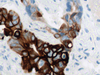
PATHWAY anti-HER-2/neu is a rabbit monoclonal antibody (clone 4B5) directed against the internal domain of the c erbB 2 oncoprotein (HER-2). c erbB 2 oncoprotein was cloned and characterized by Akiyama et al in 1986.1 It is an approximately 185 kDtransmembrane glycoprotein which is structurally similar to epidermal growth factor receptor (EGFR). The protein is associated with tyrosine kinase activity similar to that of several growth factor receptors, and to that of the transforming proteins of the src family. The coding sequence is consistent with an extracellular binding domain and an intracellular kinase domain. This suggests that HER-2 may be involved in signal transduction and stimulation of mitogenic activity.1 Clone 4B5 has been shown to react with a 185 kD protein from SK BR 3 cell lysates via Western blotting. SK BR 3 is a breast carcinoma cell line which has a 128 fold over expression of HER-2 mRNA.2 The size of the band identified correlates well with that reported by Akiyama et al for HER-2 protein (185 kD).1 Immunohistochemistry has been used to detect specific antigens in cells or tissue since 1950.3 The use of enzymes and peroxidase as markers for immunohistochemistry was reported by Nakane and Pierce in 1967.4 The increased sensitivity of the avidin biotin peroxidase detection system over the enzyme labeled antibody method was documented by Hsu et al in 1981.5 The HER-2 protein is expressed at a level detectable by immunohistochemistry in up to 20 percent of adenocarcinomas from various sites. Between 15 and 30 percent of invasive ductal cancers are positive for HER-2.6 Almost all cases of Paget's disease of breast7 and up to 90 percent of cases of ductal carcinoma, in situ of comedo type are positive.6 The immunohistochemical detection of HER-2 protein overexpression is also used as an aid in determination of patients for whom Herceptin therapy is indicated.8 Staining results in normal tissues, neoplastic tissues, and 322 cases of breast carcinoma withPATHWAY HER-2 (4B5) were evaluated by Ventana. In the normal tissues tested, expression was consistent with the published literature in that there was no unexpected specific cytoplasmic/membrane staining, with the following exceptions: two cases of tonsil showing with epithelial cell membrane staining, one case of parathyroid, and one case of esophageal epithelium. Of the neoplastic tissues tested, cytoplasmic/membrane staining was seen in cancer cells of the breast, colon and ovary. Three hundred twenty-two (322) breast carcinomas were evaluated with Ventana PATHWAY HER-2 (4B5) in a method comparison study with PATHWAY HER-2 (CB11). There is a significant correlation of staining between these two tests. See Summary of Expected Results section for further information. Ventana PATHWAY HER-2 (4B5) in combination with Ventana iVIEW DAB Detection Kit, utilizes biotinylated secondary antibodies to locate the bound PATHWAY HER-2 (4B5) primary antibody (produced by using asynthetic peptide corresponding to a site on the internal domain of the HER-2 protein). This is followed by the binding of an avidin/streptavidin enzyme conjugate to the biotin. The complex is then visualized using a precipitating enzyme generated product. The use of Ventana pre-diluted PATHWAY HER-2 (4B5) and ready to use iVIEW DAB detection kits, in combination with a Ventana automated slide stainer, reduces the possibility of human error and inherent variability resulting from individual reagent dilution, manual pipetting, and manual reagent application.
CLINICAL SIGNIFICANCE
Breast cancer is the most common carcinoma occurring in women, and the second leading cause of cancer related death. In North America, a woman's chance of contracting breast cancer is one in eight. 9 Early detection and appropriate treatment therapies can significantly affect overall survival. 10 Small tissue samples may be easily used in routine immunohistochemistry (IHC), making this technique, in combination with antibodies that detect antigens important for carcinoma interpretation, an effective tool for the pathologist in their diagnosis and prognosis of disease. One important marker in breast cancer today is cerbB2 oncoprotein (HER-2). HER-2 is an intracellular membrane protein detected in the cellular membrane.11 It is closely related to EGFR and, like EGFR, has tyrosine kinase activity.1 Gene amplification and the corresponding over expression of c erbB 2 has been found in a variety of tumors, including breast carcinomas.11, 12 The therapeutic drug Herceptin has been shown to benefit some breast carcinoma patients by arresting, and in some cases reversing the growth of their cancer.8 The drug is a humanized monoclonal antibody that binds to HER-2 protein on cancer cells. Thus only patients with HER-2/neu positive breast carcinomas should benefit from treatment with Herceptin. In vitro diagnostics for the determination of HER-2 status in breast carcinomas are important to aid the clinician in determination of therapy with Herceptin. Interpretation of the results of any detection system for HER-2 must take into consideration the fact that HER-2 is expressed in both breast cancer tumors and healthy tissue, albeit at differing levels and with different patterns of expression.13 Histological tissue preparations have the advantage of intact tissue morphology to aid in the interpretation of the HER-2 positivity of the sample. All histological tests should be interpreted by a specialist in breast cancer morphology, and/or pathology, and the results should be complemented by morphological studies and proper controls and used in conjunction with other clinical and laboratory data.
Nakane PK, et al., J. Histochem. Cytochem. 14: 929-931, 1967.