Ventana Medical Systems, Inc. Annexin A1 760-4435

Description
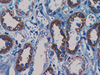
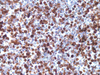
Annexin (ANXA1) is strongly expressed on the cell membrane and occasionally in the cytoplasm of tumor cells in 97% of samples from patients with hairy cell leukemia. By contrast, B-cell lymphomas other than hairy cell leukemia, including typical spleniclymphoma with villous lymphocytes and patients with variant hairy cell leukemia -- as defined by current morphologic, phenotypic, and clinical criteria -- are ANXA1-negative. In a study by Falini et al. ANXA1 immunodetection was 100% sensitive and specific for hairycell leukemia. Normal B cells from different lympho-hemopoietic tissues were ANXA1-negative. In this study the expression of ANXA1 in myeloid cells, macrophages, or T-cell subset served as positive control. These findings validated the results of gene expression profiling in hairy cell leukemia at the protein level by showing that ANXA1 is consistently expressed in this type of leukemic disease, but not in other B-cell lymphomas. Of note is that negativity for ANXA1 was also present in patients with splenic lymphoma with villous lymphocytes, variant hairy cell leukemia, prolymphocytic leukemia, marginal zone and lymphoplasmacytoid lymphomas. Thus, ANXA1 is a molecule specific to hairy cell leukemia that can be used to differentiate this disease from other B-cell lymphomas. Wang et al. showed that high ANXA1 expression is frequent in esophageal and esophagogastric junction adenocarcinomas, is associated with more advanced pathologic T stage and the presence of distant metastasis, and is an independent prognostic factor for patient survival.
Description
Annexin (ANXA1) is strongly expressed on the cell membrane and occasionally in the cytoplasm of tumor cells in 97% of samples from patients with hairy cell leukemia. By contrast, B-cell lymphomas other than hairy cell leukemia, including typical spleniclymphoma with villous lymphocytes and patients with variant hairy cell leukemia -- as defined by current morphologic, phenotypic, and clinical criteria -- are ANXA1-negative. In a study by Falini et al. ANXA1 immunodetection was 100% sensitive and specific for hairycell leukemia. Normal B cells from different lympho-hemopoietic tissues were ANXA1-negative. In this study the expression of ANXA1 in myeloid cells, macrophages, or T-cell subset served as positive control. These findings validated the results of gene expression profiling in hairy cell leukemia at the protein level by showing that ANXA1 is consistently expressed in this type of leukemic disease, but not in other B-cell lymphomas. Of note is that negativity for ANXA1 was also present in patients with splenic lymphoma with villous lymphocytes, variant hairy cell leukemia, prolymphocytic leukemia, marginal zone and lymphoplasmacytoid lymphomas. Thus, ANXA1 is a molecule specific to hairy cell leukemia that can be used to differentiate this disease from other B-cell lymphomas. Wang et al. showed that high ANXA1 expression is frequent in esophageal and esophagogastric junction adenocarcinomas, is associated with more advanced pathologic T stage and the presence of distant metastasis, and is an independent prognostic factor for patient survival.

Suppliers

Company
Product
Description
Supplier Links
Annexin A1 760-4435
Annexin (ANXA1) is strongly expressed on the cell membrane and occasionally in the cytoplasm of tumor cells in 97% of samples from patients with hairy cell leukemia. By contrast, B-cell lymphomas other than hairy cell leukemia, including typical spleniclymphoma with villous lymphocytes and patients with variant hairy cell leukemia -- as defined by current morphologic, phenotypic, and clinical criteria -- are ANXA1-negative. In a study by Falini et al. ANXA1 immunodetection was 100% sensitive and specific for hairycell leukemia. Normal B cells from different lympho-hemopoietic tissues were ANXA1-negative. In this study the expression of ANXA1 in myeloid cells, macrophages, or T-cell subset served as positive control. These findings validated the results of gene expression profiling in hairy cell leukemia at the protein level by showing that ANXA1 is consistently expressed in this type of leukemic disease, but not in other B-cell lymphomas. Of note is that negativity for ANXA1 was also present in patients with splenic lymphoma with villous lymphocytes, variant hairy cell leukemia, prolymphocytic leukemia, marginal zone and lymphoplasmacytoid lymphomas. Thus, ANXA1 is a molecule specific to hairy cell leukemia that can be used to differentiate this disease from other B-cell lymphomas. Wang et al. showed that high ANXA1 expression is frequent in esophageal and esophagogastric junction adenocarcinomas, is associated with more advanced pathologic T stage and the presence of distant metastasis, and is an independent prognostic factor for patient survival.

Annexin (ANXA1) is strongly expressed on the cell membrane and occasionally in the cytoplasm of tumor cells in 97% of samples from patients with hairy cell leukemia. By contrast, B-cell lymphomas other than hairy cell leukemia, including typical spleniclymphoma with villous lymphocytes and patients with variant hairy cell leukemia -- as defined by current morphologic, phenotypic, and clinical criteria -- are ANXA1-negative. In a study by Falini et al. ANXA1 immunodetection was 100% sensitive and specific for hairycell leukemia. Normal B cells from different lympho-hemopoietic tissues were ANXA1-negative. In this study the expression of ANXA1 in myeloid cells, macrophages, or T-cell subset served as positive control. These findings validated the results of gene expression profiling in hairy cell leukemia at the protein level by showing that ANXA1 is consistently expressed in this type of leukemic disease, but not in other B-cell lymphomas. Of note is that negativity for ANXA1 was also present in patients with splenic lymphoma with villous lymphocytes, variant hairy cell leukemia, prolymphocytic leukemia, marginal zone and lymphoplasmacytoid lymphomas. Thus, ANXA1 is a molecule specific to hairy cell leukemia that can be used to differentiate this disease from other B-cell lymphomas. Wang et al. showed that high ANXA1 expression is frequent in esophageal and esophagogastric junction adenocarcinomas, is associated with more advanced pathologic T stage and the presence of distant metastasis, and is an independent prognostic factor for patient survival.

Supplier's Site

Technical Specifications

  Ventana Medical Systems, Inc.
Product Category Organic Chemicals
Product Number 760-4435
Product Name Annexin A1
Unlock Full Specs
to access all available technical data

Similar Products

DMI 1,3 Dimethyl-2-Imidazolidinone -  - Mitsui Chemicals America, Inc.
Mitsui Chemicals America, Inc.
Specs
Trigger Solvent
Chemical Name DMI 1,3 Dimethyl-2-Imidazolidinone
State of Matter Liquid / Solution
View Details
Intermediates and Ingredients for Pharmaceuticals and Agrochemical Compounds -  - AGC Chemicals Americas, Inc.
Specs
Chemical Family All Halogenated
Chemical Name Trifluoroacetic Acid, Trifluoroacetic Anhydride, Ethyl Trifluoroacetate, Sodium Trifluoroacetate, 2,3,4-Trifluoro aniline, Trifluoroacetamide, & More
CAS Number 76-05-1, 407-25-0, 383-63-1, 2923-18-4, 3862-73-5, 354-38-1, 148043-73-6, 30071-93-3, 677-69-0, 122665-97-8, 118612-00-3, 136040-19-2, and More
View Details
 - 001196 - Matrix Scientific
Matrix Scientific
Specs
Chemical Name 1,1,2,3,3,3-Hexafluoropropoxybenzene
Chemical Formula C9H6F6O
CAS Number 357-98-2
View Details
Commercial  Heptane Ultra Low Aromatic - 717950 - Phillips 66 Specialty Solvents
Specs
Trigger Solvent
Chemical Family All Alkanes
Chemical Name Heptane, Branched, Cyclic And Linear, N-heptane
View Details