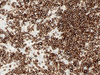
Ventana Medical Systems, Inc. MUC2 760-4388

Description
Mucins are high molecular weight glycoproteins which constitute the major component of the mucus layer that protects the gastric epithelium from chemical and mechanical aggressions. In humans, at least 14 mucin genes have been identified that code for the mucin proteins. They are designated as MUC1, MUC2, MUC3, MUC4, MUC5AC, MUC5B, MUC6, MUC7, MUC8, MUC9, MUC11, MUC12, MUC13 and MUC16. Mucins share a common feature of a tandem-repeat domain rich in serine and threonine residues. These amino acid residues are potential O-glycosylation sites for attachment of the O-glycan chains that constitute up to 80% of the molecular weight of the final mucin glycoprotein. The heterogeneous pattern of mucin expression, including the expression of the intestinal mucin MUC2, may provide new insights into the differentiation pathways of gastric carcinoma. The pattern of mucin expression may also be used as a clue to bring newi nsights into the biological behaviour of distinct clinicopathological entities related to the localization of gastric carcinoma, namely proximal and distal gastric carcinomas. Pinto-de-Sousa et al. have shown in a comprehensive study of gastric carcinomas evaluated for expression of several mucins (MUC1, MUC2, MUC5AC and MUC6) that: (1) mucin expression is associated with tumor type (MUC5AC with diffuse and infiltrative carcinomas and MUC2 with mucinous carcinomas) but not with the clinico-biological behaviour of the tumors; and (2) mucin expression is associated with tumor location (MUC5AC with antrum carcinomas and MUC2 with cardia carcinomas), indirectly reflecting differences in tumor differentiation according to tumor location. The following generalities apply to the patterns of Mucin expression: MUC1 expression: apical surfaces of most epithelial cells in breast, GI, respiratory, and GU tracts. MUC2 expression: specifically expressed in goblet cells of the small intestine & colon. Colonic CAs - 65%, Gastric CAs - 42%, Esophageal CAs - 17% Rare outside of GI tract - with exception of; mucinous ca of breast, clear cell-type CAs of the ovary.
Description
Mucins are high molecular weight glycoproteins which constitute the major component of the mucus layer that protects the gastric epithelium from chemical and mechanical aggressions. In humans, at least 14 mucin genes have been identified that code for the mucin proteins. They are designated as MUC1, MUC2, MUC3, MUC4, MUC5AC, MUC5B, MUC6, MUC7, MUC8, MUC9, MUC11, MUC12, MUC13 and MUC16. Mucins share a common feature of a tandem-repeat domain rich in serine and threonine residues. These amino acid residues are potential O-glycosylation sites for attachment of the O-glycan chains that constitute up to 80% of the molecular weight of the final mucin glycoprotein. The heterogeneous pattern of mucin expression, including the expression of the intestinal mucin MUC2, may provide new insights into the differentiation pathways of gastric carcinoma. The pattern of mucin expression may also be used as a clue to bring newi nsights into the biological behaviour of distinct clinicopathological entities related to the localization of gastric carcinoma, namely proximal and distal gastric carcinomas. Pinto-de-Sousa et al. have shown in a comprehensive study of gastric carcinomas evaluated for expression of several mucins (MUC1, MUC2, MUC5AC and MUC6) that: (1) mucin expression is associated with tumor type (MUC5AC with diffuse and infiltrative carcinomas and MUC2 with mucinous carcinomas) but not with the clinico-biological behaviour of the tumors; and (2) mucin expression is associated with tumor location (MUC5AC with antrum carcinomas and MUC2 with cardia carcinomas), indirectly reflecting differences in tumor differentiation according to tumor location. The following generalities apply to the patterns of Mucin expression: MUC1 expression: apical surfaces of most epithelial cells in breast, GI, respiratory, and GU tracts. MUC2 expression: specifically expressed in goblet cells of the small intestine & colon. Colonic CAs - 65%, Gastric CAs - 42%, Esophageal CAs - 17% Rare outside of GI tract - with exception of; mucinous ca of breast, clear cell-type CAs of the ovary.

Suppliers

Company
Product
Description
Supplier Links
Mucins are high molecular weight glycoproteins which constitute the major component of the mucus layer that protects the gastric epithelium from chemical and mechanical aggressions. In humans, at least 14 mucin genes have been identified that code for the mucin proteins. They are designated as MUC1, MUC2, MUC3, MUC4, MUC5AC, MUC5B, MUC6, MUC7, MUC8, MUC9, MUC11, MUC12, MUC13 and MUC16. Mucins share a common feature of a tandem-repeat domain rich in serine and threonine residues. These amino acid residues are potential O-glycosylation sites for attachment of the O-glycan chains that constitute up to 80% of the molecular weight of the final mucin glycoprotein. The heterogeneous pattern of mucin expression, including the expression of the intestinal mucin MUC2, may provide new insights into the differentiation pathways of gastric carcinoma. The pattern of mucin expression may also be used as a clue to bring newi nsights into the biological behaviour of distinct clinicopathological entities related to the localization of gastric carcinoma, namely proximal and distal gastric carcinomas. Pinto-de-Sousa et al. have shown in a comprehensive study of gastric carcinomas evaluated for expression of several mucins (MUC1, MUC2, MUC5AC and MUC6) that: (1) mucin expression is associated with tumor type (MUC5AC with diffuse and infiltrative carcinomas and MUC2 with mucinous carcinomas) but not with the clinico-biological behaviour of the tumors; and (2) mucin expression is associated with tumor location (MUC5AC with antrum carcinomas and MUC2 with cardia carcinomas), indirectly reflecting differences in tumor differentiation according to tumor location. The following generalities apply to the patterns of Mucin expression: MUC1 expression: apical surfaces of most epithelial cells in breast, GI, respiratory, and GU tracts. MUC2 expression: specifically expressed in goblet cells of the small intestine & colon. Colonic CAs - 65%, Gastric CAs - 42%, Esophageal CAs - 17% Rare outside of GI tract - with exception of; mucinous ca of breast, clear cell-type CAs of the ovary.

Mucins are high molecular weight glycoproteins which constitute the major component of the mucus layer that protects the gastric epithelium from chemical and mechanical aggressions. In humans, at least 14 mucin genes have been identified that code for the mucin proteins. They are designated as MUC1, MUC2, MUC3, MUC4, MUC5AC, MUC5B, MUC6, MUC7, MUC8, MUC9, MUC11, MUC12, MUC13 and MUC16. Mucins share a common feature of a tandem-repeat domain rich in serine and threonine residues. These amino acid residues are potential O-glycosylation sites for attachment of the O-glycan chains that constitute up to 80% of the molecular weight of the final mucin glycoprotein. The heterogeneous pattern of mucin expression, including the expression of the intestinal mucin MUC2, may provide new insights into the differentiation pathways of gastric carcinoma. The pattern of mucin expression may also be used as a clue to bring newi nsights into the biological behaviour of distinct clinicopathological entities related to the localization of gastric carcinoma, namely proximal and distal gastric carcinomas.
Pinto-de-Sousa et al. have shown in a comprehensive study of gastric carcinomas evaluated for expression of several mucins (MUC1, MUC2, MUC5AC and MUC6) that: (1) mucin expression is associated with tumor type (MUC5AC with diffuse and infiltrative carcinomas and MUC2 with mucinous carcinomas) but not with the clinico-biological behaviour of the tumors; and (2) mucin expression is associated with tumor location (MUC5AC with antrum carcinomas and MUC2 with cardia carcinomas), indirectly reflecting differences in tumor differentiation according to tumor location. The following generalities apply to the patterns of Mucin expression: MUC1 expression: apical surfaces of most epithelial cells in breast, GI, respiratory, and GU tracts. MUC2 expression: specifically expressed in goblet cells of the small intestine & colon. Colonic CAs - 65%, Gastric CAs - 42%, Esophageal CAs - 17% Rare outside of GI tract - with exception of; mucinous ca of breast, clear cell-type CAs of the ovary.

Supplier's Site

Technical Specifications

  Ventana Medical Systems, Inc.
Product Category Organic Chemicals
Product Number 760-4388
Product Name MUC2
Unlock Full Specs
to access all available technical data

Similar Products

DMI 1,3 Dimethyl-2-Imidazolidinone -  - Mitsui Chemicals America, Inc.
Mitsui Chemicals America, Inc.
Specs
Trigger Solvent
Chemical Name DMI 1,3 Dimethyl-2-Imidazolidinone
State of Matter Liquid / Solution
View Details
AsahiKlin Precision Cleaning Solvent - AE3000AT - AGC Chemicals Americas, Inc.
Specs
Trigger Solvent
Chemical Family All Alkenes; All Halogenated; All Ethers
Chemical Name Trans-1,2 Dichloroethylene
View Details
Amplified Opti-4CN Substrate Kit - 170-8238 - Bio-Rad Laboratories, Inc.
Specs
Trigger Base
View Details
N-(2-Amino-3,8-dimethylimidazo[4,5-f]quinoxalin-5-yl) 2.. - A606815 - Toronto Research Chemicals, Inc.
Specs
Chemical Name N-(2-Amino-3,8-dimethylimidazo[4,5-f]quinoxalin-5-yl) 2’-Deoxyguanosine
Chemical Formula C21H22N10O4
CAS Number 142038-30-0
View Details