The Integrated Services Digital Network (ISDN) system allows voice, data and video to be transmitted simultaneously across the world using end-to-end digital connectivity. ISDN, based on the telephony network, was conceived of to provide multiple voice and non-voice services over a single network, and a digital user network interface over regular phone lines, instead of dedicated and isolated user-network interfaces.
ISDN is an integrated solution for providing basic telephony and data services, whilst offering more telephony services such as supplementary services. ISDN services are grouped in three service categories:
Bearer service
Teleservice
Supplementary service
The user-to-network interface is provided in two flavors:
Basic interface structure (BRI) - two B-channels and one 16 kbit/s D-channel (2B+D)
Primary rate B-channel interface structure (PRI) - 30 thirty B-channels and one 64 kbit/s D-channel (30B+D)
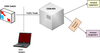
GL's ISDN analyzer can capture and analyze stream of frames on an ISDN PRI link. It decodes LAPD according to Q.921, while, the ISDN information parsing is done based on the user's selection of ITU Q.931, ISDN ANSI, AT&T/Lucent switch 4ESS and 5ESS (TR41449, TR41459 and 235-900-342), Nortel's switch DMS-100 and DMS-250 (NIS-A2111-1 and NIS-A211-4), Bellcore National ISDN-2 (NI-2), Euro ISDN (ETS-300 102-1), ARINC 746, ETSI 300-102, QSIG ETSI/ECMA, National ISDN PRI CPE, DPNSS, and DASS2.
GL Communications supports the following types of ISDN analyzers:
Real-time ISDN Analyzer (Pre-requisites: GL's field proven E1 or T1 internal cards or USB Laptop E1 or T1 external units, required licenses and Windows XP (or higher) Operating System)
Remote/Offline ISDN Analyzers (Pre-requisites: Hardware Dongle and Windows XP (or higher) Operating System)
Both real-time and off-line analysis presents the following information
Raw ISDN Frame data as a hexadecimal and ASCII octet dump - Physical Layer
LAPD information (Layer 2)
ISDN information (Layer 3)
Also, visit GL's SIGTRAN protocol decode and ISDN SIGTRAN protocol decode web page for a description of SIGTRAN - used to carry Q.931 or SS7 ISUP messages between IP nodes such as a Signaling Gateway and Media Gateway Controller or Media Gateway.
In addition the following ISDN applications are supported that further help in emulating ISDN protocol:
ISDN Emulation using GUI
ISDN Emulation using Client-Server
Scripted ISDN Emulation using MAPS™
High Capacity ISDN Emulation using DCOSS
Scripted ISDN SIGTRAN Emulation using MAPS™
ISDN Analyzer Main Features:
Displays Summary, Detail, Hex-dump, Statistics, and Call Detail Views.
Summary View displays Dev #, Time Slot, Frame #, LAPD information, ISDN Message types, and etc in a tabular format.
Detail View displays decodes of user-selected frames from the Summary View; the contents of this view can also be copied to clipboard.
Hex dump View displays the frame information in HEX and ASCII format; the contents of this view can also be copied to clipboard.
Statistics View displays statistics based on frame count, byte count, frames/sec, bytes/sec etc for the entire capture data
Call trace isolates call specific information i.e. status of each call (i.e. Active/Completed), duration of completed call, Device No, Timeslot, CRV, Called and Calling Party number.
Call Detail Recording feature includes data link groups that help in defining the direction of the calls in a given network and form logical groups comprised of unidirectional (either 'Forward' or 'Backward') data links.
Supports filtering and search based on SAPI, TEI, C/R, N(S), N(R), P/F, Supervisory Functions, and ISDN message types.
Any protocol field can be added to the summary view, filtering, and search features providing users more flexibility to monitor required protocol fields.
Exports Summary View information to a comma delimited file for subsequent import into a database or spreadsheet.
Capability to export detail decodes information to an ASCII file.
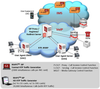
Remote monitoring capability using GL's Network Surveillance System.
Additional feature supported by Real-time/Remote ISDN Analyzer:
Real-time filter and search on C/R, SAPI, TEI, CTL, P/F, N (S), N (R) and FUNC and so on.
Streams can be captured on the selected time slots (contiguous or non-contiguous), sub-channels or full bandwidth. Frames can be transmitted/captured in either n x 64 kbps, or n x 56 kbps data channels (hyper-channels).
Sub Channel and Nx56 hyper channel enables user to analyze data captured by fractional DS0 and DS1 link.
Multiple streams of ISDN traffic on various T1/E1 channels can be simultaneously decoded with different GUI instances.
Supports decoding of frames with FCS of 16 bits and 32 bits, or none.
Variations accommodated in the software include inverted or non-inverted data, and byte reversal or non-reversal.
Recorded trace files can be played back using HDLC Playback application.
Multiple remote clients may access a single T1/E1 serverAlso, the T1/E1 server. Also the T1/E1 server is fully functional while being accessed as a server. Thus, a user may perform T1/E1 operations locally on the server while a remote client is accessing the same server, in real time. For Remote Analyzers only)
Additional features supported by Offline ISDN Analyzer:
Trace files for analysis can be loaded through simple command-line arguments.
Multiple trace files can be loaded simultaneously with different GUI instances for offline analysis.
The Integrated Services Digital Network (ISDN) system allows voice, data and video to be transmitted simultaneously across the world using end-to-end digital connectivity. ISDN, based on the telephony network, was conceived of to provide multiple voice and non-voice services over a single network, and a digital user network interface over regular phone lines, instead of dedicated and isolated user-network interfaces.
ISDN is an integrated solution for providing basic telephony and data services, whilst offering more telephony services such as supplementary services. ISDN services are grouped in three service categories:
- Bearer service
- Teleservice
- Supplementary service
The user-to-network interface is provided in two flavors:
- Basic interface structure (BRI) - two B-channels and one 16 kbit/s D-channel (2B+D)
- Primary rate B-channel interface structure (PRI) - 30 thirty B-channels and one 64 kbit/s D-channel (30B+D)
GL's ISDN analyzer can capture and analyze stream of frames on an ISDN PRI link. It decodes LAPD according to Q.921, while, the ISDN information parsing is done based on the user's selection of ITU Q.931, ISDN ANSI, AT&T/Lucent switch 4ESS and 5ESS (TR41449, TR41459 and 235-900-342), Nortel's switch DMS-100 and DMS-250 (NIS-A2111-1 and NIS-A211-4), Bellcore National ISDN-2 (NI-2), Euro ISDN (ETS-300 102-1), ARINC 746, ETSI 300-102, QSIG ETSI/ECMA, National ISDN PRI CPE, DPNSS, and DASS2.
GL Communications supports the following types of ISDN analyzers:
- Real-time ISDN Analyzer (Pre-requisites: GL's field proven E1 or T1 internal cards or USB Laptop E1 or T1 external units, required licenses and Windows XP (or higher) Operating System)
- Remote/Offline ISDN Analyzers (Pre-requisites: Hardware Dongle and Windows XP (or higher) Operating System)
Both real-time and off-line analysis presents the following information
- Raw ISDN Frame data as a hexadecimal and ASCII octet dump - Physical Layer
- LAPD information (Layer 2)
- ISDN information (Layer 3)
Also, visit GL's SIGTRAN protocol decode and ISDN SIGTRAN protocol decode web page for a description of SIGTRAN - used to carry Q.931 or SS7 ISUP messages between IP nodes such as a Signaling Gateway and Media Gateway Controller or Media Gateway.
In addition the following ISDN applications are supported that further help in emulating ISDN protocol:
- ISDN Emulation using GUI
- ISDN Emulation using Client-Server
- Scripted ISDN Emulation using MAPS™
- High Capacity ISDN Emulation using DCOSS
- Scripted ISDN SIGTRAN Emulation using MAPS™
ISDN Analyzer Main Features:
- Displays Summary, Detail, Hex-dump, Statistics, and Call Detail Views.
- Summary View displays Dev #, Time Slot, Frame #, LAPD information, ISDN Message types, and etc in a tabular format.
- Detail View displays decodes of user-selected frames from the Summary View; the contents of this view can also be copied to clipboard.
- Hex dump View displays the frame information in HEX and ASCII format; the contents of this view can also be copied to clipboard.
- Statistics View displays statistics based on frame count, byte count, frames/sec, bytes/sec etc for the entire capture data
- Call trace isolates call specific information i.e. status of each call (i.e. Active/Completed), duration of completed call, Device No, Timeslot, CRV, Called and Calling Party number.
- Call Detail Recording feature includes data link groups that help in defining the direction of the calls in a given network and form logical groups comprised of unidirectional (either 'Forward' or 'Backward') data links.
- Supports filtering and search based on SAPI, TEI, C/R, N(S), N(R), P/F, Supervisory Functions, and ISDN message types.
- Any protocol field can be added to the summary view, filtering, and search features providing users more flexibility to monitor required protocol fields.
- Exports Summary View information to a comma delimited file for subsequent import into a database or spreadsheet.
- Capability to export detail decodes information to an ASCII file.
- Remote monitoring capability using GL's Network Surveillance System.
Additional feature supported by Real-time/Remote ISDN Analyzer:
- Real-time filter and search on C/R, SAPI, TEI, CTL, P/F, N (S), N (R) and FUNC and so on.
- Streams can be captured on the selected time slots (contiguous or non-contiguous), sub-channels or full bandwidth. Frames can be transmitted/captured in either n x 64 kbps, or n x 56 kbps data channels (hyper-channels).
- Sub Channel and Nx56 hyper channel enables user to analyze data captured by fractional DS0 and DS1 link.
- Multiple streams of ISDN traffic on various T1/E1 channels can be simultaneously decoded with different GUI instances.
- Supports decoding of frames with FCS of 16 bits and 32 bits, or none.
- Variations accommodated in the software include inverted or non-inverted data, and byte reversal or non-reversal.
- Recorded trace files can be played back using HDLC Playback application.
- Multiple remote clients may access a single T1/E1 serverAlso, the T1/E1 server. Also the T1/E1 server is fully functional while being accessed as a server. Thus, a user may perform T1/E1 operations locally on the server while a remote client is accessing the same server, in real time. For Remote Analyzers only)
Additional features supported by Offline ISDN Analyzer:
- Trace files for analysis can be loaded through simple command-line arguments.
- Multiple trace files can be loaded simultaneously with different GUI instances for offline analysis.