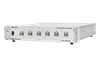
GL Communications, Inc. DCME Analyzer DC007

Description
DCME testing, analysis and verification is easy with GL's DCME Analyzer. The DCME Analyzer is a PC-based system (Desktop/Laptop) with GL's Dual port USB E1 pod to connect non-intrusively to the bearer side of DCME equipment. Both real-time and post-processing of the bearer signal is possible. In real-time mode, the status of the bearer including synchronization, bearer loading, fax loading and other statistics are easily monitored. In post processing mode, the entire DCME bearer signal is captured to the PC's hard disk using the available special E1 applications for recording. The captured file is then analyzed with the DCME software. In the DCME analysis software, the software aligns to the DCME frame, and the DCME control channel(s) are decoded. The data can be displayed to permit bit level analysis and verification of channel mapping and implementation timing of the DCME protocol. DCMEs use variable bit rate encoding to create overload channels to handle overload conditions. Bearer channels are randomly selected for rate reduction. The software identifies the bit mode of each overload and normal channel (4, 3 or 2 bits). Additionally, the Facsimile Subframe analysis software permits bit level analysis and verification of fax data submultiplexing on the DCME output bearer signal. The DCME Analyzer software calculates the mapping and interleaving algorithms, FEC and permits time of implementation verification. Main Features: DCME analyzer uses GL's Dual port USB E1 pod to provide the capability to test and analyze DCME signals Supports *1IESS-501 Rev 3 Specifications and equipment such as DTX 360 of ECTel Connects non-intrusively to the bearer side of DCME equipment Captures the entire DCME bearer signal to the PC's hard disk Realtime and post processing of the DCME bearer signal Verification of channel mapping and implementation timing of the DCME protocol Golay and BCH error correction Bit level analysis and verification of facsimile data sub-multiplexing on DCME bearer Note : *1 Although DCME is still used in the Intelsat System, IESS-501 is no longer being updated or distributed since its contents have been subsumed under ITU-T Recommendations G.763 and G.766. Users should, therefore refer to these ITU-T Recommendations for the DCME performance requirements
Datasheet
Description
DCME testing, analysis and verification is easy with GL's DCME Analyzer. The DCME Analyzer is a PC-based system (Desktop/Laptop) with GL's Dual port USB E1 pod to connect non-intrusively to the bearer side of DCME equipment. Both real-time and post-processing of the bearer signal is possible. In real-time mode, the status of the bearer including synchronization, bearer loading, fax loading and other statistics are easily monitored. In post processing mode, the entire DCME bearer signal is captured to the PC's hard disk using the available special E1 applications for recording. The captured file is then analyzed with the DCME software. In the DCME analysis software, the software aligns to the DCME frame, and the DCME control channel(s) are decoded. The data can be displayed to permit bit level analysis and verification of channel mapping and implementation timing of the DCME protocol. DCMEs use variable bit rate encoding to create overload channels to handle overload conditions. Bearer channels are randomly selected for rate reduction. The software identifies the bit mode of each overload and normal channel (4, 3 or 2 bits). Additionally, the Facsimile Subframe analysis software permits bit level analysis and verification of fax data submultiplexing on the DCME output bearer signal. The DCME Analyzer software calculates the mapping and interleaving algorithms, FEC and permits time of implementation verification. Main Features: DCME analyzer uses GL's Dual port USB E1 pod to provide the capability to test and analyze DCME signals Supports *1IESS-501 Rev 3 Specifications and equipment such as DTX 360 of ECTel Connects non-intrusively to the bearer side of DCME equipment Captures the entire DCME bearer signal to the PC's hard disk Realtime and post processing of the DCME bearer signal Verification of channel mapping and implementation timing of the DCME protocol Golay and BCH error correction Bit level analysis and verification of facsimile data sub-multiplexing on DCME bearer Note : *1 Although DCME is still used in the Intelsat System, IESS-501 is no longer being updated or distributed since its contents have been subsumed under ITU-T Recommendations G.763 and G.766. Users should, therefore refer to these ITU-T Recommendations for the DCME performance requirements
Datasheet

Suppliers

Company
Product
Description
Supplier Links
DCME Analyzer - DC007 - GL Communications, Inc.
Gaithersburg, MD, United States
DCME Analyzer
DC007
DCME Analyzer DC007
DCME testing, analysis and verification is easy with GL's DCME Analyzer. The DCME Analyzer is a PC-based system (Desktop/Laptop) with GL's Dual port USB E1 pod to connect non-intrusively to the bearer side of DCME equipment. Both real-time and post-processing of the bearer signal is possible. In real-time mode, the status of the bearer including synchronization, bearer loading, fax loading and other statistics are easily monitored. In post processing mode, the entire DCME bearer signal is captured to the PC's hard disk using the available special E1 applications for recording. The captured file is then analyzed with the DCME software. In the DCME analysis software, the software aligns to the DCME frame, and the DCME control channel(s) are decoded. The data can be displayed to permit bit level analysis and verification of channel mapping and implementation timing of the DCME protocol. DCMEs use variable bit rate encoding to create overload channels to handle overload conditions. Bearer channels are randomly selected for rate reduction. The software identifies the bit mode of each overload and normal channel (4, 3 or 2 bits). Additionally, the Facsimile Subframe analysis software permits bit level analysis and verification of fax data submultiplexing on the DCME output bearer signal. The DCME Analyzer software calculates the mapping and interleaving algorithms, FEC and permits time of implementation verification. Main Features: DCME analyzer uses GL's Dual port USB E1 pod to provide the capability to test and analyze DCME signals Supports *1IESS-501 Rev 3 Specifications and equipment such as DTX 360 of ECTel Connects non-intrusively to the bearer side of DCME equipment Captures the entire DCME bearer signal to the PC's hard disk Realtime and post processing of the DCME bearer signal Verification of channel mapping and implementation timing of the DCME protocol Golay and BCH error correction Bit level analysis and verification of facsimile data sub-multiplexing on DCME bearer Note : *1 Although DCME is still used in the Intelsat System, IESS-501 is no longer being updated or distributed since its contents have been subsumed under ITU-T Recommendations G.763 and G.766. Users should, therefore refer to these ITU-T Recommendations for the DCME performance requirements

DCME testing, analysis and verification is easy with GL's DCME Analyzer. The DCME Analyzer is a PC-based system (Desktop/Laptop) with GL's Dual port USB E1 pod to connect non-intrusively to the bearer side of DCME equipment. Both real-time and post-processing of the bearer signal is possible. In real-time mode, the status of the bearer including synchronization, bearer loading, fax loading and other statistics are easily monitored.

In post processing mode, the entire DCME bearer signal is captured to the PC's hard disk using the available special E1 applications for recording. The captured file is then analyzed with the DCME software.

In the DCME analysis software, the software aligns to the DCME frame, and the DCME control channel(s) are decoded. The data can be displayed to permit bit level analysis and verification of channel mapping and implementation timing of the DCME protocol. DCMEs use variable bit rate encoding to create overload channels to handle overload conditions. Bearer channels are randomly selected for rate reduction. The software identifies the bit mode of each overload and normal channel (4, 3 or 2 bits).

Additionally, the Facsimile Subframe analysis software permits bit level analysis and verification of fax data submultiplexing on the DCME output bearer signal. The DCME Analyzer software calculates the mapping and interleaving algorithms, FEC and permits time of implementation verification.

Main Features:

  • DCME analyzer uses GL's Dual port USB E1 pod to provide the capability to test and analyze DCME signals
  • Supports *1IESS-501 Rev 3 Specifications and equipment such as DTX 360 of ECTel
  • Connects non-intrusively to the bearer side of DCME equipment
  • Captures the entire DCME bearer signal to the PC's hard disk
  • Realtime and post processing of the DCME bearer signal
  • Verification of channel mapping and implementation timing of the DCME protocol
  • Golay and BCH error correction
  • Bit level analysis and verification of facsimile data sub-multiplexing on DCME bearer

Note : *1 Although DCME is still used in the Intelsat System, IESS-501 is no longer being updated or distributed since its contents have been subsumed under ITU-T Recommendations G.763 and G.766. Users should, therefore refer to these ITU-T Recommendations for the DCME performance requirements
Supplier's Site Datasheet

Technical Specifications

  GL Communications, Inc.
Product Category Network Test Equipment
Product Number DC007
Product Name DCME Analyzer
Equipment Type Protocol Analyzer
Unlock Full Specs
to access all available technical data

Similar Products

Network Testers - 4439200 - RS Components, Ltd.
RS Components, Ltd.
Specs
Equipment Type Network Cable tester; Cable tester
Port Type RJ-45; Coaxial, rj45
Standards and Certifications RoHS
View Details
Analyzer IE -  - Softing Inc. Industrial Automation
Softing Inc. Industrial Automation
Specs
Equipment Type Protocol Analyzer
View Details
Voice, Data, or Video Cable Toner - Pocket Toner® - Fluke
Specs
Equipment Type Network Cable tester
View Details
MAPS™ MGCP Protocol Emulator - PKS124 - GL Communications, Inc.
Specs
Network Protocol MGCP
View Details