Technetics Group Segmented Circumferential Seals QUALISEAL

Description
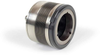
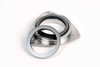
In certain extreme applications, a part made of individual segments may meet your critical performance requirements better than a single-piece unit. Segmented seals ride directly along the shaft and are primarily used in low-pressure applications. These seals contain a series of segmented carbon rings which contact the shaft or rotor. Segments inside the seal housing are kept in the proper location by anti-rotation keys or pins. A secondary seal is formed by the axial spring loading of the seal rings against the internal surface of the housing face. During movement, a continuous seal is always in contact with either the primary or secondary sealing surfaces. FEATURES & BENEFITS Benefits: Tolerance to unlimited shaft axial movement Prevents oil and contaminant migration into the process gas side Leakage rates remain constant over the life of the seal Features: Rides directly along the shaft Special gap segments permit the seal to adjust dimensionally for minimal leakage Compression and garter springs ensure that segments remain in contact with mating surfaces during low delta pressure and shutdown conditions Design Configurations: Various seal ring segment configurations Pressure-balanced segments Fractured rings Multiple seal labyrinth Internally pressurized seal Internally vented seal
Request a Quote Datasheet
Description
In certain extreme applications, a part made of individual segments may meet your critical performance requirements better than a single-piece unit. Segmented seals ride directly along the shaft and are primarily used in low-pressure applications. These seals contain a series of segmented carbon rings which contact the shaft or rotor. Segments inside the seal housing are kept in the proper location by anti-rotation keys or pins. A secondary seal is formed by the axial spring loading of the seal rings against the internal surface of the housing face. During movement, a continuous seal is always in contact with either the primary or secondary sealing surfaces. FEATURES & BENEFITS Benefits: Tolerance to unlimited shaft axial movement Prevents oil and contaminant migration into the process gas side Leakage rates remain constant over the life of the seal Features: Rides directly along the shaft Special gap segments permit the seal to adjust dimensionally for minimal leakage Compression and garter springs ensure that segments remain in contact with mating surfaces during low delta pressure and shutdown conditions Design Configurations: Various seal ring segment configurations Pressure-balanced segments Fractured rings Multiple seal labyrinth Internally pressurized seal Internally vented seal
Request a Quote Datasheet

Suppliers

Company
Product
Description
Supplier Links
Segmented Circumferential Seals - QUALISEAL - Technetics Group
Columbia, SC, United States
Segmented Circumferential Seals
QUALISEAL
Segmented Circumferential Seals QUALISEAL
In certain extreme applications, a part made of individual segments may meet your critical performance requirements better than a single-piece unit. Segmented seals ride directly along the shaft and are primarily used in low-pressure applications. These seals contain a series of segmented carbon rings which contact the shaft or rotor. Segments inside the seal housing are kept in the proper location by anti-rotation keys or pins. A secondary seal is formed by the axial spring loading of the seal rings against the internal surface of the housing face. During movement, a continuous seal is always in contact with either the primary or secondary sealing surfaces. FEATURES & BENEFITS Benefits: Tolerance to unlimited shaft axial movement Prevents oil and contaminant migration into the process gas side Leakage rates remain constant over the life of the seal Features: Rides directly along the shaft Special gap segments permit the seal to adjust dimensionally for minimal leakage Compression and garter springs ensure that segments remain in contact with mating surfaces during low delta pressure and shutdown conditions Design Configurations: Various seal ring segment configurations Pressure-balanced segments Fractured rings Multiple seal labyrinth Internally pressurized seal Internally vented seal

In certain extreme applications, a part made of individual segments may meet your critical performance requirements better than a single-piece unit.

Segmented seals ride directly along the shaft and are primarily used in low-pressure applications.

These seals contain a series of segmented carbon rings which contact the shaft or rotor. Segments inside the seal housing are kept in the proper location by anti-rotation keys or pins. A secondary seal is formed by the axial spring loading of the seal rings against the internal surface of the housing face. During movement, a continuous seal is always in contact with either the primary or secondary sealing surfaces.

FEATURES & BENEFITS

Benefits:

  • Tolerance to unlimited shaft axial movement
  • Prevents oil and contaminant migration into the process gas side
  • Leakage rates remain constant over the life of the seal

Features:

  • Rides directly along the shaft
  • Special gap segments permit the seal to adjust dimensionally for minimal leakage
  • Compression and garter springs ensure that segments remain in contact with mating surfaces during low delta pressure and shutdown conditions

Design Configurations:

  • Various seal ring segment configurations
  • Pressure-balanced segments
  • Fractured rings
  • Multiple seal labyrinth
  • Internally pressurized seal
  • Internally vented seal
Supplier's Site Datasheet
Controlled Gap/Bushing Circumferential Seals - QUALISEAL - Technetics Group
Columbia, SC, United States
Controlled Gap/Bushing Circumferential Seals
QUALISEAL
Controlled Gap/Bushing Circumferential Seals QUALISEAL
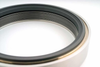
Really two pieces in one, Qualiseal Controlled Gap/Bushing seals are the best solution when pressure is an issue. Controlled gap or bushing seals are comprised of a carbon insert that is shrink-fitted into a separate retaining band. This floating circumferential ring assembly grows at a rate similar to that of the shaft when exposed to elevated temperatures. Under normal operating conditions, the pressure on the airside is higher than the pressure on the oil side. This creates some air leakage through the controlled gap between the carbon ring and shaft. The differential air pressure, along with the spring load, provide the closing force necessary to maintain contact between the carbon and housing secondary sealing face. Meanwhile, the shaft turns freely within the carbon ring. The seal design also features a unique stabilizer ring with fins which minimize stress on the carbon ring, thereby maintaining the roundness of the circumferential ring assembly. The dimensional tolerance of the critical inside diameter of the bushing ring is tightly controlled to minimize leakage variations. FEATURES & BENEFITS Benefits: Minimal leakage in an exceptionally wide temperature range Tolerance to unlimited shaft axial movement Very long life Very low heat generation Features: Rides on a buffer that centers the ring and minimizes seal-to-shaft contact Available in a wide variety of materials suitable to a broad range of applications Often paired with other seals to create sealing systems that meet demanding requirements Design Configurations: Single seal for dual pressure conditions Spring-loaded double back-to-back seal Separable designs to facilitate replacement and/or rework of internal components Double tandem seal arrangement for sealing a combination of liquids and gases Multiple labyrinth ring assemblies Housing for mounting directly onto equipment case

Really two pieces in one, Qualiseal Controlled Gap/Bushing seals are the best solution when pressure is an issue.

Controlled gap or bushing seals are comprised of a carbon insert that is shrink-fitted into a separate retaining band. This floating circumferential ring assembly grows at a rate similar to that of the shaft when exposed to elevated temperatures.

Under normal operating conditions, the pressure on the airside is higher than the pressure on the oil side. This creates some air leakage through the controlled gap between the carbon ring and shaft. The differential air pressure, along with the spring load, provide the closing force necessary to maintain contact between the carbon and housing secondary sealing face. Meanwhile, the shaft turns freely within the carbon ring.

The seal design also features a unique stabilizer ring with fins which minimize stress on the carbon ring, thereby maintaining the roundness of the circumferential ring assembly. The dimensional tolerance of the critical inside diameter of the bushing ring is tightly controlled to minimize leakage variations.

FEATURES & BENEFITS

Benefits:

  • Minimal leakage in an exceptionally wide temperature range
  • Tolerance to unlimited shaft axial movement
  • Very long life
  • Very low heat generation

Features:

  • Rides on a buffer that centers the ring and minimizes seal-to-shaft contact
  • Available in a wide variety of materials suitable to a broad range of applications
  • Often paired with other seals to create sealing systems that meet demanding requirements

Design Configurations:

  • Single seal for dual pressure conditions
  • Spring-loaded double back-to-back seal
  • Separable designs to facilitate replacement and/or rework of internal components
  • Double tandem seal arrangement for sealing a combination of liquids and gases
  • Multiple labyrinth ring assemblies
  • Housing for mounting directly onto equipment case
Supplier's Site Datasheet
Hydrodynamic Lift Off Mechanical Seals - QUALISEAL - Technetics Group
Columbia, SC, United States
Hydrodynamic Lift Off Mechanical Seals
QUALISEAL
Hydrodynamic Lift Off Mechanical Seals QUALISEAL
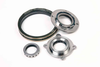
Qualiseal Hydrodynamic Lift Off Seals are non-contacting film-riding seals that have been successfully used in industrial pump and compressor applications for decades and are now increasingly finding their way into demanding aerospace applications where the hydrodynamic features can be even more beneficial. We design hydrodynamic features into the face of the mating ring. As the mating ring rotates, these features force air into a converging gap in the sealing surface, causing a pressure increase between the primary sealing elements. Once the pressure becomes great enough, the faces separate and the part operates in a hydrodynamic or non-contacting mode. The hydrodynamic features use air from the inside diameter to generate lift. A static sealing dam prevents leakage when the part is not rotating. In many aerospace applications, the rapid thermal transition, constantly changing pressures and high altitude conditions demand solutions where seal flatness must be maintained reliably over the long haul. Using a non-contacting seal enables the face seal and mating ring to operate virtually leak-free and experience almost no wear. FEATURES & BENEFITS Benefits: Significantly lower heat generation and reduced wear compared to contacting face seals Virtually zero leakage Robust design does not require special coatings or materials Can fit into same space as existing contacting face seals Robust performance and greater life expectancy Features: Can utilize either an O-ring on the outer diameter in a slip fit application or can be designed to press-fit into the seal bore of your unit Unbalanced or balanced designs Several elastomeric compounds, metal bellows or spring energized secondary sealing options are available for a variety of fluid and temperature applications Take-apart or unitized seal design Seal designs incorporate seal face material grades to encompass a wide range of applications, including high-pressure velocity (PV) or extreme vibration applications

Qualiseal Hydrodynamic Lift Off Seals are non-contacting film-riding seals that have been successfully used in industrial pump and compressor applications for decades and are now increasingly finding their way into demanding aerospace applications where the hydrodynamic features can be even more beneficial. We design hydrodynamic features into the face of the mating ring. As the mating ring rotates, these features force air into a converging gap in the sealing surface, causing a pressure increase between the primary sealing elements. Once the pressure becomes great enough, the faces separate and the part operates in a hydrodynamic or non-contacting mode. The hydrodynamic features use air from the inside diameter to generate lift. A static sealing dam prevents leakage when the part is not rotating. In many aerospace applications, the rapid thermal transition, constantly changing pressures and high altitude conditions demand solutions where seal flatness must be maintained reliably over the long haul. Using a non-contacting seal enables the face seal and mating ring to operate virtually leak-free and experience almost no wear.

FEATURES & BENEFITS

Benefits:

  • Significantly lower heat generation and reduced wear compared to contacting face seals
  • Virtually zero leakage
  • Robust design does not require special coatings or materials
  • Can fit into same space as existing contacting face seals
  • Robust performance and greater life expectancy

Features:

  • Can utilize either an O-ring on the outer diameter in a slip fit application or can be designed to press-fit into the seal bore of your unit
  • Unbalanced or balanced designs
  • Several elastomeric compounds, metal bellows or spring energized secondary sealing options are available for a variety of fluid and temperature applications
  • Take-apart or unitized seal design
  • Seal designs incorporate seal face material grades to encompass a wide range of applications, including high-pressure velocity (PV) or extreme vibration applications
Supplier's Site Datasheet
Contacting Face Seals - QUALISEAL - Technetics Group
Columbia, SC, United States
Contacting Face Seals
QUALISEAL
Contacting Face Seals QUALISEAL
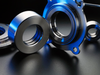
Pushing the outer limits of speed and vibration with your critical application? We have two words for you. No problem. Qualiseal Technology contacting face seals are known for versatility and exceptional performance across a wide range of demanding aircraft and industrial applications. They are designed for optimum performance where high speed and vibration are the norm. As the stationary portion of a seal assembly, contacting face seals are generally paired with a rotating mating ring, bearing or shaft. The seal face in the stationary portion provides the low-friction wear element that rides on the harder wear-resistant mating surface. The seal face and mating surfaces are typically lapped flat to within 0.0000348 inches (3 helium light bands), which provides virtually leak-tight sealing between the sealing interface. With the aid of Finite Element Analysis (FEA), mechanical face seal design at Qualiseal Technology is optimized to meet or exceed the most extreme unit operating conditions, with long life and reliable performance. FEATURES & BENEFITS Benefits: Achieve low leakage rates while managing axial shaft movement Easy, fast installation minimizes downtime and maintenance costs Designed to tolerate pressure reversals Features: Can utilize either an O-ring on the outer diameter in a slip fit application or can be designed to press-fit into the seal bore of your unit Unbalanced or balanced designs Several elastomeric compounds, metal bellows or spring energized secondary sealing options are available for a variety of fluid and temperature applications Take-apart or unitized seal design Seal designs incorporate seal face material grades to encompass a wide range of applications, including high-pressure velocity (PV) or extreme vibration applications

Pushing the outer limits of speed and vibration with your critical application? We have two words for you. No problem. Qualiseal Technology contacting face seals are known for versatility and exceptional performance across a wide range of demanding aircraft and industrial applications. They are designed for optimum performance where high speed and vibration are the norm. As the stationary portion of a seal assembly, contacting face seals are generally paired with a rotating mating ring, bearing or shaft. The seal face in the stationary portion provides the low-friction wear element that rides on the harder wear-resistant mating surface. The seal face and mating surfaces are typically lapped flat to within 0.0000348 inches (3 helium light bands), which provides virtually leak-tight sealing between the sealing interface. With the aid of Finite Element Analysis (FEA), mechanical face seal design at Qualiseal Technology is optimized to meet or exceed the most extreme unit operating conditions, with long life and reliable performance.

FEATURES & BENEFITS

Benefits:

  • Achieve low leakage rates while managing axial shaft movement
  • Easy, fast installation minimizes downtime and maintenance costs
  • Designed to tolerate pressure reversals

Features:

  • Can utilize either an O-ring on the outer diameter in a slip fit application or can be designed to press-fit into the seal bore of your unit
  • Unbalanced or balanced designs
  • Several elastomeric compounds, metal bellows or spring energized secondary sealing options are available for a variety of fluid and temperature applications
  • Take-apart or unitized seal design
  • Seal designs incorporate seal face material grades to encompass a wide range of applications, including high-pressure velocity (PV) or extreme vibration applications
Supplier's Site Datasheet

Technical Specifications

  Technetics Group Technetics Group Technetics Group Technetics Group
Product Category Mechanical Seals Mechanical Seals Mechanical Seals Mechanical Seals
Product Number QUALISEAL QUALISEAL QUALISEAL QUALISEAL
Product Name Segmented Circumferential Seals Controlled Gap/Bushing Circumferential Seals Hydrodynamic Lift Off Mechanical Seals Contacting Face Seals
Spring Element Single Spring Single Spring Single Spring
Seal Application Gas Seal (Spiral Groove Seal); Aerospace, Industrial Aerospace, Industrial Pump; Cryogenic Seal; Aerospace Pump; Aerospace, Industrial, Flow Control
Features Balanced Balanced; Unbalanced Balanced; Unbalanced
Rubbing Speed 40000 ft/min (20320 cm/sec) 50000 ft/min (25400 cm/sec) 50000 ft/min (25400 cm/sec) 50000 ft/min (25400 cm/sec)
Operating Pressure 100 psi (70.38 m H2O) 1.49 to 99.93 psi (1.05 to 70.33 m H2O) 2 psi (1.41 m H2O)
Unlock Full Specs
to access all available technical data

Similar Products

Mechanical Seals - Gulliver® - Technetics Group
Specs
Seal Design Metal Bellows; Elastomeric Bellows
Spring Element Single Spring
Seal Application Pump; Agitator or Mixer
View Details
Carbon Face Mechanical Seals -  - Technetics Group
Specs
Seal Design Metal Bellows
Seal Application Pump; Cryogenic Seal; Propulsion Engine & APU Shaft Sealing, Gearboxes, Power Generators, Wind Turbines, Drilling Machinery, Compressors
Rubbing Speed 29500 ft/min (14986 cm/sec)
View Details
Mechanical Seals - CEFILAC GPA® - Technetics Group
Specs
Seal Application Pump; Agitator or Mixer; Mining, Paper, Food, Energy
Rubbing Speed 2950 ft/min (1499 cm/sec)
Operating Pressure 218 psi (153 m H2O)
View Details
Customized Dynamic Sealing Solutions -  - Technetics Group
Specs
Seal Design Metal Bellows; Elastomeric Bellows
Seal Application Pump; Cryogenic Seal; Racing, Nuclear, Industrial, Aerospace, Medical
Rubbing Speed 19600 ft/min (9957 cm/sec)
View Details