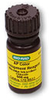
600 mg, nitroblue tetrazolium (NBT), colorimetric substrate, for purple color development; requires AP color development reagent (#170-6539)
Enzymes such as HRP or AP convert several substrates to a colored precipitate. As the precipitate accumulates on the blot, a colored signal develops. The reaction can be monitored and stopped when the desired signal over background is observed. Colorimetric detection is easier to perform than film-based chemiluminescence detection; however, the method's single endpoint result does not allow the multiple exposures of chemiluminescence methods. Colorimetric detection is typically considered a medium-sensitivity method compared to radioactive or chemiluminescence detection.
Bio-Rad's AP-based colorimetric kits utilize 5-bromo-4-chloro-3-i
ndolyl phosphate/Nitroblue Tetrazolium (BCIP/NBT), which reacts with the alkaline phosphatase to form a color precipitate for detection. The Immun-Blot AP assay kit includes all necessary reagents for colorimetric detection and can detect up to 100 pg of protein.
600 mg, nitroblue tetrazolium (NBT), colorimetric substrate, for purple color development; requires AP color development reagent (#170-6539)
Enzymes such as HRP or AP convert several substrates to a colored precipitate. As the precipitate accumulates on the blot, a colored signal develops. The reaction can be monitored and stopped when the desired signal over background is observed. Colorimetric detection is easier to perform than film-based chemiluminescence detection; however, the method's single endpoint result does not allow the multiple exposures of chemiluminescence methods. Colorimetric detection is typically considered a medium-sensitivity method compared to radioactive or chemiluminescence detection.
Bio-Rad's AP-based colorimetric kits utilize 5-bromo-4-chloro-3-indolyl phosphate/Nitroblue Tetrazolium (BCIP/NBT), which reacts with the alkaline phosphatase to form a color precipitate for detection. The Immun-Blot AP assay kit includes all necessary reagents for colorimetric detection and can detect up to 100 pg of protein.