Atomic absorption spectroscopy (AAS) is a common technique used in many analytical chemistry protocols, as well as applications requiring a high degree of precision and accuracy, such as food & drug safety, clinical diagnostics, and environmental sampling. Atomic absorption spectrometers may be used to analyze the concentration of over 70 different elements in a given sample solution, making them a very valuable instrument in any laboratory procedure that requires reliable measurements and reproducibility.
Atomic absorption spectroscopy relies on the Beer-Lambert law to determine the concentration of a particular analyte in a sample. The absorption spectrum and molar absorbance of the desired sample element are known, and each element will preferentially absorb light at a particular wavelength, due to each element having a defined and discrete quantity of energy required to promote its electrons into higher orbitals (excited state). During atomic absorption testing, a known amount of energy is passed through the atomized sample, and by then measuring the quantity of light remaining after absorption it is possible to determine the concentration of the element being measured. The technique behind atomic absorption spectroscopy instruments has a great impact in many different applications, ranging from one of the first instruments that a science student will work with, to an instrument that leading scientists around the world use every day.
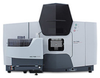
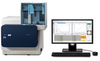
Prior to atomic absorption spectroscopy analysis, some samples must be digested to ensure for accurate analyte measurement, which can be performed by using a highly efficient acid-assisted microwave digestion system. Aurora’s series of TRACE™ atomic absorption spectrometers aspirate the sample into the light path of their built-in atomizer. Aurora’s TRACE AI1200 and TRACE 1300 atomic absorption spectrometers are available with flame, graphite furnace and vapour-hydride generation atomizers, while the cost-efficient TRACE 800 is available with either a flame or flame/vapour-hydride generation atomizer. The sample is then illuminated by light from a hollow-cathode lamp (HCL) which emits light at the wavelength characteristic to the desired element(s). A built in detector measures the light emissions both in presence and absence of sample, and the ratio of the absorbances are then converted into a measurement for analyte concentration.
Background correction techniques, such the built-in self-reversal (Smith-Hieftje) correction method and deuterium background correction adjust for molecular absorption overlap which would otherwise result in false atomic absorption spectroscopy rates. Both Deuterium and Self-reversal background correction are standard features offered in each TRACE atomic absorption spectrometer, which vastly i…
Atomic absorption spectroscopy (AAS) is a common technique used in many analytical chemistry protocols, as well as applications requiring a high degree of precision and accuracy, such as food & drug safety, clinical diagnostics, and environmental sampling. Atomic absorption spectrometers may be used to analyze the concentration of over 70 different elements in a given sample solution, making them a very valuable instrument in any laboratory procedure that requires reliable measurements and reproducibility.
Atomic absorption spectroscopy relies on the Beer-Lambert law to determine the concentration of a particular analyte in a sample. The absorption spectrum and molar absorbance of the desired sample element are known, and each element will preferentially absorb light at a particular wavelength, due to each element having a defined and discrete quantity of energy required to promote its electrons into higher orbitals (excited state). During atomic absorption testing, a known amount of energy is passed through the atomized sample, and by then measuring the quantity of light remaining after absorption it is possible to determine the concentration of the element being measured. The technique behind atomic absorption spectroscopy instruments has a great impact in many different applications, ranging from one of the first instruments that a science student will work with, to an instrument that leading scientists around the world use every day.
Prior to atomic absorption spectroscopy analysis, some samples must be digested to ensure for accurate analyte measurement, which can be performed by using a highly efficient acid-assisted microwave digestion system. Aurora’s series of TRACE™ atomic absorption spectrometers aspirate the sample into the light path of their built-in atomizer. Aurora’s TRACE AI1200 and TRACE 1300 atomic absorption spectrometers are available with flame, graphite furnace and vapour-hydride generation atomizers, while the cost-efficient TRACE 800 is available with either a flame or flame/vapour-hydride generation atomizer. The sample is then illuminated by light from a hollow-cathode lamp (HCL) which emits light at the wavelength characteristic to the desired element(s). A built in detector measures the light emissions both in presence and absence of sample, and the ratio of the absorbances are then converted into a measurement for analyte concentration.
Background correction techniques, such the built-in self-reversal (Smith-Hieftje) correction method and deuterium background correction adjust for molecular absorption overlap which would otherwise result in false atomic absorption spectroscopy rates. Both Deuterium and Self-reversal background correction are standard features offered in each TRACE atomic absorption spectrometer, which vastly i…