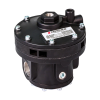
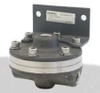
The PNEUMATIC RELAY is a pilot operated valve designed to provide the higher air or gas flow rates necessary for PNEUMATIC DRIVE CYLINDER diameters greater than 3 inches. The PNEUMATIC RELAY is actuated by the pulses produced by the CONTROLLER. A single acting PNEUMATIC RELAY is used with pumps that have return springs as illustrated to the left. The air or gas pressure is required to return the PISTON-PLUNGER ASSEMBLY on the CRP1000V800. Air/gas pressure from a controller forces a piston and one or more attached poppet valves to move. Then, when the controller removes the pressure, a spring forces both the piston and poppet valve(s) in the reverse direction. The PO4-8S relay, used on pumps that do not have a motor return spring, drives the air piston both up and down with the air/gas pressure. This relay has two poppet valves. The upper valve operates in the same way as the PO3-6S relay valve, while the lower valve operates in the opposite order. That is, when the upper valve applies air/gas pressure to the pump, the lower valve exhausts it, and when the upper valve exhausts the air/gas, the lower valve applies pressure to the opposite side of the piston.
The PNEUMATIC RELAY is a pilot operated valve designed to provide the higher air or gas flow rates necessary for PNEUMATIC DRIVE CYLINDER diameters greater than 3 inches. The PNEUMATIC RELAY is actuated by the pulses produced by the CONTROLLER. A single acting PNEUMATIC RELAY is used with pumps that have return springs as illustrated to the left. The air or gas pressure is required to return the PISTON-PLUNGER ASSEMBLY on the CRP1000V800.
Air/gas pressure from a controller forces a piston and one or more attached poppet valves to move.
Then, when the controller removes the pressure, a spring forces both the piston and poppet valve(s) in the reverse direction. The PO4-8S relay, used on pumps that do not have a motor return spring, drives the air piston both up and down with the air/gas pressure. This relay has two poppet valves.
The upper valve operates in the same way as the PO3-6S relay valve, while the lower valve operates in the opposite order.
That is, when the upper valve applies air/gas pressure to the pump, the lower valve exhausts it, and when the upper valve exhausts the air/gas, the lower valve applies pressure to the opposite side of the piston.