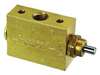
Western Analytical Products High Pressure Capillary with Stainless Steel Needle M-405S

Description
" For Interfacing LC-MS Systems Adjustable Split Stream Flow Rates Medium and High Pressure Versions Upchurch Scientific® offers a line of Micro-Splitter Valves designed to accurately split and control a low-flow stream off a single incoming supply. The biocompatible Medium Pressure Micro-Splitter Valves are perfect for LC-MS and other multidetector systems and fraction collectors. The ideal placement of these valves is on the effluent side of the detector flow cell, at a maximum pressure of 800 psi (55 bar). Choose between 1/4-28 and 10-32 threaded versions. A valve is also available to accommodate applications involving capillary tubing. The High Pressure Micro-Splitter Valves are designed to operate successfully up to 4,000 psi (276 bar). These products are well suited for running two analytical devices in parallel. The High Pressure Capillary Micro-Splitter Valves may also be used to adapt an analytical HPLC system to handle microbore applications. Our Graduated Valves offer many of the benefits and features of our original Micro-Splitter Valves, plus the ability to adjust and set the split flow to repeatable settings. This allows documentation of settings and the resulting flow rates for easier method development. The graduations also make it easier to employ the valve in a system used to run multiple analyses that require different split flow rates. Choose from regular High Pressure and Capillary versions. All Micro-Splitter Valves have been tested at flow rates to 100 mL/min., with a maximum resulting pressure drop of only 45 psi (3.1 bar). Micro-Splitter Valve Applications & Notes Back Pressure Considerations Our Micro-Splitter Valves are designed to work when both effluent flow path pressures are nearly identical. However, the split flow path will often have higher back pressure than the waste flow path, making it hard to achieve any split flow at all. There are two possible solutions. Place a back pressure regulator on the waste flow path that is equal to or slightly greater than the pressure on the split flow path. Or, switch the two effluent pathways such that the split flow pathway is attached to the ""waste"" port on the valve and the waste flow pathway is attached to the ""split"" port on the valve. Prime/Purge Valve Air within the pump head can cause noisy pump operation and flow instability. Solve this problem by placing a High Pressure Micro-Splitter Valve or High Pressure Universal Prime/Purge Valve inline between the pump and the injector valve. You can then safely divert pump flow to a waste container at a sufficient rate to dislodge the air. Remove air from the solvent line leading to the pump with a Low Pressure Prime/Purge Valve. Multi-Column and Detector Systems
Description
" For Interfacing LC-MS Systems Adjustable Split Stream Flow Rates Medium and High Pressure Versions Upchurch Scientific® offers a line of Micro-Splitter Valves designed to accurately split and control a low-flow stream off a single incoming supply. The biocompatible Medium Pressure Micro-Splitter Valves are perfect for LC-MS and other multidetector systems and fraction collectors. The ideal placement of these valves is on the effluent side of the detector flow cell, at a maximum pressure of 800 psi (55 bar). Choose between 1/4-28 and 10-32 threaded versions. A valve is also available to accommodate applications involving capillary tubing. The High Pressure Micro-Splitter Valves are designed to operate successfully up to 4,000 psi (276 bar). These products are well suited for running two analytical devices in parallel. The High Pressure Capillary Micro-Splitter Valves may also be used to adapt an analytical HPLC system to handle microbore applications. Our Graduated Valves offer many of the benefits and features of our original Micro-Splitter Valves, plus the ability to adjust and set the split flow to repeatable settings. This allows documentation of settings and the resulting flow rates for easier method development. The graduations also make it easier to employ the valve in a system used to run multiple analyses that require different split flow rates. Choose from regular High Pressure and Capillary versions. All Micro-Splitter Valves have been tested at flow rates to 100 mL/min., with a maximum resulting pressure drop of only 45 psi (3.1 bar). Micro-Splitter Valve Applications & Notes Back Pressure Considerations Our Micro-Splitter Valves are designed to work when both effluent flow path pressures are nearly identical. However, the split flow path will often have higher back pressure than the waste flow path, making it hard to achieve any split flow at all. There are two possible solutions. Place a back pressure regulator on the waste flow path that is equal to or slightly greater than the pressure on the split flow path. Or, switch the two effluent pathways such that the split flow pathway is attached to the ""waste"" port on the valve and the waste flow pathway is attached to the ""split"" port on the valve. Prime/Purge Valve Air within the pump head can cause noisy pump operation and flow instability. Solve this problem by placing a High Pressure Micro-Splitter Valve or High Pressure Universal Prime/Purge Valve inline between the pump and the injector valve. You can then safely divert pump flow to a waste container at a sufficient rate to dislodge the air. Remove air from the solvent line leading to the pump with a Low Pressure Prime/Purge Valve. Multi-Column and Detector Systems

Suppliers

Company
Product
Description
Supplier Links
High Pressure Capillary with Stainless Steel Needle - M-405S - Western Analytical Products
Wildomar, CA, USA
High Pressure Capillary with Stainless Steel Needle
M-405S
High Pressure Capillary with Stainless Steel Needle M-405S
" For Interfacing LC-MS Systems Adjustable Split Stream Flow Rates Medium and High Pressure Versions Upchurch Scientific® offers a line of Micro-Splitter Valves designed to accurately split and control a low-flow stream off a single incoming supply. The biocompatible Medium Pressure Micro-Splitter Valves are perfect for LC-MS and other multidetector systems and fraction collectors. The ideal placement of these valves is on the effluent side of the detector flow cell, at a maximum pressure of 800 psi (55 bar). Choose between 1/4-28 and 10-32 threaded versions. A valve is also available to accommodate applications involving capillary tubing. The High Pressure Micro-Splitter Valves are designed to operate successfully up to 4,000 psi (276 bar). These products are well suited for running two analytical devices in parallel. The High Pressure Capillary Micro-Splitter Valves may also be used to adapt an analytical HPLC system to handle microbore applications. Our Graduated Valves offer many of the benefits and features of our original Micro-Splitter Valves, plus the ability to adjust and set the split flow to repeatable settings. This allows documentation of settings and the resulting flow rates for easier method development. The graduations also make it easier to employ the valve in a system used to run multiple analyses that require different split flow rates. Choose from regular High Pressure and Capillary versions. All Micro-Splitter Valves have been tested at flow rates to 100 mL/min., with a maximum resulting pressure drop of only 45 psi (3.1 bar). Micro-Splitter Valve Applications & Notes Back Pressure Considerations Our Micro-Splitter Valves are designed to work when both effluent flow path pressures are nearly identical. However, the split flow path will often have higher back pressure than the waste flow path, making it hard to achieve any split flow at all. There are two possible solutions. Place a back pressure regulator on the waste flow path that is equal to or slightly greater than the pressure on the split flow path. Or, switch the two effluent pathways such that the split flow pathway is attached to the ""waste"" port on the valve and the waste flow pathway is attached to the ""split"" port on the valve. Prime/Purge Valve Air within the pump head can cause noisy pump operation and flow instability. Solve this problem by placing a High Pressure Micro-Splitter Valve or High Pressure Universal Prime/Purge Valve inline between the pump and the injector valve. You can then safely divert pump flow to a waste container at a sufficient rate to dislodge the air. Remove air from the solvent line leading to the pump with a Low Pressure Prime/Purge Valve. Multi-Column and Detector Systems

"

  • For Interfacing LC-MS Systems
  • Adjustable Split Stream Flow Rates
  • Medium and High Pressure Versions

Upchurch Scientific® offers a line of Micro-Splitter Valves designed to accurately split and control a low-flow stream off a single incoming supply.
The biocompatible Medium Pressure Micro-Splitter Valves are perfect for LC-MS and other multidetector systems and fraction collectors. The ideal placement of these valves is on the effluent side of the detector flow cell, at a maximum pressure of 800 psi (55 bar). Choose between 1/4-28 and 10-32 threaded versions. A valve is also available to accommodate applications involving capillary tubing.
The High Pressure Micro-Splitter Valves are designed to operate successfully up to 4,000 psi (276 bar). These products are well suited for running two analytical devices in parallel. The High Pressure Capillary Micro-Splitter Valves may also be used to adapt an analytical HPLC system to handle microbore applications.
Our Graduated Valves offer many of the benefits and features of our original Micro-Splitter Valves, plus the ability to adjust and set the split flow to repeatable settings. This allows documentation of settings and the resulting flow rates for easier method development. The graduations also make it easier to employ the valve in a system used to run multiple analyses that require different split flow rates. Choose from regular High Pressure and Capillary versions.
All Micro-Splitter Valves have been tested at flow rates to 100 mL/min., with a maximum resulting pressure drop of only 45 psi (3.1 bar).
Micro-Splitter Valve Applications & Notes
Back Pressure Considerations

Our Micro-Splitter Valves are designed to work when both effluent flow path pressures are nearly identical. However, the split flow path will often have higher back pressure than the waste flow path, making it hard to achieve any split flow at all. There are two possible solutions. Place a back pressure regulator on the waste flow path that is equal to or slightly greater than the pressure on the split flow path. Or, switch the two effluent pathways such that the split flow pathway is attached to the ""waste"" port on the valve and the waste flow pathway is attached to the ""split"" port on the valve.
Prime/Purge Valve
Air within the pump head can cause noisy pump operation and flow instability. Solve this problem by placing a High Pressure Micro-Splitter Valve or High Pressure Universal Prime/Purge Valve inline between the pump and the injector valve. You can then safely divert pump flow to a waste container at a sufficient rate to dislodge the air. Remove air from the solvent line leading to the pump with a Low Pressure Prime/Purge Valve.
Multi-Column and Detector Systems

Supplier's Site

Technical Specifications

  Western Analytical Products
Product Category Industrial Valves
Product Number M-405S
Product Name High Pressure Capillary with Stainless Steel Needle
Valve Type Injection
Unlock Full Specs
to access all available technical data

Similar Products

Manual Plastic Check Valve Options, Foot Valves (1/2
Specs
Valve Type Check
Primary Material PVC;

PVC

Valve Size 0.50 to 4.00 inch (12.70 to 101.60 mm)
View Details
Premium Wedge Gate Valves - DSI-WG Series - Assured Automation
Specs
Valve Type Gate
Primary Material Steel
Media Chemical
View Details
10-32 Thread Venting, Slide Sleeve Valve - MSV - Beswick Engineering Co., Inc.
Specs
Primary Material Stainless Steel; 303 Stainless Steel
Maximum Pressure 500.00 psi (352 m H2O)
Connection Description Threaded
View Details
Intrinsically Safe Soleinoid Valve - EIO-2-*-15.5-H - Clippard
Specs
Valve Type Control Valve; Directional; Cartridge; Poppet; Solenoid
Primary Material Aluminum
Media Air; Compressed Air
View Details