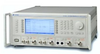
ValueTronics International, Inc. RF Generator 2041

Description
The 2041 is a 2.7 GHz RF generator from Marconi. An RF generator is a tool engineers use to generate sinusoidal outputs while testing electronic equipment. The output will automatically have its frequency varied or swept between frequencies. A “sweep” is one complete cycle of a frequency variation. Engineers use RF signal generators as test equipment, mostly to measure responses of filters, amplifiers, and electrical components. Additional Features: 10 kHz to 2.7 GHz Low residual FM noise: 0.3 Hz RMS at 1 GHz Low spurious signals: -90 dBc non-harmonics Low phase noise: -140 dBc/Hz at 1 GHz Comprehensive modulation modes +13 dBm output 0.1 Hz to 500 kHz modulation oscillator Comprehensive frequency and amplitude sweep capabilities With a choice of operating modes, two low noise modes for improved SSB phase noise and normal mode for increased flexibility, the 2040 series can be used in a wide variety of applications. Microprocessor control coupled with a large screen dot matrix display provides ease of use via menu driven displays. Set up time is further reduced by recalling previously stored instrument settings from the non-volatile memory. Remote programming via the GPIB is provided as a standard feature, allowing the instruments to be incorporated in automatic test systems. The excellent noise characteristics and the low level of spurious signals of the 2040 series enable the instruments to be used with confidence for a wide range of critical measurements. With a specified SSB phase noise performance of better than –140 dBc/Hz at 20 kHz offset from a carrier of 1 GHz, the 2040 series of signal generators is easily able to measure UHF receiver selectivities beyond 90 dB. The low residual FM noise figure (less than 0.3 Hz RMS at 1 GHz) gives the 2040 series the capability of measuring UHF receiver signal to noise ratios as high as 80 dB. A specified non-harmonic spurious signal content of –90 dBc ensures the suitability of the 2040 series for the most demanding measurements on modern receivers and RF systems. A large screen, dot matrix liquid crystal display, with backlighting, offers excellent clarity and low power consumption. The parameters displayed on the screen depend on the operating mode selected; for example in the Signal Generator mode, carrier frequency, modulation and RF level are shown in separate horizontal regions. Status information is also shown with error messages being displayed in a single line at the top of the screen. Carrier frequency entry is selected via a soft key option on the signal generator screen and data is then entered directly via the keyboard. Frequency is resolved to within 0.1 Hz across the complete range of the instrument. Carrier frequencies can be stored in the non-volatile memory for recall at any time. A CARRIER ON-OFF switch is provided to completely disable the output. RF output up to +13 dBm can be set by direct keyboard entry with a resolution of 0.1 dB or better over the entire range. An extended hysterisis facility allows for extended electronic control of RF output level without introducing mechanical attenuator transients when testing squelch systems and an overrange facility allows the generator to produce RF levels above the normal operating range. A low intermodulation mode can be selected which disables the RF levelling system and improves the intermodulation performance when combining the outputs of two signal generators.
Datasheet
Description
The 2041 is a 2.7 GHz RF generator from Marconi. An RF generator is a tool engineers use to generate sinusoidal outputs while testing electronic equipment. The output will automatically have its frequency varied or swept between frequencies. A “sweep” is one complete cycle of a frequency variation. Engineers use RF signal generators as test equipment, mostly to measure responses of filters, amplifiers, and electrical components. Additional Features: 10 kHz to 2.7 GHz Low residual FM noise: 0.3 Hz RMS at 1 GHz Low spurious signals: -90 dBc non-harmonics Low phase noise: -140 dBc/Hz at 1 GHz Comprehensive modulation modes +13 dBm output 0.1 Hz to 500 kHz modulation oscillator Comprehensive frequency and amplitude sweep capabilities With a choice of operating modes, two low noise modes for improved SSB phase noise and normal mode for increased flexibility, the 2040 series can be used in a wide variety of applications. Microprocessor control coupled with a large screen dot matrix display provides ease of use via menu driven displays. Set up time is further reduced by recalling previously stored instrument settings from the non-volatile memory. Remote programming via the GPIB is provided as a standard feature, allowing the instruments to be incorporated in automatic test systems. The excellent noise characteristics and the low level of spurious signals of the 2040 series enable the instruments to be used with confidence for a wide range of critical measurements. With a specified SSB phase noise performance of better than –140 dBc/Hz at 20 kHz offset from a carrier of 1 GHz, the 2040 series of signal generators is easily able to measure UHF receiver selectivities beyond 90 dB. The low residual FM noise figure (less than 0.3 Hz RMS at 1 GHz) gives the 2040 series the capability of measuring UHF receiver signal to noise ratios as high as 80 dB. A specified non-harmonic spurious signal content of –90 dBc ensures the suitability of the 2040 series for the most demanding measurements on modern receivers and RF systems. A large screen, dot matrix liquid crystal display, with backlighting, offers excellent clarity and low power consumption. The parameters displayed on the screen depend on the operating mode selected; for example in the Signal Generator mode, carrier frequency, modulation and RF level are shown in separate horizontal regions. Status information is also shown with error messages being displayed in a single line at the top of the screen. Carrier frequency entry is selected via a soft key option on the signal generator screen and data is then entered directly via the keyboard. Frequency is resolved to within 0.1 Hz across the complete range of the instrument. Carrier frequencies can be stored in the non-volatile memory for recall at any time. A CARRIER ON-OFF switch is provided to completely disable the output. RF output up to +13 dBm can be set by direct keyboard entry with a resolution of 0.1 dB or better over the entire range. An extended hysterisis facility allows for extended electronic control of RF output level without introducing mechanical attenuator transients when testing squelch systems and an overrange facility allows the generator to produce RF levels above the normal operating range. A low intermodulation mode can be selected which disables the RF levelling system and improves the intermodulation performance when combining the outputs of two signal generators.
Datasheet

Suppliers

Company
Product
Description
Supplier Links
RF Generator - 2041 - ValueTronics International, Inc.
Elgin, IL, USA
RF Generator
2041
RF Generator 2041
The 2041 is a 2.7 GHz RF generator from Marconi. An RF generator is a tool engineers use to generate sinusoidal outputs while testing electronic equipment. The output will automatically have its frequency varied or swept between frequencies. A “sweep” is one complete cycle of a frequency variation. Engineers use RF signal generators as test equipment, mostly to measure responses of filters, amplifiers, and electrical components. Additional Features: 10 kHz to 2.7 GHz Low residual FM noise: 0.3 Hz RMS at 1 GHz Low spurious signals: -90 dBc non-harmonics Low phase noise: -140 dBc/Hz at 1 GHz Comprehensive modulation modes +13 dBm output 0.1 Hz to 500 kHz modulation oscillator Comprehensive frequency and amplitude sweep capabilities With a choice of operating modes, two low noise modes for improved SSB phase noise and normal mode for increased flexibility, the 2040 series can be used in a wide variety of applications. Microprocessor control coupled with a large screen dot matrix display provides ease of use via menu driven displays. Set up time is further reduced by recalling previously stored instrument settings from the non-volatile memory. Remote programming via the GPIB is provided as a standard feature, allowing the instruments to be incorporated in automatic test systems. The excellent noise characteristics and the low level of spurious signals of the 2040 series enable the instruments to be used with confidence for a wide range of critical measurements. With a specified SSB phase noise performance of better than –140 dBc/Hz at 20 kHz offset from a carrier of 1 GHz, the 2040 series of signal generators is easily able to measure UHF receiver selectivities beyond 90 dB. The low residual FM noise figure (less than 0.3 Hz RMS at 1 GHz) gives the 2040 series the capability of measuring UHF receiver signal to noise ratios as high as 80 dB. A specified non-harmonic spurious signal content of –90 dBc ensures the suitability of the 2040 series for the most demanding measurements on modern receivers and RF systems. A large screen, dot matrix liquid crystal display, with backlighting, offers excellent clarity and low power consumption. The parameters displayed on the screen depend on the operating mode selected; for example in the Signal Generator mode, carrier frequency, modulation and RF level are shown in separate horizontal regions. Status information is also shown with error messages being displayed in a single line at the top of the screen. Carrier frequency entry is selected via a soft key option on the signal generator screen and data is then entered directly via the keyboard. Frequency is resolved to within 0.1 Hz across the complete range of the instrument. Carrier frequencies can be stored in the non-volatile memory for recall at any time. A CARRIER ON-OFF switch is provided to completely disable the output. RF output up to +13 dBm can be set by direct keyboard entry with a resolution of 0.1 dB or better over the entire range. An extended hysterisis facility allows for extended electronic control of RF output level without introducing mechanical attenuator transients when testing squelch systems and an overrange facility allows the generator to produce RF levels above the normal operating range. A low intermodulation mode can be selected which disables the RF levelling system and improves the intermodulation performance when combining the outputs of two signal generators.

The 2041 is a 2.7 GHz RF generator from Marconi. An RF generator is a tool engineers use to generate sinusoidal outputs while testing electronic equipment. The output will automatically have its frequency varied or swept between frequencies. A “sweep” is one complete cycle of a frequency variation. Engineers use RF signal generators as test equipment, mostly to measure responses of filters, amplifiers, and electrical components.

Additional Features:

  • 10 kHz to 2.7 GHz
  • Low residual FM noise: 0.3 Hz RMS at 1 GHz
  • Low spurious signals: -90 dBc non-harmonics
  • Low phase noise: -140 dBc/Hz at 1 GHz
  • Comprehensive modulation modes
  • +13 dBm output
  • 0.1 Hz to 500 kHz modulation oscillator
  • Comprehensive frequency and amplitude sweep capabilities

With a choice of operating modes, two low noise modes for improved SSB phase noise and normal mode for increased flexibility, the 2040 series can be used in a wide variety of applications. Microprocessor control coupled with a large screen dot matrix display provides ease of use via menu driven displays. Set up time is further reduced by recalling previously stored instrument settings from the non-volatile memory. Remote programming via the GPIB is provided as a standard feature, allowing the instruments to be incorporated in automatic test systems.

The excellent noise characteristics and the low level of spurious signals of the 2040 series enable the instruments to be used with confidence for a wide range of critical measurements. With a specified SSB phase noise performance of better than –140 dBc/Hz at 20 kHz offset from a carrier of 1 GHz, the 2040 series of signal generators is easily able to measure UHF receiver selectivities beyond 90 dB. The low residual FM noise figure (less than 0.3 Hz RMS at 1 GHz) gives the 2040 series the capability of measuring UHF receiver signal to noise ratios as high as 80 dB.

A specified non-harmonic spurious signal content of –90 dBc ensures the suitability of the 2040 series for the most demanding measurements on modern receivers and RF systems.

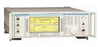
A large screen, dot matrix liquid crystal display, with backlighting, offers excellent clarity and low power consumption. The parameters displayed on the screen depend on the operating mode selected; for example in the Signal Generator mode, carrier frequency, modulation and RF level are shown in separate horizontal regions.

Status information is also shown with error messages being displayed in a single line at the top of the screen. Carrier frequency entry is selected via a soft key option on the signal generator screen and data is then entered directly via the keyboard. Frequency is resolved to within 0.1 Hz across the complete range of the instrument. Carrier frequencies can be stored in the non-volatile memory for recall at any time. A CARRIER ON-OFF switch is provided to completely disable the output.

RF output up to +13 dBm can be set by direct keyboard entry with a resolution of 0.1 dB or better over the entire range. An extended hysterisis facility allows for extended electronic control of RF output level without introducing mechanical attenuator transients when testing squelch systems and an overrange facility allows the generator to produce RF levels above the normal operating range.

A low intermodulation mode can be selected which disables the RF levelling system and improves the intermodulation performance when combining the outputs of two signal generators.

Supplier's Site Datasheet
RF Generator - 2041 - ValueTronics International, Inc.
Elgin, IL, USA
RF Generator
2041
RF Generator 2041
The 2041 is a 2.7 GHz RF Generator from IFR . An RF generator is a tool engineers use to generate sinusoidal outputs while testing electronic equipment. The output will automatically have its frequency varied or swept between frequencies. A “sweep” is one complete cycle of a frequency variation. Engineers use RF signal generators as test equipment, mostly to measure responses of filters, amplifiers, and electrical components. Additional Features: Frequency range: 10 kHz to 2.7 GHz Low residual FM noise: 0.3 Hz RMS at 1 GHz Low spurious signals: –90 dBc non-harmonics Low phase noise: –140 dBc/Hz at 1 GHz Comprehensive modulation modes +13 dBm output (+19 dBm optional) 0.1 Hz to 500 kHz modulation oscillator Comprehensive frequency and amplitude sweep capabilities The 2041 low noise signal generator covers frequencies from 10 kHz to 2.74 GHz. With a choice of operating modes, two low noise modes for improved SSB phase noise and normal mode for increased flexibility, the 2041 can be used in a wide variety of applications. Microprocessor control coupled with a large screen dot matrix display provides ease of use via menu driven displays. Set up time is further reduced by recalling previously stored instrument settings from the non-volatile memory. Remote programming via the GPIB is provided as a standard feature,allowing the instruments to be incorporated in automatic test systems.

The 2041 is a 2.7 GHz RF Generator from IFR . An RF generator is a tool engineers use to generate sinusoidal outputs while testing electronic equipment. The output will automatically have its frequency varied or swept between frequencies. A “sweep” is one complete cycle of a frequency variation. Engineers use RF signal generators as test equipment, mostly to measure responses of filters, amplifiers, and electrical components.

Additional Features:

  • Frequency range: 10 kHz to 2.7 GHz
  • Low residual FM noise: 0.3 Hz RMS at 1 GHz
  • Low spurious signals: –90 dBc non-harmonics
  • Low phase noise: –140 dBc/Hz at 1 GHz
  • Comprehensive modulation modes +13 dBm output (+19 dBm optional)
  • 0.1 Hz to 500 kHz modulation oscillator
  • Comprehensive frequency and amplitude sweep capabilities

The 2041 low noise signal generator covers frequencies from 10 kHz to 2.74 GHz. With a choice of operating modes, two low noise modes for improved SSB phase noise and normal mode for increased flexibility, the 2041 can be used in a wide variety of applications.

Microprocessor control coupled with a large screen dot matrix display provides ease of use via menu driven displays. Set up time is further reduced by recalling previously stored instrument settings from the non-volatile memory.

Remote programming via the GPIB is provided as a standard feature,allowing the instruments to be incorporated in automatic test systems.

Supplier's Site Datasheet

Technical Specifications

  ValueTronics International, Inc.
Product Category Signal Generators
Product Number 2041
Product Name RF Generator
Device Type Generator
Unlock Full Specs
to access all available technical data

Similar Products

Compact Signal Generators - SGX1018 - Maury Microwave
Specs
Device Type Generator
Switching Speed 0.3500 ms
Minimum 10 MHz
View Details
Arbitrary Waveform Generators - 1925848 - RS Components, Ltd.
Specs
Generator Type Pulse
Display Video
Inputs 2
View Details
RF Generator - SSG3021X - Siglent Technologies NA, Inc.
Siglent Technologies NA, Inc.
Specs
Device Type Generator
Generator Type Signal; RF
Form Factor Portable
View Details
40GHz RF Signal Generator - CSG9K40GA - Corech Microwave
Specs
Device Type Generator
Generator Type Pulse; Sweep
Form Factor Portable
View Details