TCI America 9-Phenylcarbazole P1492

Description
9-Phenylcarbazole / In 1977, Shirakawa and co-workers reported that thin films of the semi-conducting polymer polyacetylene show a dramatic increase in electrical conductivity when doped with controlled amounts of iodine.1) Their reports triggered intensive R&D into the electrical conductivity of plastic materials. Studies of conducting polymers began and, as a result, many ï-conjugated polymers such as polypyrrole2), polythiophene3), polyaniline4) and polyphenylenevinylen e5) have been developed. Among these polymers, many of them have been utilized practically. One example is an electrolytic condenser using polypyrrole. This condenser has characteristic features such as being compact and lightweight, as well as having high-capacity and high-frequency compliance. These features have achieved a downsizing and weight-saving in electronic devices, and are utilized currently in some mobile phones. Thereby, conducting polymers are widely used for electronic devices vital to our everyday life. These and many other achievements were the reasons Shirakawa received to the Nobel Prize Award in 2000. Moreover, conducting polymers have been applied to solar cell materials. For instance, Kim et al. have reported the synthesis of the co-polymers 3 and 4, using 4,7-dibromo-2,1,3-be nzothiadiazole (1) and 4,7-dibromo-2,1,3-be nzoselenadiazole (2) as starting materials, respectively. According to their results, the bulk heterojunction solar cells composed of 3 or 4 with PC71BM give power conversion efficiencies of 1.12%6) and 1.34%7), respectively. Thus, further applications using conducting polymers can be fully expected in many areas.
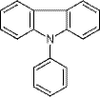
Description
9-Phenylcarbazole / In 1977, Shirakawa and co-workers reported that thin films of the semi-conducting polymer polyacetylene show a dramatic increase in electrical conductivity when doped with controlled amounts of iodine.1) Their reports triggered intensive R&D into the electrical conductivity of plastic materials. Studies of conducting polymers began and, as a result, many ï-conjugated polymers such as polypyrrole2), polythiophene3), polyaniline4) and polyphenylenevinylen e5) have been developed. Among these polymers, many of them have been utilized practically. One example is an electrolytic condenser using polypyrrole. This condenser has characteristic features such as being compact and lightweight, as well as having high-capacity and high-frequency compliance. These features have achieved a downsizing and weight-saving in electronic devices, and are utilized currently in some mobile phones. Thereby, conducting polymers are widely used for electronic devices vital to our everyday life. These and many other achievements were the reasons Shirakawa received to the Nobel Prize Award in 2000. Moreover, conducting polymers have been applied to solar cell materials. For instance, Kim et al. have reported the synthesis of the co-polymers 3 and 4, using 4,7-dibromo-2,1,3-be nzothiadiazole (1) and 4,7-dibromo-2,1,3-be nzoselenadiazole (2) as starting materials, respectively. According to their results, the bulk heterojunction solar cells composed of 3 or 4 with PC71BM give power conversion efficiencies of 1.12%6) and 1.34%7), respectively. Thus, further applications using conducting polymers can be fully expected in many areas.

Suppliers

Company
Product
Description
Supplier Links
9-Phenylcarbazole - P1492 - TCI America
Portland, OR, USA
9-Phenylcarbazole
P1492
9-Phenylcarbazole P1492
9-Phenylcarbazole / In 1977, Shirakawa and co-workers reported that thin films of the semi-conducting polymer polyacetylene show a dramatic increase in electrical conductivity when doped with controlled amounts of iodine.1) Their reports triggered intensive R&D into the electrical conductivity of plastic materials. Studies of conducting polymers began and, as a result, many ï-conjugated polymers such as polypyrrole2), polythiophene3), polyaniline4) and polyphenylenevinylen e5) have been developed. Among these polymers, many of them have been utilized practically. One example is an electrolytic condenser using polypyrrole. This condenser has characteristic features such as being compact and lightweight, as well as having high-capacity and high-frequency compliance. These features have achieved a downsizing and weight-saving in electronic devices, and are utilized currently in some mobile phones. Thereby, conducting polymers are widely used for electronic devices vital to our everyday life. These and many other achievements were the reasons Shirakawa received to the Nobel Prize Award in 2000. Moreover, conducting polymers have been applied to solar cell materials. For instance, Kim et al. have reported the synthesis of the co-polymers 3 and 4, using 4,7-dibromo-2,1,3-be nzothiadiazole (1) and 4,7-dibromo-2,1,3-be nzoselenadiazole (2) as starting materials, respectively. According to their results, the bulk heterojunction solar cells composed of 3 or 4 with PC71BM give power conversion efficiencies of 1.12%6) and 1.34%7), respectively. Thus, further applications using conducting polymers can be fully expected in many areas.

9-Phenylcarbazole /
In 1977, Shirakawa and co-workers reported that thin films of the semi-conducting polymer polyacetylene show a dramatic increase in electrical conductivity when doped with controlled amounts of iodine.1) Their reports triggered intensive R&D into the electrical conductivity of plastic materials. Studies of conducting polymers began and, as a result, many Ï-conjugated polymers such as polypyrrole2), polythiophene3), polyaniline4) and polyphenylenevinylene5) have been developed. Among these polymers, many of them have been utilized practically. One example is an electrolytic condenser using polypyrrole. This condenser has characteristic features such as being compact and lightweight, as well as having high-capacity and high-frequency compliance. These features have achieved a downsizing and weight-saving in electronic devices, and are utilized currently in some mobile phones. Thereby, conducting polymers are widely used for electronic devices vital to our everyday life. These and many other achievements were the reasons Shirakawa received to the Nobel Prize Award in 2000.
Moreover, conducting polymers have been applied to solar cell materials. For instance, Kim et al. have reported the synthesis of the co-polymers 3 and 4, using 4,7-dibromo-2,1,3-benzothiadiazole (1) and 4,7-dibromo-2,1,3-benzoselenadiazole (2) as starting materials, respectively. According to their results, the bulk heterojunction solar cells composed of 3 or 4 with PC71BM give power conversion efficiencies of 1.12%6) and 1.34%7), respectively. Thus, further applications using conducting polymers can be fully expected in many areas.

Supplier's Site

Technical Specifications

  TCI America
Product Category Chemical Additives and Agents
Product Number P1492
Product Name 9-Phenylcarbazole
Unlock Full Specs
to access all available technical data

Similar Products

Formulations - Applications - Activators - Adhesion Promoter 42 - 304207 - Hernon Manufacturing, Inc.
Specs
Function Tackifer / Adhesion Promoter
View Details
Escorene™ Ultra EVA - Escorene™ Ultra UL 15028CC - ExxonMobil - Polyethylene Products
Specs
Applications Adhesives or Sealants
View Details
pH/ORP Sensor Storage Solution -  - Myron L Company
Specs
Function Unlisted, Proprietary or Specialized Function; Storage Solution
Form & Features Liquids
View Details
Photoresist Raw Materials -  - Mitsui Chemicals America, Inc.
Mitsui Chemicals America, Inc.
View Details