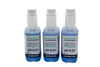
TCI America Ethyl Nitrite (ca. 15% in Ethanol, ca. 1.6mol/L) E0152

Description
Ethyl Nitrite (ca. 15% in Ethanol, ca. 1.6mol/L) / In recent years, studies on nitric oxide (NO), one of the reactive oxygen species, have been actively conducted. It is well known that NO is produced in vivo from the guanidino nitrogen of arginine and oxygen by nitric oxide synthase (NOS), and plays an important role in various scenes such as vascular relaxation, biological defense, neurotransmission modulation and immune system. The following three types of compounds generate NO.1) 1) Compounds which act on an NO generating system and facilitate NO generation in vivo : e.g. Emodin, etc. They activate the vascular endothelium and macrophages, etc., increasing NO generation. 2) Compounds which are converted into NO-releasing compounds via metabolism : e.g. nitric esters, nitrite esters, etc. They react with thiols in vivo and release NO. 3) Compounds which directly release NO by itself : e.g. N-nitrosodiphenylami ne, etc. N-nitrosodiphenylami ne releases NO by radical cleavage of the Nï¼NO bond when it is heated to reï¬ ux in benzene. Popular analytical methods of NO include a chemiluminescent method, a spin trap method and the Griess method.2) The Griess method determines NO2ï¼, which is a metabolite of NO, while the chemiluminescent method and the spin trap method directly determine NO. Moreover, a simultaneous determination method of NO and NO2 using PTIO, the organic radical that selectively oxidizes NO, has been developed.3)
Description
Ethyl Nitrite (ca. 15% in Ethanol, ca. 1.6mol/L) / In recent years, studies on nitric oxide (NO), one of the reactive oxygen species, have been actively conducted. It is well known that NO is produced in vivo from the guanidino nitrogen of arginine and oxygen by nitric oxide synthase (NOS), and plays an important role in various scenes such as vascular relaxation, biological defense, neurotransmission modulation and immune system. The following three types of compounds generate NO.1) 1) Compounds which act on an NO generating system and facilitate NO generation in vivo : e.g. Emodin, etc. They activate the vascular endothelium and macrophages, etc., increasing NO generation. 2) Compounds which are converted into NO-releasing compounds via metabolism : e.g. nitric esters, nitrite esters, etc. They react with thiols in vivo and release NO. 3) Compounds which directly release NO by itself : e.g. N-nitrosodiphenylami ne, etc. N-nitrosodiphenylami ne releases NO by radical cleavage of the Nï¼NO bond when it is heated to reï¬ ux in benzene. Popular analytical methods of NO include a chemiluminescent method, a spin trap method and the Griess method.2) The Griess method determines NO2ï¼, which is a metabolite of NO, while the chemiluminescent method and the spin trap method directly determine NO. Moreover, a simultaneous determination method of NO and NO2 using PTIO, the organic radical that selectively oxidizes NO, has been developed.3)

Suppliers

Company
Product
Description
Supplier Links
Ethyl Nitrite (ca. 15% in Ethanol, ca. 1.6mol/L) - E0152 - TCI America
Portland, OR, USA
Ethyl Nitrite (ca. 15% in Ethanol, ca. 1.6mol/L)
E0152
Ethyl Nitrite (ca. 15% in Ethanol, ca. 1.6mol/L) E0152
Ethyl Nitrite (ca. 15% in Ethanol, ca. 1.6mol/L) / In recent years, studies on nitric oxide (NO), one of the reactive oxygen species, have been actively conducted. It is well known that NO is produced in vivo from the guanidino nitrogen of arginine and oxygen by nitric oxide synthase (NOS), and plays an important role in various scenes such as vascular relaxation, biological defense, neurotransmission modulation and immune system. The following three types of compounds generate NO.1) 1) Compounds which act on an NO generating system and facilitate NO generation in vivo : e.g. Emodin, etc. They activate the vascular endothelium and macrophages, etc., increasing NO generation. 2) Compounds which are converted into NO-releasing compounds via metabolism : e.g. nitric esters, nitrite esters, etc. They react with thiols in vivo and release NO. 3) Compounds which directly release NO by itself : e.g. N-nitrosodiphenylami ne, etc. N-nitrosodiphenylami ne releases NO by radical cleavage of the Nï¼NO bond when it is heated to reï¬ ux in benzene. Popular analytical methods of NO include a chemiluminescent method, a spin trap method and the Griess method.2) The Griess method determines NO2ï¼, which is a metabolite of NO, while the chemiluminescent method and the spin trap method directly determine NO. Moreover, a simultaneous determination method of NO and NO2 using PTIO, the organic radical that selectively oxidizes NO, has been developed.3)

Ethyl Nitrite (ca. 15% in Ethanol, ca. 1.6mol/L) /
In recent years, studies on nitric oxide (NO), one of the reactive oxygen species, have been actively conducted. It is well known that NO is produced in vivo from the guanidino nitrogen of arginine and oxygen by nitric oxide synthase (NOS), and plays an important role in various scenes such as vascular
relaxation, biological defense, neurotransmission modulation and immune system.
The following three types of compounds generate NO.1)
1) Compounds which act on an NO generating system and facilitate NO generation in vivo : e.g. Emodin, etc.
They activate the vascular endothelium and macrophages, etc., increasing NO generation.
2) Compounds which are converted into NO-releasing compounds via metabolism : e.g. nitric esters, nitrite esters, etc.
They react with thiols in vivo and release NO.
3) Compounds which directly release NO by itself : e.g. N-nitrosodiphenylamine, etc.
N-nitrosodiphenylamine releases NO by radical cleavage of the Nï¼NO bond when it is heated to reï¬ ux in benzene.
Popular analytical methods of NO include a chemiluminescent method, a spin trap method and the Griess method.2) The Griess method determines NO2ï¼, which is a metabolite of NO, while the chemiluminescent method and the spin trap method directly determine NO. Moreover, a simultaneous determination method of NO and NO2 using PTIO, the organic radical that selectively oxidizes NO, has been developed.3)

Supplier's Site

Technical Specifications

  TCI America
Product Category Chemical Additives and Agents
Product Number E0152
Product Name Ethyl Nitrite (ca. 15% in Ethanol, ca. 1.6mol/L)
Unlock Full Specs
to access all available technical data

Similar Products

pH Buffer 9.21 - 238919 - Hamilton Company
Hamilton Company
Specs
Function Buffer / Buffering Agent
Applications Calibration of pH Sensors
Form & Features Liquids
View Details
Red Filler -  - MacDermid Alpha Electronics Solutions
MacDermid Alpha Electronics Solutions
Specs
Function Surface Active Agent
View Details
Exfola™ - Surface Modifier - Mitsui Chemicals America, Inc.
Mitsui Chemicals America, Inc.
Specs
Function Unlisted, Proprietary or Specialized Function; Surface Modifier
Applications Packaging
View Details
Ionomer Dispersion Grades - FORBLUE™ IC100 - AGC Chemicals Americas, Inc.
Specs
Function Catalyst; Deflocculants / Dispersing Agents
Applications PEMFC, PEMWE
Form & Features Colloid / Dispersion
View Details