TCI America Pyromellitic Dianhydride B0040

Description
Pyromellitic Dianhydride / Benzene-1,2,4,5-tetr acarboxylic Dianhydride Polyvinyl chloride and polyethylene polymers, which have long been the mainstay of industrial polymers, are now making way for new high performance polymers. Engineering plastics are polymers that have various properties designed into the polymer. For example, some polymers are designed for thermal resistance, such as polyamide, and polycarbonate, which are widely used these days. The thermal resistance of a polymer is determined by the softening point, as the softening point rises with the increase in the material strength. To make improvements in the softening points and material strength, the super engineering plastics such as polysulfone, polyether sulfone, polyarylate and polyimide have been developed. The softening points of these polymers are all above 150 °C, and these utilized in materials of ï¬reman uniform and ulletproof vest, and so on. Active R&D is continuing to take place to further improve the performance.1) On the other hand, there have been active experiments in adding new functions to the polymers, such as the electrical, optical, medical and biological properties. For example, copolymers which are obtained by the polymerization of ï¬uorine containing monomers and variety of monomers have been utilized as photoresists, optical ï¬ber dressings, oxygen enrichment membranes, and membrane oxygenators. Polysilane has the maximum absorption in the ultraviolet region, and also has photosensitivity; therefore, it can be used as a positive type resist with excellent oxygen plasma resistance.2) Polylactic acid (PLA) has been commercialized as an environmentally-frie ndly polymer, being compatible with the natural environment. Furthermore, it can save fossil resources as it is made of biomass raw materials.3) Further broad applications are expected to be made with functional polymers, thus R&D in this ï¬ eld is highly promising. The page below shows a wide variety of monomers and intermediates as building blocks for functional polymers. These are surely useful for the development of novel polymers.
Description
Pyromellitic Dianhydride / Benzene-1,2,4,5-tetr acarboxylic Dianhydride Polyvinyl chloride and polyethylene polymers, which have long been the mainstay of industrial polymers, are now making way for new high performance polymers. Engineering plastics are polymers that have various properties designed into the polymer. For example, some polymers are designed for thermal resistance, such as polyamide, and polycarbonate, which are widely used these days. The thermal resistance of a polymer is determined by the softening point, as the softening point rises with the increase in the material strength. To make improvements in the softening points and material strength, the super engineering plastics such as polysulfone, polyether sulfone, polyarylate and polyimide have been developed. The softening points of these polymers are all above 150 °C, and these utilized in materials of ï¬reman uniform and ulletproof vest, and so on. Active R&D is continuing to take place to further improve the performance.1) On the other hand, there have been active experiments in adding new functions to the polymers, such as the electrical, optical, medical and biological properties. For example, copolymers which are obtained by the polymerization of ï¬uorine containing monomers and variety of monomers have been utilized as photoresists, optical ï¬ber dressings, oxygen enrichment membranes, and membrane oxygenators. Polysilane has the maximum absorption in the ultraviolet region, and also has photosensitivity; therefore, it can be used as a positive type resist with excellent oxygen plasma resistance.2) Polylactic acid (PLA) has been commercialized as an environmentally-frie ndly polymer, being compatible with the natural environment. Furthermore, it can save fossil resources as it is made of biomass raw materials.3) Further broad applications are expected to be made with functional polymers, thus R&D in this ï¬ eld is highly promising. The page below shows a wide variety of monomers and intermediates as building blocks for functional polymers. These are surely useful for the development of novel polymers.

Suppliers

Company
Product
Description
Supplier Links
Pyromellitic Dianhydride - B0040 - TCI America
Portland, OR, USA
Pyromellitic Dianhydride
B0040
Pyromellitic Dianhydride B0040
Pyromellitic Dianhydride / Benzene-1,2,4,5-tetr acarboxylic Dianhydride Polyvinyl chloride and polyethylene polymers, which have long been the mainstay of industrial polymers, are now making way for new high performance polymers. Engineering plastics are polymers that have various properties designed into the polymer. For example, some polymers are designed for thermal resistance, such as polyamide, and polycarbonate, which are widely used these days. The thermal resistance of a polymer is determined by the softening point, as the softening point rises with the increase in the material strength. To make improvements in the softening points and material strength, the super engineering plastics such as polysulfone, polyether sulfone, polyarylate and polyimide have been developed. The softening points of these polymers are all above 150 °C, and these utilized in materials of ï¬reman uniform and ulletproof vest, and so on. Active R&D is continuing to take place to further improve the performance.1) On the other hand, there have been active experiments in adding new functions to the polymers, such as the electrical, optical, medical and biological properties. For example, copolymers which are obtained by the polymerization of ï¬uorine containing monomers and variety of monomers have been utilized as photoresists, optical ï¬ber dressings, oxygen enrichment membranes, and membrane oxygenators. Polysilane has the maximum absorption in the ultraviolet region, and also has photosensitivity; therefore, it can be used as a positive type resist with excellent oxygen plasma resistance.2) Polylactic acid (PLA) has been commercialized as an environmentally-frie ndly polymer, being compatible with the natural environment. Furthermore, it can save fossil resources as it is made of biomass raw materials.3) Further broad applications are expected to be made with functional polymers, thus R&D in this ï¬ eld is highly promising. The page below shows a wide variety of monomers and intermediates as building blocks for functional polymers. These are surely useful for the development of novel polymers.

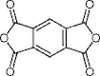
Pyromellitic Dianhydride / Benzene-1,2,4,5-tetracarboxylic Dianhydride
Polyvinyl chloride and polyethylene polymers, which have long been the mainstay of industrial polymers, are now making way for new high performance polymers. Engineering plastics are polymers that have various properties designed into the polymer. For example, some polymers are designed for thermal resistance, such as polyamide, and polycarbonate, which are widely used these days. The thermal resistance of a polymer is determined by the softening point, as the softening point rises with the increase in the material strength. To make improvements in the softening points and material strength, the super engineering plastics such as polysulfone, polyether sulfone, polyarylate and polyimide have been developed. The softening points of these polymers are all above 150 °C, and these utilized in materials of ï¬reman uniform and ulletproof vest, and so on. Active R&D is continuing to take place to further improve the performance.1)
On the other hand, there have been active experiments in adding new functions to the polymers, such as the electrical, optical, medical and biological properties. For example, copolymers which are obtained by the polymerization of ï¬uorine containing monomers and variety of monomers have been utilized as photoresists, optical ï¬ber dressings, oxygen enrichment membranes, and membrane oxygenators. Polysilane has the maximum absorption in the ultraviolet region, and also has photosensitivity; therefore, it can be used as a positive type resist with excellent oxygen plasma resistance.2) Polylactic acid (PLA) has been commercialized as an environmentally-friendly polymer, being compatible with the natural environment. Furthermore, it can save fossil resources as it is made of biomass raw materials.3)
Further broad applications are expected to be made with functional polymers, thus R&D in this ï¬ eld is highly promising. The page below shows a wide variety of monomers and intermediates as building blocks for functional polymers. These are surely useful for the development of novel polymers.

Supplier's Site

Technical Specifications

  TCI America
Product Category Chemical Additives and Agents
Product Number B0040
Product Name Pyromellitic Dianhydride
Unlock Full Specs
to access all available technical data

Similar Products

Activator - 100100 - Hernon Manufacturing, Inc.
Hernon Manufacturing, Inc.
Specs
Function Reaction Accelerator
View Details
pH/ORP Sensor Storage Solution -  - Myron L Company
Specs
Function Unlisted, Proprietary or Specialized Function; Storage Solution
Form & Features Liquids
View Details
Low Viscosity Polyaphaolefin (PAO) Base Stock - SpectraSyn™ 4 - ExxonMobil Chemical Company - Synthetic Base Stocks
ExxonMobil Chemical Company - Synthetic Base Stocks
Specs
Applications Oils & Fuels
Form & Features Liquids
View Details