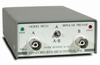
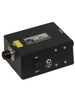
The SR552 is a Preamplifier from Stanford Research. An amplifier is a type of electronic test equipment that amplifies radiofrequency (RF) and microwave signals using the antenna. Amplifiers are ideal when used for electromagnetic interference (EMI) testing, cell phones, microwaves, radio communications, and other such applications.
Additional Features:
1.4 nV/√Hz input noise
BJT input, 100 kω input impedance
Gain of 10, 20, 50 or 100
Single-ended and differential inputs
AC coupled input
Powered by SRS lock-in amplifiers
The SR552 Voltage Preamplifier is designed to work with SRS lock-in amplifiers, providing gain where it is needed most—right at the experiment. The preamplifier minimizes noise and pickup in the connecting ines and can reduce measurement time in noise-limited experiments. The SR552 differs from the SR550 in its bipolar front-end design.
The SR552 has a lower input noise and a correspondingly lower input impedance (100 kω vs. 100 Mω) than the SR550. When used with the SR510 or SR530, the preamplifier gain is automatically set by the lock-in. When used with the SR850, SR810 or SR830, the gain is always set to 100. Power and control signals are brought from the lock-in by a 9-pin cable (included). The SR552 may also be operated independently by applying appropriate power supply voltages (±20 VDC, +5 VDC).
The SR552 is a Preamplifier from Stanford Research. An amplifier is a type of electronic test equipment that amplifies radiofrequency (RF) and microwave signals using the antenna. Amplifiers are ideal when used for electromagnetic interference (EMI) testing, cell phones, microwaves, radio communications, and other such applications.
Additional Features:
- 1.4 nV/√Hz input noise
- BJT input, 100 kΩ input impedance
- Gain of 10, 20, 50 or 100
- Single-ended and differential inputs
- AC coupled input
- Powered by SRS lock-in amplifiers
The SR552 Voltage Preamplifier is designed to work with SRS lock-in amplifiers, providing gain where it is needed most—right at the experiment. The preamplifier minimizes noise and pickup in the connecting ines and can reduce measurement time in noise-limited experiments. The SR552 differs from the SR550 in its bipolar front-end design.
The SR552 has a lower input noise and a correspondingly lower input impedance (100 kΩ vs. 100 MΩ) than the SR550. When used with the SR510 or SR530, the preamplifier gain is automatically set by the lock-in. When used with the SR850, SR810 or SR830, the gain is always set to 100. Power and control signals are brought from the lock-in by a 9-pin cable (included). The SR552 may also be operated independently by applying appropriate power supply voltages (±20 VDC, +5 VDC).