New Super OMEGACLAD XL sheathed mineral-insulated thermocouple wire, designated XL for ordering, can be used at ultra-high temperatures for prolonged periods with very little drift of the base metal thermocouple. The sheath material uses Nickel-Chrome based Super OMEGACLAD XL sheathing, which provides excellent oxidation resistance. The sheath can withstand long-term exposure to combustion gases or air at temperatures up to1150C (2102F). Short-term exposures to higher temperatures are also possible. Superior resistance to oxidation attack results from a tenacious and protective high temperature film that does not affect the stability of the thermocouple alloys. This film permits the sensor to be used at ultra-high temperatures for prolonged periods with improved accuracy over other available sheath materials. Super OMEGACLAD sheathing also provides excellent resistance to corrosion in high temperature chlorine-contaminate
d oxidizing environments and ammonia/nitride-rich environments at temperatures above 980C (1800F), the temperature at which the protective film forms.
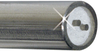
New Super OMEGACLAD XL sheathed mineral-insulated thermocouple wire, designated XL for ordering, can be used at ultra-high temperatures for prolonged periods with very little drift of the base metal thermocouple. The sheath material uses Nickel-Chrome based Super OMEGACLAD XL sheathing, which provides excellent oxidation resistance. The sheath can withstand long-term exposure to combustion gases or air at temperatures up to1150C (2102F). Short-term exposures to higher temperatures are also possible. Superior resistance to oxidation attack results from a tenacious and protective high temperature film that does not affect the stability of the thermocouple alloys. This film permits the sensor to be used at ultra-high temperatures for prolonged periods with improved accuracy over other available sheath materials. Super OMEGACLAD sheathing also provides excellent resistance to corrosion in high temperature chlorine-contaminated oxidizing environments and ammonia/nitride-rich environments at temperatures above 980C (1800F), the temperature at which the protective film forms.