Shanghai Optics Raman Filter

Description
A Raman Filter is a precise optical filter used in Raman spectroscopy. When placed in the beam path, these filters transmit Raman scattered light to the spectrometer while selectively blocking the laser line. Shanghai Optics produces high quality Raman filters suitable for the most precise work. Key features of our Raman filters include: High transmission to permit detection of even the weakest signals. Ultra-steep edge to measure even miniscule Raman shifts Deep optical blocking for maximum laser rejection Our filters have hard coatings and are manufactured without adhesives for longer filter life. Your Choice of Raman Filters: Notch or Edge Filters We manufacture both notch and edge signals. Either notch or edge filtering can be used in Raman spectroscopy, and the type you choose will depend on your application. You will need individual filters for each laser wavelength you utilize. Edge filters are long pass optical filters. They block all wavelengths up to a given cut-off. Wavelength higher than the cutoff are transmitted. A 532 nm edge filter, for instance, absorbs all light up to 534 nm, and effectively blocks a 532 laser line. This filter transmits light with wavelength above 534, allowing detection of the Raman spectrum. Edge pass filters are environmentally stable and, with appropriate care, may last indefinitely. Raman notch filters have a sharp, discrete band where light is blocked. This absorption band must be chosen to coincide with the specific laser wavelength in use, as it is typically only a few nanometers wide. If you were working with a 532 nm laser, you would choose a notch filter with a central absorption at 532 nm. The Raman spectrum above this light would be transmitted, as would any light with lower wavelengths. The sharp cut off means that light close in wavelength would still be transmitted, reaching the detector The benefit of notch filters is that they may be used for both Stokes and anti-Stokes Raman scattering, and thus have more versatility. Unlike edge filters, they do have a limited lifespan and degrade over time. Raman Laser Line Filters Our Raman laser line filters are designed to pass a specified laser wavelength while blocking all other ambient light. This bandpass filter essentially cleans up the laser beam signal and reduces noise. Our laser line filters feature very high transmittance in the pass band (greater than 90 percent) and a 1-3 nm bandwidth. They also exhibit high optical density in the 300 to 1200 nm range. Standard Specifications We take pride in our precise workmanship, and every lens, filter, and optical component to leave our factory is subject to the strictest quality control. Our Raman lenses are manufactured of high quality fused silica, NBK7 or equivalent. Our factory standard dictates a clear aperture of greater than 80%, and a surface quality of at least 60-40 scratch dig for Raman filters. The edge steepness is typically 0.5% of the laser wavelength, and the transition width is less than 2% of laser wavelength (from T=50% to OD6). The laser damage threshold is 1 J/cm2 @ 532nm with 10ns pulse width. Laser line blocking is achieved with greater than 6.0 optical density, and the angle of incidence is 0.0 +/- 2.0. Please contact us to discuss custom specifications and how we can help you design and select optimal components for your optical system.
Description
A Raman Filter is a precise optical filter used in Raman spectroscopy. When placed in the beam path, these filters transmit Raman scattered light to the spectrometer while selectively blocking the laser line. Shanghai Optics produces high quality Raman filters suitable for the most precise work. Key features of our Raman filters include: High transmission to permit detection of even the weakest signals. Ultra-steep edge to measure even miniscule Raman shifts Deep optical blocking for maximum laser rejection Our filters have hard coatings and are manufactured without adhesives for longer filter life. Your Choice of Raman Filters: Notch or Edge Filters We manufacture both notch and edge signals. Either notch or edge filtering can be used in Raman spectroscopy, and the type you choose will depend on your application. You will need individual filters for each laser wavelength you utilize. Edge filters are long pass optical filters. They block all wavelengths up to a given cut-off. Wavelength higher than the cutoff are transmitted. A 532 nm edge filter, for instance, absorbs all light up to 534 nm, and effectively blocks a 532 laser line. This filter transmits light with wavelength above 534, allowing detection of the Raman spectrum. Edge pass filters are environmentally stable and, with appropriate care, may last indefinitely. Raman notch filters have a sharp, discrete band where light is blocked. This absorption band must be chosen to coincide with the specific laser wavelength in use, as it is typically only a few nanometers wide. If you were working with a 532 nm laser, you would choose a notch filter with a central absorption at 532 nm. The Raman spectrum above this light would be transmitted, as would any light with lower wavelengths. The sharp cut off means that light close in wavelength would still be transmitted, reaching the detector The benefit of notch filters is that they may be used for both Stokes and anti-Stokes Raman scattering, and thus have more versatility. Unlike edge filters, they do have a limited lifespan and degrade over time. Raman Laser Line Filters Our Raman laser line filters are designed to pass a specified laser wavelength while blocking all other ambient light. This bandpass filter essentially cleans up the laser beam signal and reduces noise. Our laser line filters feature very high transmittance in the pass band (greater than 90 percent) and a 1-3 nm bandwidth. They also exhibit high optical density in the 300 to 1200 nm range. Standard Specifications We take pride in our precise workmanship, and every lens, filter, and optical component to leave our factory is subject to the strictest quality control. Our Raman lenses are manufactured of high quality fused silica, NBK7 or equivalent. Our factory standard dictates a clear aperture of greater than 80%, and a surface quality of at least 60-40 scratch dig for Raman filters. The edge steepness is typically 0.5% of the laser wavelength, and the transition width is less than 2% of laser wavelength (from T=50% to OD6). The laser damage threshold is 1 J/cm2 @ 532nm with 10ns pulse width. Laser line blocking is achieved with greater than 6.0 optical density, and the angle of incidence is 0.0 +/- 2.0. Please contact us to discuss custom specifications and how we can help you design and select optimal components for your optical system.

Suppliers

Company
Product
Description
Supplier Links
Raman Filter -  - Shanghai Optics
North Plainfield, NJ, United States
Raman Filter
Raman Filter
A Raman Filter is a precise optical filter used in Raman spectroscopy. When placed in the beam path, these filters transmit Raman scattered light to the spectrometer while selectively blocking the laser line. Shanghai Optics produces high quality Raman filters suitable for the most precise work. Key features of our Raman filters include: High transmission to permit detection of even the weakest signals. Ultra-steep edge to measure even miniscule Raman shifts Deep optical blocking for maximum laser rejection Our filters have hard coatings and are manufactured without adhesives for longer filter life. Your Choice of Raman Filters: Notch or Edge Filters We manufacture both notch and edge signals. Either notch or edge filtering can be used in Raman spectroscopy, and the type you choose will depend on your application. You will need individual filters for each laser wavelength you utilize. Edge filters are long pass optical filters. They block all wavelengths up to a given cut-off. Wavelength higher than the cutoff are transmitted. A 532 nm edge filter, for instance, absorbs all light up to 534 nm, and effectively blocks a 532 laser line. This filter transmits light with wavelength above 534, allowing detection of the Raman spectrum. Edge pass filters are environmentally stable and, with appropriate care, may last indefinitely. Raman notch filters have a sharp, discrete band where light is blocked. This absorption band must be chosen to coincide with the specific laser wavelength in use, as it is typically only a few nanometers wide. If you were working with a 532 nm laser, you would choose a notch filter with a central absorption at 532 nm. The Raman spectrum above this light would be transmitted, as would any light with lower wavelengths. The sharp cut off means that light close in wavelength would still be transmitted, reaching the detector The benefit of notch filters is that they may be used for both Stokes and anti-Stokes Raman scattering, and thus have more versatility. Unlike edge filters, they do have a limited lifespan and degrade over time. Raman Laser Line Filters Our Raman laser line filters are designed to pass a specified laser wavelength while blocking all other ambient light. This bandpass filter essentially cleans up the laser beam signal and reduces noise. Our laser line filters feature very high transmittance in the pass band (greater than 90 percent) and a 1-3 nm bandwidth. They also exhibit high optical density in the 300 to 1200 nm range. Standard Specifications We take pride in our precise workmanship, and every lens, filter, and optical component to leave our factory is subject to the strictest quality control. Our Raman lenses are manufactured of high quality fused silica, NBK7 or equivalent. Our factory standard dictates a clear aperture of greater than 80%, and a surface quality of at least 60-40 scratch dig for Raman filters. The edge steepness is typically 0.5% of the laser wavelength, and the transition width is less than 2% of laser wavelength (from T=50% to OD6). The laser damage threshold is 1 J/cm2 @ 532nm with 10ns pulse width. Laser line blocking is achieved with greater than 6.0 optical density, and the angle of incidence is 0.0 +/- 2.0. Please contact us to discuss custom specifications and how we can help you design and select optimal components for your optical system.
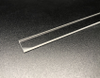
A Raman Filter is a precise optical filter used in Raman spectroscopy. When placed in the beam path, these filters transmit Raman scattered light to the spectrometer while selectively blocking the laser line.

Shanghai Optics produces high quality Raman filters suitable for the most precise work. Key features of our Raman filters include:

  • High transmission to permit detection of even the weakest signals.
  • Ultra-steep edge to measure even miniscule Raman shifts
  • Deep optical blocking for maximum laser rejection

Our filters have hard coatings and are manufactured without adhesives for longer filter life.

Your Choice of Raman Filters: Notch or Edge Filters

We manufacture both notch and edge signals. Either notch or edge filtering can be used in Raman spectroscopy, and the type you choose will depend on your application. You will need individual filters for each laser wavelength you utilize.

Edge filters are long pass optical filters. They block all wavelengths up to a given cut-off. Wavelength higher than the cutoff are transmitted.

A 532 nm edge filter, for instance, absorbs all light up to 534 nm, and effectively blocks a 532 laser line. This filter transmits light with wavelength above 534, allowing detection of the Raman spectrum. Edge pass filters are environmentally stable and, with appropriate care, may last indefinitely.

Raman notch filters have a sharp, discrete band where light is blocked. This absorption band must be chosen to coincide with the specific laser wavelength in use, as it is typically only a few nanometers wide. If you were working with a 532 nm laser, you would choose a notch filter with a central absorption at 532 nm. The Raman spectrum above this light would be transmitted, as would any light with lower wavelengths. The sharp cut off means that light close in wavelength would still be transmitted, reaching the detector

The benefit of notch filters is that they may be used for both Stokes and anti-Stokes Raman scattering, and thus have more versatility. Unlike edge filters, they do have a limited lifespan and degrade over time.

Raman Laser Line Filters

Our Raman laser line filters are designed to pass a specified laser wavelength while blocking all other ambient light. This bandpass filter essentially cleans up the laser beam signal and reduces noise. Our laser line filters feature very high transmittance in the pass band (greater than 90 percent) and a 1-3 nm bandwidth. They also exhibit high optical density in the 300 to 1200 nm range.


Standard Specifications

We take pride in our precise workmanship, and every lens, filter, and optical component to leave our factory is subject to the strictest quality control. Our Raman lenses are manufactured of high quality fused silica, NBK7 or equivalent. Our factory standard dictates a clear aperture of greater than 80%, and a surface quality of at least 60-40 scratch dig for Raman filters. The edge steepness is typically 0.5% of the laser wavelength, and the transition width is less than 2% of laser wavelength (from T=50% to OD6). The laser damage threshold is 1 J/cm2 @ 532nm with 10ns pulse width.

Laser line blocking is achieved with greater than 6.0 optical density, and the angle of incidence is 0.0 +/- 2.0.

Please contact us to discuss custom specifications and how we can help you design and select optimal components for your optical system.
Supplier's Site

Technical Specifications

  Shanghai Optics
Product Category Optical Filters
Product Name Raman Filter
Unlock Full Specs
to access all available technical data

Similar Products

ND Filter, Metallic, Optical Crown Glass, 25.4 mm, 0.04 OD at 632.8 nm - FBR-ND004 - Newport MKS
Specs
Filter Type Neutral Density Filters
Filter Diameter, Side Length, or Rectangular Length 25.4 mm (1 inch)
Thickness 3 mm (0.1181 inch)
View Details
Gurley Precision Instruments
Specs
Filter Type Neutral Density Filters
Application Infrared; Visible
Filter Shape Circular
View Details
Optical Longpass Filters -  - Changchun Yutai Optics Co., Ltd.
Changchun Yutai Optics Co., Ltd.
Specs
Filter Type Long Pass Filters
Application Infrared; Visible; Ultraviolet
Thickness 0.5000 to 6 mm (0.0197 to 0.2362 inch)
View Details
Filter -  - CRYSTECH, Inc.
CRYSTECH, Inc.
Specs
Filter Type Bandpass / Interference Filters
Application Infrared; Visible
Filter Shape Rectangular
View Details
