RAD Data Communications, Inc. Multiple E1 or T1 PDH Fiber Multiplexer Optimux-T3

Description
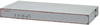
FEATURES Supports a combination of T1 and E1 channels Multiplexes up to 28 T1 or 21 E1 channels into a T3 data stream Transmission over coax or fiber optic cable Supports single mode and multimode fiber and single fiber (WDM) Laser diode option Range up to 110 km (68 miles) Conforms to ITU G.703, G.747, G.823, G.824, ANSI T1.107, T1.404, RFC2495, RFC2496 Optional second fiber optic or coaxial link provides automatic backup to the T3 link Optional redundant power supply Management using ASCII terminal, Telnet or SNMP management station Compact, 1U high enclosure Optimux-T3 provides a simple, flexible and cost-effective solution for transporting multiple T1 and E1 signals at distances up to 110 km (68 miles). Optimux-T3 integrates up to 28 T1 or 21 E1, or a combination of T1 and E1, channels over a single T3 data stream. This provides an easily configurable solution, flexible enough to meet the specific requirements of a broad range of applications. Two Optimux-T3 units can be connected over a single fiber (SF) using WDM technology (the transmit signal is at a different wavelength than the receive signal), thus reducing fiber cable costs by 50%. Various optical interfaces are available: 850 nm for multimode fiber 1300 nm for single mode and multimode fiber 1300 and 1550 nm laser for extended range over single mode fiber 1300 and 1550 nm laser (WDM) for extended range over single fiber. When required, critical components can be automatically backed up. This ensures that there is no single point of failure. An optional second main link provides backup, using automatic switchover upon link failure. An optional second power supply provides power redundancy and fail-safe operation. The device is available with either balanced or unbalanced tributary ports: Balanced with 28 RJ-45 connectors (for both E1 and T1) Unbalanced with 21 mini-BNC connectors (for E1 only). Optimux-T3 transmits each of the T1 channels independently, such that the clock of each T1 channel is independent. To facilitate system diagnostics, Optimux-T3 features LED status indicators, AIS alarm generation, alarm dry contact interface, and diagnostic loopbacks on the E1/T1 and T3 links. Setup, control and diagnostics can be performed via a supervisory port using an ASCII terminal, via a Telnet application via a dedicated separate Ethernet management port, or via RADview. RADview, RAD's SNMP management application running in either a PC (Windows based) or UNIX (HP OpenView based) environment provides a user-friendly GUI for Optimux-T3 configuration, monitoring and management. Optimux-T3 is available as a compact 1U high unit that can be mounted in a 19" (ANSI) or an ETSI rack.
Description
FEATURES Supports a combination of T1 and E1 channels Multiplexes up to 28 T1 or 21 E1 channels into a T3 data stream Transmission over coax or fiber optic cable Supports single mode and multimode fiber and single fiber (WDM) Laser diode option Range up to 110 km (68 miles) Conforms to ITU G.703, G.747, G.823, G.824, ANSI T1.107, T1.404, RFC2495, RFC2496 Optional second fiber optic or coaxial link provides automatic backup to the T3 link Optional redundant power supply Management using ASCII terminal, Telnet or SNMP management station Compact, 1U high enclosure Optimux-T3 provides a simple, flexible and cost-effective solution for transporting multiple T1 and E1 signals at distances up to 110 km (68 miles). Optimux-T3 integrates up to 28 T1 or 21 E1, or a combination of T1 and E1, channels over a single T3 data stream. This provides an easily configurable solution, flexible enough to meet the specific requirements of a broad range of applications. Two Optimux-T3 units can be connected over a single fiber (SF) using WDM technology (the transmit signal is at a different wavelength than the receive signal), thus reducing fiber cable costs by 50%. Various optical interfaces are available: 850 nm for multimode fiber 1300 nm for single mode and multimode fiber 1300 and 1550 nm laser for extended range over single mode fiber 1300 and 1550 nm laser (WDM) for extended range over single fiber. When required, critical components can be automatically backed up. This ensures that there is no single point of failure. An optional second main link provides backup, using automatic switchover upon link failure. An optional second power supply provides power redundancy and fail-safe operation. The device is available with either balanced or unbalanced tributary ports: Balanced with 28 RJ-45 connectors (for both E1 and T1) Unbalanced with 21 mini-BNC connectors (for E1 only). Optimux-T3 transmits each of the T1 channels independently, such that the clock of each T1 channel is independent. To facilitate system diagnostics, Optimux-T3 features LED status indicators, AIS alarm generation, alarm dry contact interface, and diagnostic loopbacks on the E1/T1 and T3 links. Setup, control and diagnostics can be performed via a supervisory port using an ASCII terminal, via a Telnet application via a dedicated separate Ethernet management port, or via RADview. RADview, RAD's SNMP management application running in either a PC (Windows based) or UNIX (HP OpenView based) environment provides a user-friendly GUI for Optimux-T3 configuration, monitoring and management. Optimux-T3 is available as a compact 1U high unit that can be mounted in a 19" (ANSI) or an ETSI rack.

Suppliers

Company
Product
Description
Supplier Links
Multiple E1 or T1 PDH Fiber Multiplexer - Optimux-T3 - Data Connect Enterprise, Inc.
Olney, MD, USA
Multiple E1 or T1 PDH Fiber Multiplexer
Optimux-T3
Multiple E1 or T1 PDH Fiber Multiplexer Optimux-T3
FEATURES Supports a combination of T1 and E1 channels Multiplexes up to 28 T1 or 21 E1 channels into a T3 data stream Transmission over coax or fiber optic cable Supports single mode and multimode fiber and single fiber (WDM) Laser diode option Range up to 110 km (68 miles) Conforms to ITU G.703, G.747, G.823, G.824, ANSI T1.107, T1.404, RFC2495, RFC2496 Optional second fiber optic or coaxial link provides automatic backup to the T3 link Optional redundant power supply Management using ASCII terminal, Telnet or SNMP management station Compact, 1U high enclosure Optimux-T3 provides a simple, flexible and cost-effective solution for transporting multiple T1 and E1 signals at distances up to 110 km (68 miles). Optimux-T3 integrates up to 28 T1 or 21 E1, or a combination of T1 and E1, channels over a single T3 data stream. This provides an easily configurable solution, flexible enough to meet the specific requirements of a broad range of applications. Two Optimux-T3 units can be connected over a single fiber (SF) using WDM technology (the transmit signal is at a different wavelength than the receive signal), thus reducing fiber cable costs by 50%. Various optical interfaces are available: 850 nm for multimode fiber 1300 nm for single mode and multimode fiber 1300 and 1550 nm laser for extended range over single mode fiber 1300 and 1550 nm laser (WDM) for extended range over single fiber. When required, critical components can be automatically backed up. This ensures that there is no single point of failure. An optional second main link provides backup, using automatic switchover upon link failure. An optional second power supply provides power redundancy and fail-safe operation. The device is available with either balanced or unbalanced tributary ports: Balanced with 28 RJ-45 connectors (for both E1 and T1) Unbalanced with 21 mini-BNC connectors (for E1 only). Optimux-T3 transmits each of the T1 channels independently, such that the clock of each T1 channel is independent. To facilitate system diagnostics, Optimux-T3 features LED status indicators, AIS alarm generation, alarm dry contact interface, and diagnostic loopbacks on the E1/T1 and T3 links. Setup, control and diagnostics can be performed via a supervisory port using an ASCII terminal, via a Telnet application via a dedicated separate Ethernet management port, or via RADview. RADview, RAD's SNMP management application running in either a PC (Windows based) or UNIX (HP OpenView based) environment provides a user-friendly GUI for Optimux-T3 configuration, monitoring and management. Optimux-T3 is available as a compact 1U high unit that can be mounted in a 19" (ANSI) or an ETSI rack.

FEATURES

  • Supports a combination of T1 and E1 channels
  • Multiplexes up to 28 T1 or 21 E1 channels into a T3 data stream
  • Transmission over coax or fiber optic cable
  • Supports single mode and multimode fiber and single fiber (WDM)
  • Laser diode option
  • Range up to 110 km (68 miles)
  • Conforms to ITU G.703, G.747, G.823, G.824, ANSI T1.107, T1.404, RFC2495, RFC2496
  • Optional second fiber optic or coaxial link provides automatic backup to the T3 link
  • Optional redundant power supply
  • Management using ASCII terminal, Telnet or SNMP management station
  • Compact, 1U high enclosure
  • Optimux-T3 provides a simple, flexible and cost-effective solution for transporting multiple T1 and E1 signals at distances up to 110 km (68 miles).
  • Optimux-T3 integrates up to 28 T1 or 21 E1, or a combination of T1 and E1, channels over a single T3 data stream. This provides an easily configurable solution, flexible enough to meet the specific requirements of a broad range of applications.
  • Two Optimux-T3 units can be connected over a single fiber (SF) using WDM technology (the transmit signal is at a different wavelength than the receive signal), thus reducing fiber cable costs by 50%.
  • Various optical interfaces are available:
    • 850 nm for multimode fiber
    • 1300 nm for single mode and multimode fiber
    • 1300 and 1550 nm laser for extended range over single mode fiber
    • 1300 and 1550 nm laser (WDM) for extended range over single fiber.
  • When required, critical components can be automatically backed up. This ensures that there is no single point of failure. An optional second main link provides backup, using automatic switchover upon link failure. An optional second power supply provides power redundancy and fail-safe operation.
  • The device is available with either balanced or unbalanced tributary ports:
    • Balanced with 28 RJ-45 connectors (for both E1 and T1)
    • Unbalanced with 21 mini-BNC connectors (for E1 only).
  • Optimux-T3 transmits each of the T1 channels independently, such that the clock of each T1 channel is independent.
  • To facilitate system diagnostics, Optimux-T3 features LED status indicators, AIS alarm generation, alarm dry contact interface, and diagnostic loopbacks on the E1/T1 and T3 links.
  • Setup, control and diagnostics can be performed via a supervisory port using an ASCII terminal, via a Telnet application via a dedicated separate Ethernet management port, or via RADview.
  • RADview, RAD's SNMP management application running in either a PC (Windows based) or UNIX (HP OpenView based) environment provides a user-friendly GUI for Optimux-T3 configuration, monitoring and management.
  • Optimux-T3 is available as a compact 1U high unit that can be mounted in a 19" (ANSI) or an ETSI rack.

Supplier's Site

Technical Specifications

  Data Connect Enterprise, Inc.
Product Category Network Equipment
Product Number Optimux-T3
Product Name Multiple E1 or T1 PDH Fiber Multiplexer
Network Equipment Multiplexer
Unlock Full Specs
to access all available technical data

Similar Products

LoRa Transceiver - LTR-100 - BinMaster, Inc.
Specs
Network Equipment Transceiver
Area Network Type WLAN
Network Media Wireless
View Details
Unmanaged Basic Industrial Ethernet Switches - INS-8008A - Volktek Corporation
Specs
Network Equipment Switch
Area Network Type LAN Capable
Protocol / Network Nway Auto-Negotiation
View Details
RAD Data Communications Short Range Async Modem - SRM-5D/M/TB - Classic Automation LLC
Specs
Network Equipment Modem
View Details
Factor 201 Raspberry Pi Industrial IoT Gateway - FR201 - OnLogic Inc.
Specs
Network Equipment Gateway
Number of Ports 2 #
View Details
