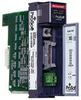
Data exchange between the DEM module and the processor data table is performed using standard ladder logic commands (block transfer in the PLC). The data structure is automatically preset for the DE channels, allowing the module to be inserted into any PLC application with minimum ladder logic required.
Configuration toolsTo ease configuration, an optional Windows program is available for each of the modules. These configuration tools will allow easy configuration of the individual DE channels, while also providing real time access to the PV values.
The module is a DE protocol co-processor module, off-loading all aspects of protocol communications from the PLC. As such, the module performs many functions, including:
Support for up to 16 single PV transmitters, 4 multivariable transmitters with 4 PVs each, or any mix of single or multivariable equaling 16 inputs
Full read/write access to instrument database
Data analysis and integrity checking on the PV variable and the data base contents
Instrument database mismatch verification
Support for redundant and non-redundant implementations
All data communication between the module and the processor are performed using the block transfer commands over the backplane or via remote I/O. This allows various card configurations, including local and remote rack, as well as multiple cards per rack. In today's intelligent transmitters, there is often substantially more data available than can be transferred via a single analog input. There are many benefits that can be derived from implementation of the DE protocol in a plant application, including
Remote diagnostics to the instrument level
High resolution PV value (32 bit floating point number)
Remote PV and database integrity checking
Remote read/write access to instrument database
Off-line instrument database configuration
Simplified loop checkout and switchovers
Redundant I/O module connection to each channel
Data exchange between the DEM module and the processor data table is performed using standard ladder logic commands (block transfer in the PLC). The data structure is automatically preset for the DE channels, allowing the module to be inserted into any PLC application with minimum ladder logic required.
- Configuration toolsTo ease configuration, an optional Windows program is available for each of the modules. These configuration tools will allow easy configuration of the individual DE channels, while also providing real time access to the PV values.
- The module is a DE protocol co-processor module, off-loading all aspects of protocol communications from the PLC. As such, the module performs many functions, including:
- Support for up to 16 single PV transmitters, 4 multivariable transmitters with 4 PVs each, or any mix of single or multivariable equaling 16 inputs
- Full read/write access to instrument database
- Data analysis and integrity checking on the PV variable and the data base contents
- Instrument database mismatch verification
- Support for redundant and non-redundant implementations
- All data communication between the module and the processor are performed using the block transfer commands over the backplane or via remote I/O. This allows various card configurations, including local and remote rack, as well as multiple cards per rack. In today's intelligent transmitters, there is often substantially more data available than can be transferred via a single analog input. There are many benefits that can be derived from implementation of the DE protocol in a plant application, including
- Remote diagnostics to the instrument level
- High resolution PV value (32 bit floating point number)
- Remote PV and database integrity checking
- Remote read/write access to instrument database
- Off-line instrument database configuration
- Simplified loop checkout and switchovers
- Redundant I/O module connection to each channel