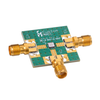
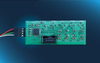
PowerFilm, Inc. Solar Development Kit (DEV-BASIC)

Description
The DEV-BASIC is a complete energy harvesting power management solution using TI BQ25570 PMIC. It can efficiently extract energy from solar, whether in a dim indoor environment or outdoors in direct sunlight. Once collected, the BQ25570 can store energy in various storage elements while providing a regulated voltage output to power your application devices. The kit includes everything you need to start developing power autonomous electronics. Use Indoor Light series panels for indoor applications and Classic Application panels for outdoor environments. Pre-configured to charge 3.7V Lithium batteries, you can use the included Li-Po battery or swap for a more suitable size. Panel Specifications Indoor Series LL200-3-37 1000 lux: 1.089mW 0.419mA 2.6V 200 lux: 0.166mW 0.079mA 2.1V Classic Application ONP1.2-12x24 100% Sun 4mW 3.33mA 1.2V 25% Sun 0.9mW 0.7mA 1.2V System Diagram Board Layout Use Cases - Power Source For Wireless connectivity is now standard in modern electronics and the growing IoT and sensing industries. Many applications in this area are very low power and can run entirely off a solar energy harvesting solution. BLE Beacons and Tags Smart Windows and Shades E-Paper Displays Wireless Sensors Telematics Wearables Smart Locks Field and Herd Monitoring Thermostats Other Low Power Electronics Features Nano power DC-DC boost charger, with 100mV minimum input voltage. Integrated power management. Compatible with Li-ion, LiFePo, Thin-Film, capacitor, and supercapacitor rechargeable battery technologies. Adjustable battery under-voltage protection and load disconnect with hysteresis. Adjustable battery overvoltage protection. Regulated power output with adjustable voltage. Capacitor / Supercapacitor Storage Element Operation The DEV-BASIC can run and operate with a capacitor as the storage element instead of the Li-Polymer battery. The capacitor will maintain steady power to the system while light is available. The charge and discharge rate will be significantly affected by the size of the capacitor. If the capacitor is completely discharged (0V), the charge rate will be slower because the harvester chip is not yet fully functional. Board Configuration and Customization The Solar Development Kit hardware is currently configured to charge a Li-Polymer type battery with a max voltage of 4.2V and the output voltage set to 3.0V. The configuration can be customized by modifying SMT resistor dividers per the BQ25570 datasheet specifications which can be found under the “Resources” section above. Resistors OV1(2), OK1(2)(3), and OUT1(2) control the output voltage, charge configuration, and power management of the BQ25570 PMIC. Use the formulas below to determine appropriate 0603 package resistor values for your desired application. Output Voltage: VOUT = 1.21 * (R_OUT2 + R_OUT1)/R_OUT1 Charge Termination Voltage: VBAT_OV = 1.815 * (1 + R_OV2/R_OV1) Low Voltage Load Disconnect: VBAT_MIN = 1.21 * (1 + R_OK2/R_OK1) Load Re-connect Hysteresis: VBAT_MIN_HYST = 1.21 * (1 + (R_OK2+R_OK3)/R_OK1) For best results the sum of each resistor divider should be as close too but not exceeding 13Mohms. VOUT cannot exceed VBAT, VBAT_OV cannot exceed 5.5V, and VBAT_MIN cannot be less than 2V. IV Curves Indoor Series Classic Application
Datasheet
Description
The DEV-BASIC is a complete energy harvesting power management solution using TI BQ25570 PMIC. It can efficiently extract energy from solar, whether in a dim indoor environment or outdoors in direct sunlight. Once collected, the BQ25570 can store energy in various storage elements while providing a regulated voltage output to power your application devices. The kit includes everything you need to start developing power autonomous electronics. Use Indoor Light series panels for indoor applications and Classic Application panels for outdoor environments. Pre-configured to charge 3.7V Lithium batteries, you can use the included Li-Po battery or swap for a more suitable size. Panel Specifications Indoor Series LL200-3-37 1000 lux: 1.089mW 0.419mA 2.6V 200 lux: 0.166mW 0.079mA 2.1V Classic Application ONP1.2-12x24 100% Sun 4mW 3.33mA 1.2V 25% Sun 0.9mW 0.7mA 1.2V System Diagram Board Layout Use Cases - Power Source For Wireless connectivity is now standard in modern electronics and the growing IoT and sensing industries. Many applications in this area are very low power and can run entirely off a solar energy harvesting solution. BLE Beacons and Tags Smart Windows and Shades E-Paper Displays Wireless Sensors Telematics Wearables Smart Locks Field and Herd Monitoring Thermostats Other Low Power Electronics Features Nano power DC-DC boost charger, with 100mV minimum input voltage. Integrated power management. Compatible with Li-ion, LiFePo, Thin-Film, capacitor, and supercapacitor rechargeable battery technologies. Adjustable battery under-voltage protection and load disconnect with hysteresis. Adjustable battery overvoltage protection. Regulated power output with adjustable voltage. Capacitor / Supercapacitor Storage Element Operation The DEV-BASIC can run and operate with a capacitor as the storage element instead of the Li-Polymer battery. The capacitor will maintain steady power to the system while light is available. The charge and discharge rate will be significantly affected by the size of the capacitor. If the capacitor is completely discharged (0V), the charge rate will be slower because the harvester chip is not yet fully functional. Board Configuration and Customization The Solar Development Kit hardware is currently configured to charge a Li-Polymer type battery with a max voltage of 4.2V and the output voltage set to 3.0V. The configuration can be customized by modifying SMT resistor dividers per the BQ25570 datasheet specifications which can be found under the “Resources” section above. Resistors OV1(2), OK1(2)(3), and OUT1(2) control the output voltage, charge configuration, and power management of the BQ25570 PMIC. Use the formulas below to determine appropriate 0603 package resistor values for your desired application. Output Voltage: VOUT = 1.21 * (R_OUT2 + R_OUT1)/R_OUT1 Charge Termination Voltage: VBAT_OV = 1.815 * (1 + R_OV2/R_OV1) Low Voltage Load Disconnect: VBAT_MIN = 1.21 * (1 + R_OK2/R_OK1) Load Re-connect Hysteresis: VBAT_MIN_HYST = 1.21 * (1 + (R_OK2+R_OK3)/R_OK1) For best results the sum of each resistor divider should be as close too but not exceeding 13Mohms. VOUT cannot exceed VBAT, VBAT_OV cannot exceed 5.5V, and VBAT_MIN cannot be less than 2V. IV Curves Indoor Series Classic Application
Datasheet

Suppliers

Company
Product
Description
Supplier Links
Solar Development Kit (DEV-BASIC) -  - PowerFilm, Inc.
Ames, IA, United States
Solar Development Kit (DEV-BASIC)
The DEV-BASIC is a complete energy harvesting power management solution using TI BQ25570 PMIC. It can efficiently extract energy from solar, whether in a dim indoor environment or outdoors in direct sunlight. Once collected, the BQ25570 can store energy in various storage elements while providing a regulated voltage output to power your application devices. The kit includes everything you need to start developing power autonomous electronics. Use Indoor Light series panels for indoor applications and Classic Application panels for outdoor environments. Pre-configured to charge 3.7V Lithium batteries, you can use the included Li-Po battery or swap for a more suitable size. Panel Specifications Indoor Series LL200-3-37 1000 lux: 1.089mW 0.419mA 2.6V 200 lux: 0.166mW 0.079mA 2.1V Classic Application ONP1.2-12x24 100% Sun 4mW 3.33mA 1.2V 25% Sun 0.9mW 0.7mA 1.2V System Diagram Board Layout Use Cases - Power Source For Wireless connectivity is now standard in modern electronics and the growing IoT and sensing industries. Many applications in this area are very low power and can run entirely off a solar energy harvesting solution. BLE Beacons and Tags Smart Windows and Shades E-Paper Displays Wireless Sensors Telematics Wearables Smart Locks Field and Herd Monitoring Thermostats Other Low Power Electronics Features Nano power DC-DC boost charger, with 100mV minimum input voltage. Integrated power management. Compatible with Li-ion, LiFePo, Thin-Film, capacitor, and supercapacitor rechargeable battery technologies. Adjustable battery under-voltage protection and load disconnect with hysteresis. Adjustable battery overvoltage protection. Regulated power output with adjustable voltage. Capacitor / Supercapacitor Storage Element Operation The DEV-BASIC can run and operate with a capacitor as the storage element instead of the Li-Polymer battery. The capacitor will maintain steady power to the system while light is available. The charge and discharge rate will be significantly affected by the size of the capacitor. If the capacitor is completely discharged (0V), the charge rate will be slower because the harvester chip is not yet fully functional. Board Configuration and Customization The Solar Development Kit hardware is currently configured to charge a Li-Polymer type battery with a max voltage of 4.2V and the output voltage set to 3.0V. The configuration can be customized by modifying SMT resistor dividers per the BQ25570 datasheet specifications which can be found under the “Resources” section above. Resistors OV1(2), OK1(2)(3), and OUT1(2) control the output voltage, charge configuration, and power management of the BQ25570 PMIC. Use the formulas below to determine appropriate 0603 package resistor values for your desired application. Output Voltage: VOUT = 1.21 * (R_OUT2 + R_OUT1)/R_OUT1 Charge Termination Voltage: VBAT_OV = 1.815 * (1 + R_OV2/R_OV1) Low Voltage Load Disconnect: VBAT_MIN = 1.21 * (1 + R_OK2/R_OK1) Load Re-connect Hysteresis: VBAT_MIN_HYST = 1.21 * (1 + (R_OK2+R_OK3)/R_OK1) For best results the sum of each resistor divider should be as close too but not exceeding 13Mohms. VOUT cannot exceed VBAT, VBAT_OV cannot exceed 5.5V, and VBAT_MIN cannot be less than 2V. IV Curves Indoor Series Classic Application

The DEV-BASIC is a complete energy harvesting power management solution using TI BQ25570 PMIC. It can efficiently extract energy from solar, whether in a dim indoor environment or outdoors in direct sunlight.

Once collected, the BQ25570 can store energy in various storage elements while providing a regulated voltage output to power your application devices.

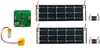
The kit includes everything you need to start developing power autonomous electronics. Use Indoor Light series panels for indoor applications and Classic Application panels for outdoor environments. Pre-configured to charge 3.7V Lithium batteries, you can use the included Li-Po battery or swap for a more suitable size.

Panel Specifications

Indoor Series

LL200-3-37

1000 lux:

  • 1.089mW
  • 0.419mA
  • 2.6V

200 lux:

  • 0.166mW
  • 0.079mA
  • 2.1V

Classic Application

ONP1.2-12x24

100% Sun

  • 4mW
  • 3.33mA
  • 1.2V

25% Sun

  • 0.9mW
  • 0.7mA
  • 1.2V

System Diagram

Board Layout

Use Cases - Power Source For

Wireless connectivity is now standard in modern electronics and the growing IoT and sensing industries. Many applications in this area are very low power and can run entirely off a solar energy harvesting solution.

  • BLE Beacons and Tags
  • Smart Windows and Shades
  • E-Paper Displays
  • Wireless Sensors
  • Telematics
  • Wearables
  • Smart Locks
  • Field and Herd Monitoring
  • Thermostats
  • Other Low Power Electronics

Features

  • Nano power DC-DC boost charger, with 100mV minimum input voltage.
  • Integrated power management.
  • Compatible with Li-ion, LiFePo, Thin-Film, capacitor, and supercapacitor rechargeable battery technologies.
  • Adjustable battery under-voltage protection and load disconnect with hysteresis.
  • Adjustable battery overvoltage protection.
  • Regulated power output with adjustable voltage.

Capacitor / Supercapacitor Storage Element Operation

The DEV-BASIC can run and operate with a capacitor as the storage element instead of the Li-Polymer battery. The capacitor will maintain steady power to the system while light is available.

The charge and discharge rate will be significantly affected by the size of the capacitor. If the capacitor is completely discharged (0V), the charge rate will be slower because the harvester chip is not yet fully functional.

Board Configuration and Customization

The Solar Development Kit hardware is currently configured to charge a Li-Polymer type battery with a max voltage of 4.2V and the output voltage set to 3.0V. The configuration can be customized by modifying SMT resistor dividers per the BQ25570 datasheet specifications which can be found under the “Resources” section above.

Resistors OV1(2), OK1(2)(3), and OUT1(2) control the output voltage, charge configuration, and power management of the BQ25570 PMIC. Use the formulas below to determine appropriate 0603 package resistor values for your desired application.

Output Voltage: VOUT = 1.21 * (R_OUT2 + R_OUT1)/R_OUT1

Charge Termination Voltage: VBAT_OV = 1.815 * (1 + R_OV2/R_OV1)

Low Voltage Load Disconnect: VBAT_MIN = 1.21 * (1 + R_OK2/R_OK1)

Load Re-connect Hysteresis: VBAT_MIN_HYST = 1.21 * (1 + (R_OK2+R_OK3)/R_OK1)

For best results the sum of each resistor divider should be as close too but not exceeding 13Mohms. VOUT cannot exceed VBAT, VBAT_OV cannot exceed 5.5V, and VBAT_MIN cannot be less than 2V.

IV Curves

Indoor Series

Classic Application
Supplier's Site Datasheet

Technical Specifications

  PowerFilm, Inc.
Product Category Electronic Development Boards
Product Name Solar Development Kit (DEV-BASIC)
Category Development Suite / Kit
Unlock Full Specs
to access all available technical data

Similar Products

Sensor Development Tools - 1942923 - RS Components, Ltd.
Specs
Category Development Suite / Kit
View Details
Evaluation and Demonstration Boards and Kits - CY8CKIT-037-ND - DigiKey
Specs
Category Developement Board
Supported System Microcontroller; Motor Controller/Driver
Manufacturer INFINEON TECHNOLOGIES; Other
View Details
2 suppliers
Sensor Evaluation Boards - 2952-BREAKOUTBOARDBOB0.4-ND - DigiKey
Innovative Sensor Technology IST USA Division
View Details