Plansee SE Tungsten Electrodes

Description
If a voltage is applied at the anode and cathode then a light-emitting arc is generated. During operation, the tips of the electrodes must withstand temperatures of 1 800 to 3 200 °C. They conduct the emitted heat to the electrode body and the support rods (stems). Tungsten is the only metal that can meet the high physical and mechanical requirements. Tungsten has the highest melting point of all metals, a low vapor pressure, low thermal expansion, good thermal conductivity and a low electron work function. Our many materials engineers use our in-house powder metallurgical manufacturing procedures to prepare tungsten optimally for use in cathodes, anodes or support rods (stems). With special alloy additives, we improve the high-temperature dimensional stability, electron work function, formability, machinability and thermal conductivity of the material. For cathodes, we supply aluminium-potassium silicate (AKS) or lanthanum oxide-doped tungsten. A new addition to the range: WLZ, a tungsten material doped with lanthanum and zirconium oxide. WLZ is the non-radioactive alternative to thorium-doped materials. Anodes have to withstand extreme thermal loads. Plansee can supply special potassium-doped tungsten materials for this type of application: WVM and WVMW. These materials benefit from a particularly high level of thermal stability and are characterized by excellent arc erosion resistance. Support rods (stems) are exposed to severe mechanical shocks. Plansee supplies the tungsten material WL-S which is doped with lanthanum oxide. WL-S is exceptionally resistant to breakage even after high-temperature processing. Our materials for tungsten electrodes at a glance. Naturally, we would be delighted to help you choose the optimum material for your application. Cathodes: WLZ, porous tungsten, WL10, WVM Anodes: WVM, WVMW, S-WVMW, WVM Support rods (stems): WVM, WL-S A single source for all your needs. We handle every stage in the manufacture of our products in-house. From the raw materials through to the finished product: including the development of new materials. In this way, we can guarantee that you benefit from the very best quality.
Description
If a voltage is applied at the anode and cathode then a light-emitting arc is generated. During operation, the tips of the electrodes must withstand temperatures of 1 800 to 3 200 °C. They conduct the emitted heat to the electrode body and the support rods (stems). Tungsten is the only metal that can meet the high physical and mechanical requirements. Tungsten has the highest melting point of all metals, a low vapor pressure, low thermal expansion, good thermal conductivity and a low electron work function. Our many materials engineers use our in-house powder metallurgical manufacturing procedures to prepare tungsten optimally for use in cathodes, anodes or support rods (stems). With special alloy additives, we improve the high-temperature dimensional stability, electron work function, formability, machinability and thermal conductivity of the material. For cathodes, we supply aluminium-potassium silicate (AKS) or lanthanum oxide-doped tungsten. A new addition to the range: WLZ, a tungsten material doped with lanthanum and zirconium oxide. WLZ is the non-radioactive alternative to thorium-doped materials. Anodes have to withstand extreme thermal loads. Plansee can supply special potassium-doped tungsten materials for this type of application: WVM and WVMW. These materials benefit from a particularly high level of thermal stability and are characterized by excellent arc erosion resistance. Support rods (stems) are exposed to severe mechanical shocks. Plansee supplies the tungsten material WL-S which is doped with lanthanum oxide. WL-S is exceptionally resistant to breakage even after high-temperature processing. Our materials for tungsten electrodes at a glance. Naturally, we would be delighted to help you choose the optimum material for your application. Cathodes: WLZ, porous tungsten, WL10, WVM Anodes: WVM, WVMW, S-WVMW, WVM Support rods (stems): WVM, WL-S A single source for all your needs. We handle every stage in the manufacture of our products in-house. From the raw materials through to the finished product: including the development of new materials. In this way, we can guarantee that you benefit from the very best quality.

Suppliers

Company
Product
Description
Supplier Links
Tungsten Electrodes -  - Plansee SE
Reutte, Austria
Tungsten Electrodes
Tungsten Electrodes
If a voltage is applied at the anode and cathode then a light-emitting arc is generated. During operation, the tips of the electrodes must withstand temperatures of 1 800 to 3 200 °C. They conduct the emitted heat to the electrode body and the support rods (stems). Tungsten is the only metal that can meet the high physical and mechanical requirements. Tungsten has the highest melting point of all metals, a low vapor pressure, low thermal expansion, good thermal conductivity and a low electron work function. Our many materials engineers use our in-house powder metallurgical manufacturing procedures to prepare tungsten optimally for use in cathodes, anodes or support rods (stems). With special alloy additives, we improve the high-temperature dimensional stability, electron work function, formability, machinability and thermal conductivity of the material. For cathodes, we supply aluminium-potassium silicate (AKS) or lanthanum oxide-doped tungsten. A new addition to the range: WLZ, a tungsten material doped with lanthanum and zirconium oxide. WLZ is the non-radioactive alternative to thorium-doped materials. Anodes have to withstand extreme thermal loads. Plansee can supply special potassium-doped tungsten materials for this type of application: WVM and WVMW. These materials benefit from a particularly high level of thermal stability and are characterized by excellent arc erosion resistance. Support rods (stems) are exposed to severe mechanical shocks. Plansee supplies the tungsten material WL-S which is doped with lanthanum oxide. WL-S is exceptionally resistant to breakage even after high-temperature processing. Our materials for tungsten electrodes at a glance. Naturally, we would be delighted to help you choose the optimum material for your application. Cathodes: WLZ, porous tungsten, WL10, WVM Anodes: WVM, WVMW, S-WVMW, WVM Support rods (stems): WVM, WL-S A single source for all your needs. We handle every stage in the manufacture of our products in-house. From the raw materials through to the finished product: including the development of new materials. In this way, we can guarantee that you benefit from the very best quality.
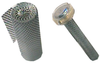
If a voltage is applied at the anode and cathode then a light-emitting arc is generated. During operation, the tips of the electrodes must withstand temperatures of 1 800 to 3 200 °C. They conduct the emitted heat to the electrode body and the support rods (stems).

Tungsten is the only metal that can meet the high physical and mechanical requirements. Tungsten has the highest melting point of all metals, a low vapor pressure, low thermal expansion, good thermal conductivity and a low electron work function.

Our many materials engineers use our in-house powder metallurgical manufacturing procedures to prepare tungsten optimally for use in cathodes, anodes or support rods (stems). With special alloy additives, we improve the high-temperature dimensional stability, electron work function, formability, machinability and thermal conductivity of the material.

For cathodes, we supply aluminium-potassium silicate (AKS) or lanthanum oxide-doped tungsten. A new addition to the range: WLZ, a tungsten material doped with lanthanum and zirconium oxide. WLZ is the non-radioactive alternative to thorium-doped materials.

Anodes have to withstand extreme thermal loads. Plansee can supply special potassium-doped tungsten materials for this type of application: WVM and WVMW. These materials benefit from a particularly high level of thermal stability and are characterized by excellent arc erosion resistance.

Support rods (stems) are exposed to severe mechanical shocks. Plansee supplies the tungsten material WL-S which is doped with lanthanum oxide. WL-S is exceptionally resistant to breakage even after high-temperature processing.

Our materials for tungsten electrodes at a glance. Naturally, we would be delighted to help you choose the optimum material for your application.

  • Cathodes: WLZ, porous tungsten, WL10, WVM
  • Anodes: WVM, WVMW, S-WVMW, WVM
  • Support rods (stems): WVM, WL-S

A single source for all your needs.

We handle every stage in the manufacture of our products in-house. From the raw materials through to the finished product: including the development of new materials. In this way, we can guarantee that you benefit from the very best quality.

Supplier's Site

Technical Specifications

  Plansee SE
Product Category Electrodes and Electrode Materials
Product Name Tungsten Electrodes
Material Tungsten
Unlock Full Specs
to access all available technical data

Similar Products

Battery Electrode Materials - PolyGrid® - Dexmet® Corporation, a part of PPG’s engineered materials division
Dexmet® Corporation, a part of PPG’s engineered materials division
Specs
OD / Width 12 to 48 inch (305 to 1219 mm)
Thickness 0.0020 to 0.0400 inch (0.0508 to 1.02 mm)
View Details
Automotive Terminals - 1241412-3 - TE Connectivity
Specs
Type Contact
Plating / Coating Silver; Silver (Ag)
Applications Motor or Generator
View Details
Copper Electrodes -  - Sunstone Engineering
Sunstone Engineering
Specs
Material Cu
Shape / Form Button
Applications Welding Electrodes
View Details