Observing Cosmic History The Mission
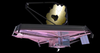
NASA's James Webb Space Telescope will peer into the past to a time when new stars and developing galaxies were first beginning to form, measuring and capturing images and spectra of galaxies that formed billions of years ago.
The Webb Telescope will use its superb angular resolution and near-infrared instruments to discover and study planetary systems similar to our own, analyze the molecular composition of extrasolar planets' atmospheres, and directly image Jupiter-size planets orbiting nearby stars.
By extending our knowledge of the cosmos, the Webb Telescope will play an important role in our quest to answer the compelling questions "How did we get here?" and "Are we alone?"
Identified as a top priority for astronomy and astrophysics by the National Research Council, the Webb Telescope is a key program for NASA and the scientific community and is central to the nation's ground- and space-based astrophysics program.
The Team
The National Aeronautics and Space Administration (NASA) leads an international partnership that includes the European Space Agency and the Canadian Space Agency. NASA's Goddard Space Flight Center is managing the Webb Telescope project, and the Space Telescope Science Institute is responsible for science and mission operations, as well as ground station development.
In 2002, NASA selected Northrop Grumman as prime contractor to develop the James Webb Space Telescope. Northrop Grumman will design and build the deployable sunshield, provide the spacecraft and integrate the total system.
The observatory subsystems are developed by a Northrop Grumman-led team with vast experience in developing space-based observatories:
Ball Aerospace provides the telescope's optical design and mirrors, and the wavefront sensing and control design and algorithms.
ITT Exelis integrates and tests the optical telescope.
ATK provides the telescope's composite structures.
Customer: NASA Goddard Space Flight Center Launch Vehicle: Ariane 5
Instruments:
Near-Infrared Camera, University of Arizona
Near-Infrared Spectrograph, European Space Agency (ESA)
Mid-Infrared Instrument, Jet Propulsion Laboratory (JPL), ESA
Fine Guidance Sensor with Tunable Filter Module, Canadian Space Agency (CSA)
Technical Characteristics
Mission Lifetime
5 years (10-year goal)
Orbit
L2 (the Second Sun-Earth Lagrange Point), 1,500,000 km from Earth
Sunshield Dimensions
Approximately 22 meters x 12 meters
Primary Mirror
6.5 meter diameter aperture
Wavelength Coverage
0.6 to >27 microns
Diffraction Limit
2.0 microns
One-year Sky Coverage
100%
Telescope Operating Temperature
~45 Kelvin (-380˚F)
Payload Mass
Approximately 6,500 kg
Science
First light, assembly of galaxies, birth of stars, planetary systems and the origin of life
Technology
Sunshield membrane material, near-infrared and mid-infrared detectors, lightweight cryogenic mirrors, microshutter arrays, cryogenic detector readout application-specific integrated circuits, cryogenic heat switches, wavefront sensing and control, large precision cryogenic structure, and the MIRI cryocooler.
Observing Cosmic History The Mission
NASA's James Webb Space Telescope will peer into the past to a time when new stars and developing galaxies were first beginning to form, measuring and capturing images and spectra of galaxies that formed billions of years ago.
The Webb Telescope will use its superb angular resolution and near-infrared instruments to discover and study planetary systems similar to our own, analyze the molecular composition of extrasolar planets' atmospheres, and directly image Jupiter-size planets orbiting nearby stars.
By extending our knowledge of the cosmos, the Webb Telescope will play an important role in our quest to answer the compelling questions "How did we get here?" and "Are we alone?"
Identified as a top priority for astronomy and astrophysics by the National Research Council, the Webb Telescope is a key program for NASA and the scientific community and is central to the nation's ground- and space-based astrophysics program.
The Team
The National Aeronautics and Space Administration (NASA) leads an international partnership that includes the European Space Agency and the Canadian Space Agency. NASA's Goddard Space Flight Center is managing the Webb Telescope project, and the Space Telescope Science Institute is responsible for science and mission operations, as well as ground station development.
In 2002, NASA selected Northrop Grumman as prime contractor to develop the James Webb Space Telescope. Northrop Grumman will design and build the deployable sunshield, provide the spacecraft and integrate the total system.
The observatory subsystems are developed by a Northrop Grumman-led team with vast experience in developing space-based observatories:
- Ball Aerospace provides the telescope's optical design and mirrors, and the wavefront sensing and control design and algorithms.
- ITT Exelis integrates and tests the optical telescope.
- ATK provides the telescope's composite structures.
Customer: NASA Goddard Space Flight Center
Launch Vehicle: Ariane 5
Instruments:
- Near-Infrared Camera, University of Arizona
- Near-Infrared Spectrograph, European Space Agency (ESA)
- Mid-Infrared Instrument, Jet Propulsion Laboratory (JPL), ESA
- Fine Guidance Sensor with Tunable Filter Module, Canadian Space Agency (CSA)
Technical Characteristics
| Mission Lifetime | 5 years (10-year goal) |
| Orbit | L2 (the Second Sun-Earth Lagrange Point), 1,500,000 km from Earth |
| Sunshield Dimensions | Approximately 22 meters x 12 meters |
| Primary Mirror | 6.5 meter diameter aperture |
| Wavelength Coverage | 0.6 to >27 microns |
| Diffraction Limit | 2.0 microns |
| One-year Sky Coverage | 100% |
| Telescope Operating Temperature | ~45 Kelvin (-380˚F) |
| Payload Mass | Approximately 6,500 kg |
| Science | First light, assembly of galaxies, birth of stars, planetary systems and the origin of life |
| Technology | Sunshield membrane material, near-infrared and mid-infrared detectors, lightweight cryogenic mirrors, microshutter arrays, cryogenic detector readout application-specific integrated circuits, cryogenic heat switches, wavefront sensing and control, large precision cryogenic structure, and the MIRI cryocooler. |