Description
Additional Properties
Hydrolytic Sensitivity 7: reacts slowly with moisture/water
Surface Tension (mN/m) 22.3 Application Review of synthetic utility.1 Reducing agent.2 Used to convert alkynes to (E)-alkenes via hydrosilylation-desi
lylation.3 Reduces amides to amines in the presence of Zn(OAc)2.4 Used in the reduction of phosphine oxides to phosphines.5 Reference 1. Handbook of Reagents for Organic Synthesis, Reagents for Silicon-Mediated Organic Synthesis, Fuchs, P. L. Ed., John Wiley and Sons, Ltd., 2011, p. 501-505. 2. Boyer, J. et al. Synthesis 1981, 558. 3. Trost, B. M. et al. J. Am. Chem. Soc. 2002, 124, 7922. 4. Dos, S. et al. J. Am. Chem. Soc. 2010, 132, 1770. 5. Coumbe, T. et al. Tetrahedron Lett. 1994, 35, 625. Safety
Hazard Info ivn mouse, LD50: 180 mg/kg
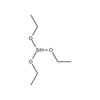
Packaging Under Nitrogen Tri-substituted Silane Reducing Agent Organosilanes are hydrocarbon-like and possess the ability to serve as both ionic and free-radical reducing agents. These reagents and their reaction by-products are safer and more easily handled and disposed than many other reducing agents. The metallic nature of silicon and its low electronegativity relative to hydrogen lead to polarization of the Si-H bond yielding a hydridic hydrogen and a milder reducing agent compared to aluminum-, boron-, and other metal-based hydrides. A summary of some key silane reductions are presented in Table 1 of the Silicon-Based Reducing Agents brochure. Triethoxysilane; Silicon triethoxide; Triethoxysilylhydrid
e CAUTION: VAPORS CAUSE BLINDNESS — GOGGLES MUST BE WORN DISPROPORTIONATES IN PRESENCE OF BASE TO PYROPHORIC PRODUCTS
Contains trace Si–Cl for stability
ΔHcomb: -4,604 kJ/mol
ΔHform: 925 kJ/mol
ΔHvap: 175.4 kJ/mol
Surface tension: 22.3 mN/m
Vapor pressure, 20 °C: 20.2 mm
Critical temperature: 244 °C
Dipole moment: 1.78 debye
Hydrosilylates olefins in presence of Pt
Used to convert alkynes to (E)–alkenes via hydrosilylation-desi
lylation
Reduces amides to amines in the presence of Zn(OAc)2
Used in the reduction of phosphine oxides to phosphines
Reduces esters in the presence of zinc hydride catalyst
Reduces aldehydes and ketones to alcohols via the silyl ethers in presence of fluoride ion
Gives 1,2 reduction of enones to allyl alcohols
Extensive review of silicon based reducing agents: Larson, G.; Fry, J. L. "Ionic and Organometallic-Catal
yzed Organosilane Reductions", Wipf, P., Ed.; Wiley, 2007




![1-Ethyl-3-methylimidazolium Chloride [for Molten Salt] - E0490 - TCI America](https://partimages.globalspec.com/27/2277/1342277_medium.png)